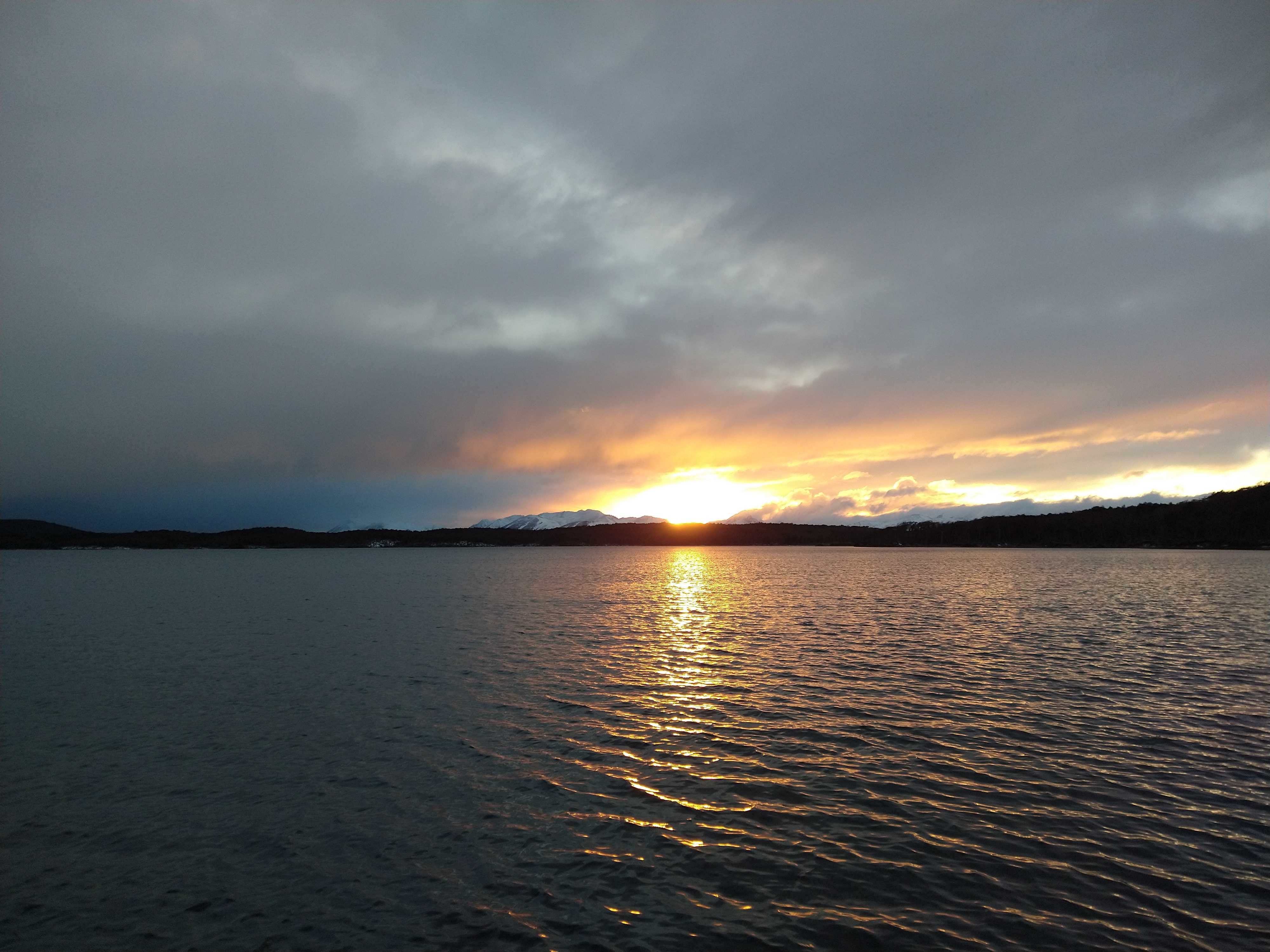
Freezing rain taps on the window in Puerto Natales, a winter storm is blowing in. Savannah is sitting empty in a port in Punta Arenas 250 km South. I’m closing out this chapter. I’ve delayed writing this final post about this journey because once I do, it means it’s really over. The next chapter promises to be just as adventurous and exciting, but in a different way and apart from Savannah.
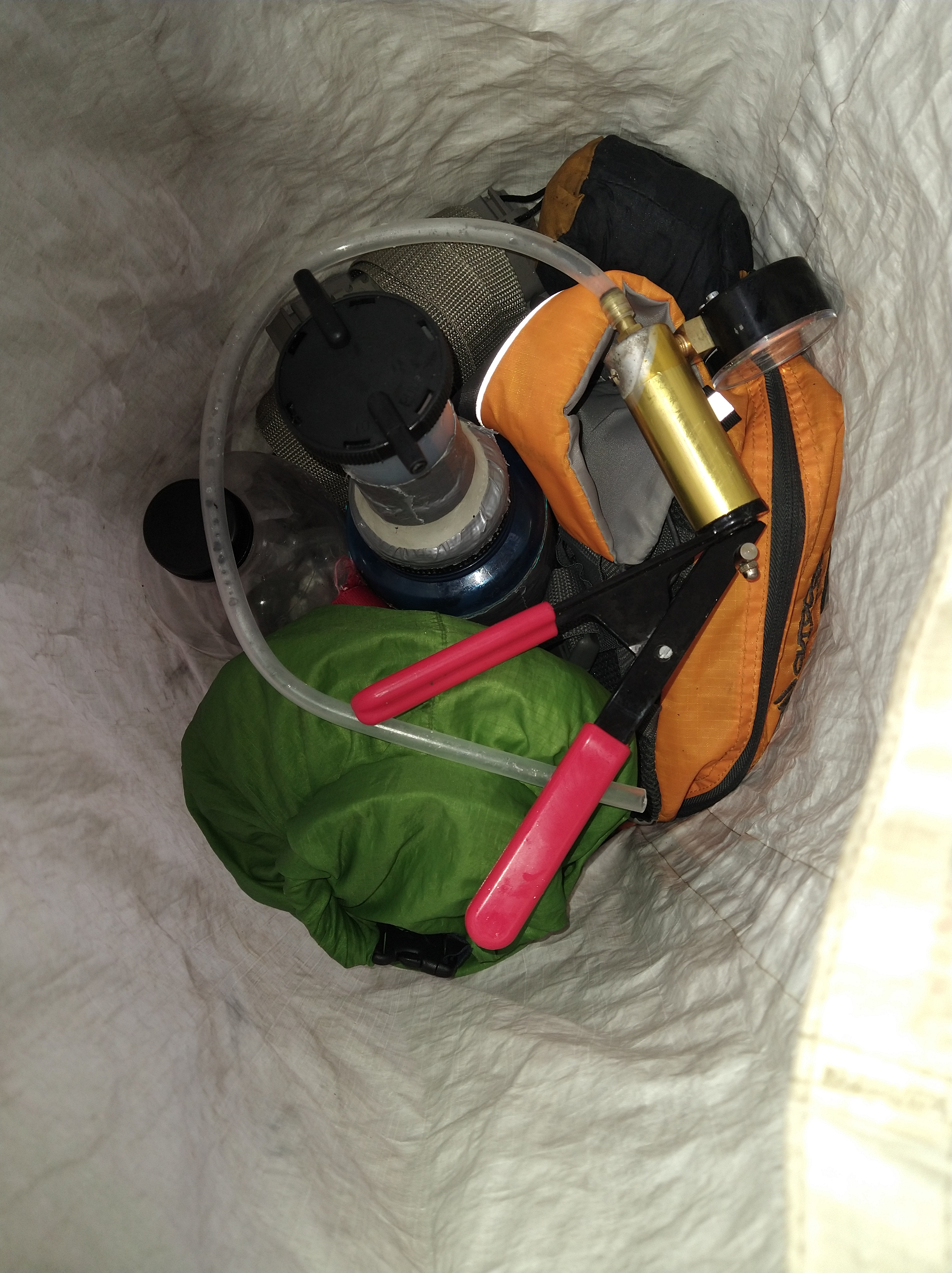
After returning from the Navy trip, we were completely exhausted. We slept the better part of the next day, then geared up for the next trek. We now needed to repeat the trek to Lake Windhold to retrieve the cameras and collect water samples. We planned to do it a bit differently this time and shorten the trek from 3 nights out to just 2 nights, we were running out of time before our final departure. This time, we’d hike in 14 km to an abandoned refugio, spend the night there, then do a “cobra strike” strategy of hiking fast and light to Lake Windhold, sample, then return to the camp at the abandoned refugio. This cobra strike day would entail about 21 km of hiking. We chose to wear waders for this stretch since there were large sections of deep bog to cross. And, despite the terrible ankle support from the waders, we believed it would be faster to cut through the bogs with them rather than trying to keep our feet dry in hiking boots by bushwhacking around them.
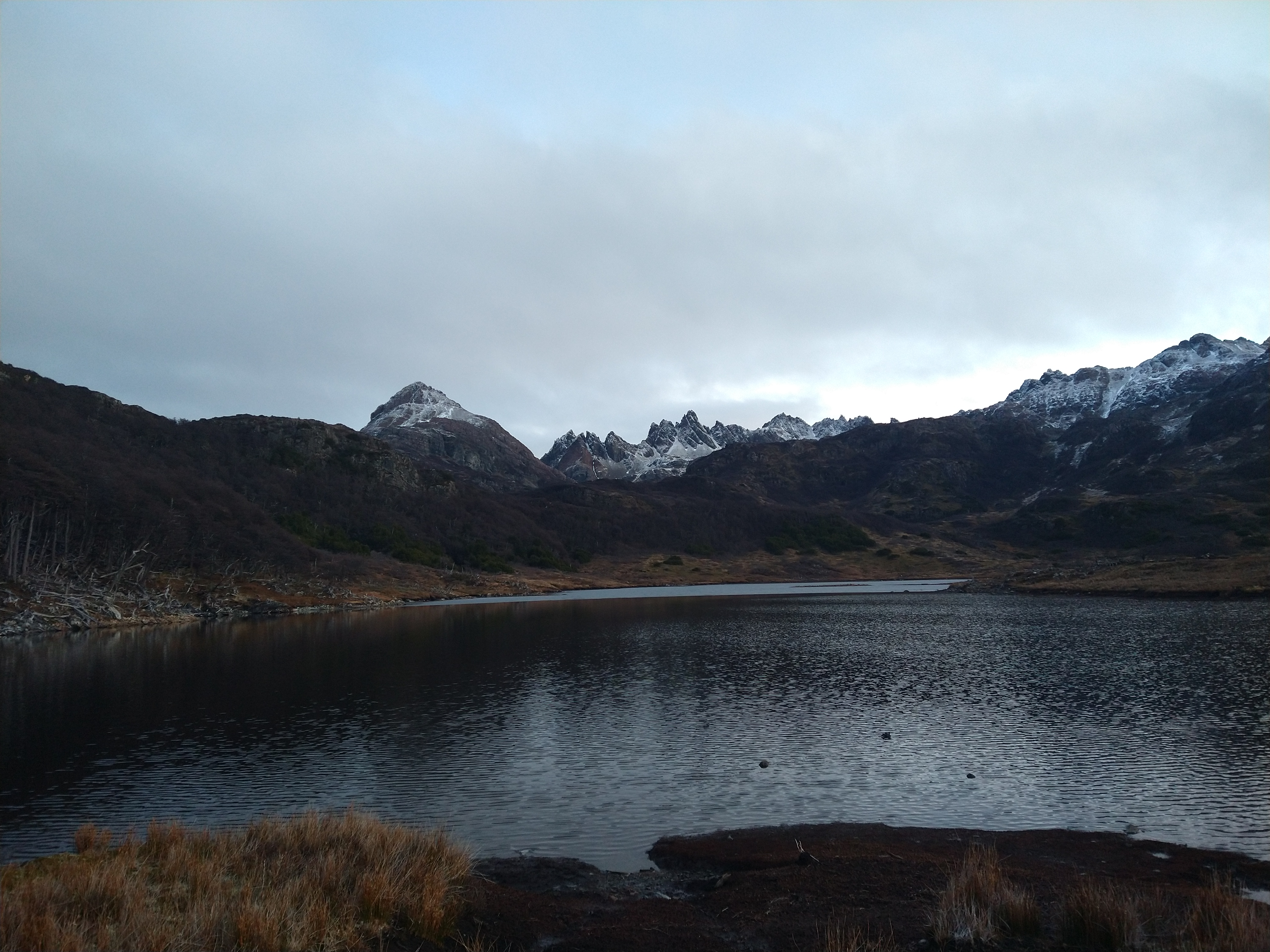
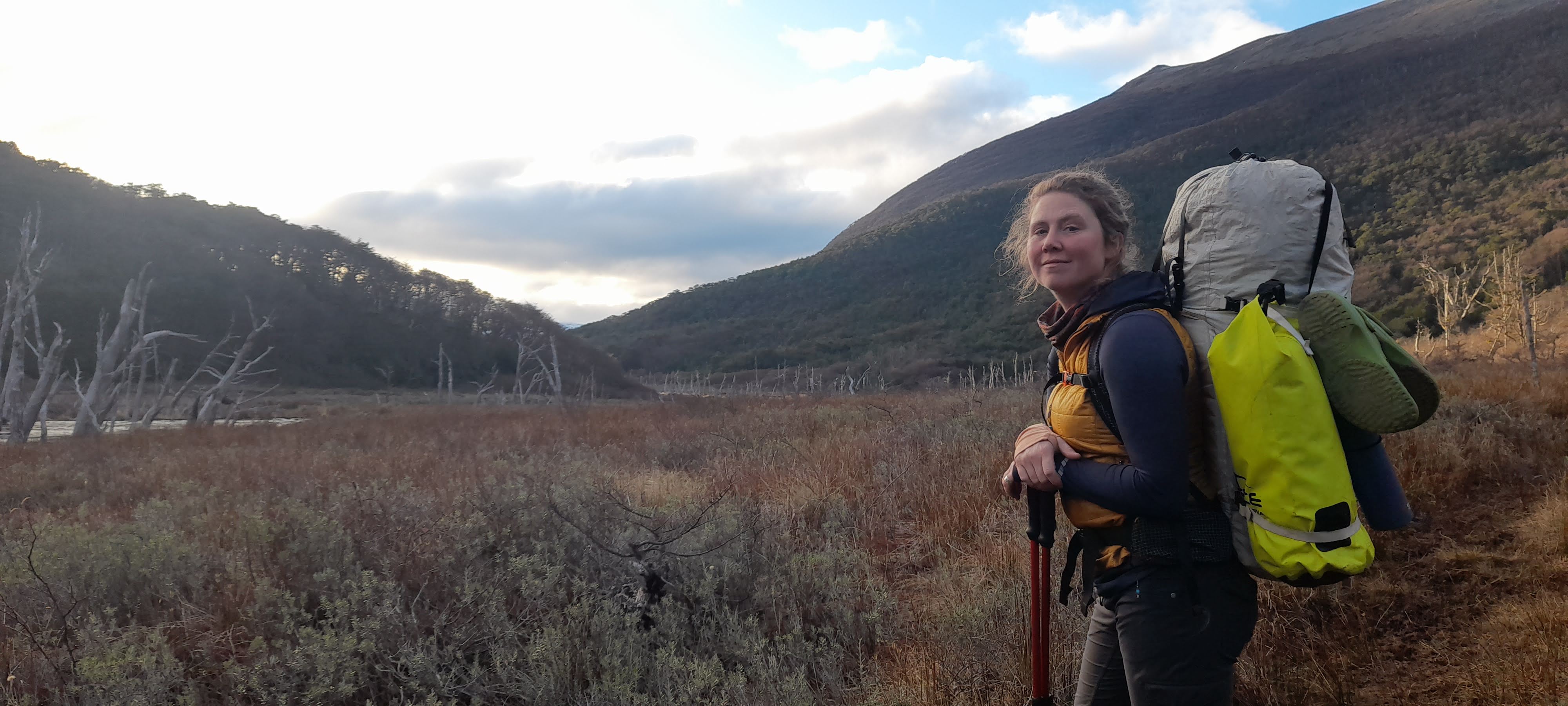
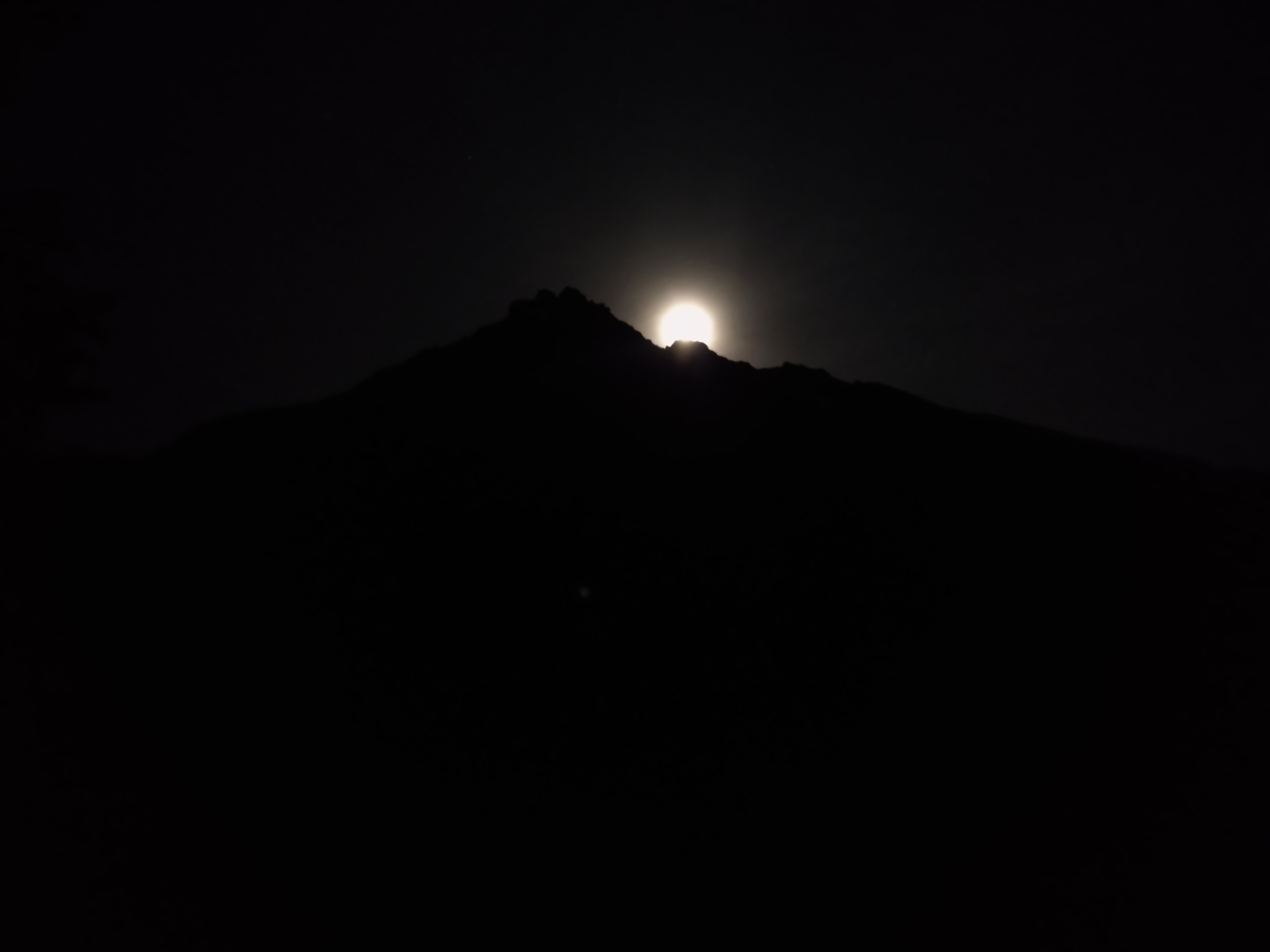
We made it to camp just around dusk and enjoyed raviolis, creamy sauce, and whisky. The raviolis took a tumble once the pot began shaking from the boil, but we were not about to give up on our dinner and scooped them up, rinsed then off, and reheated them (holding the pot this time). The moon that night was absolutely stunning coming up over the mountains.
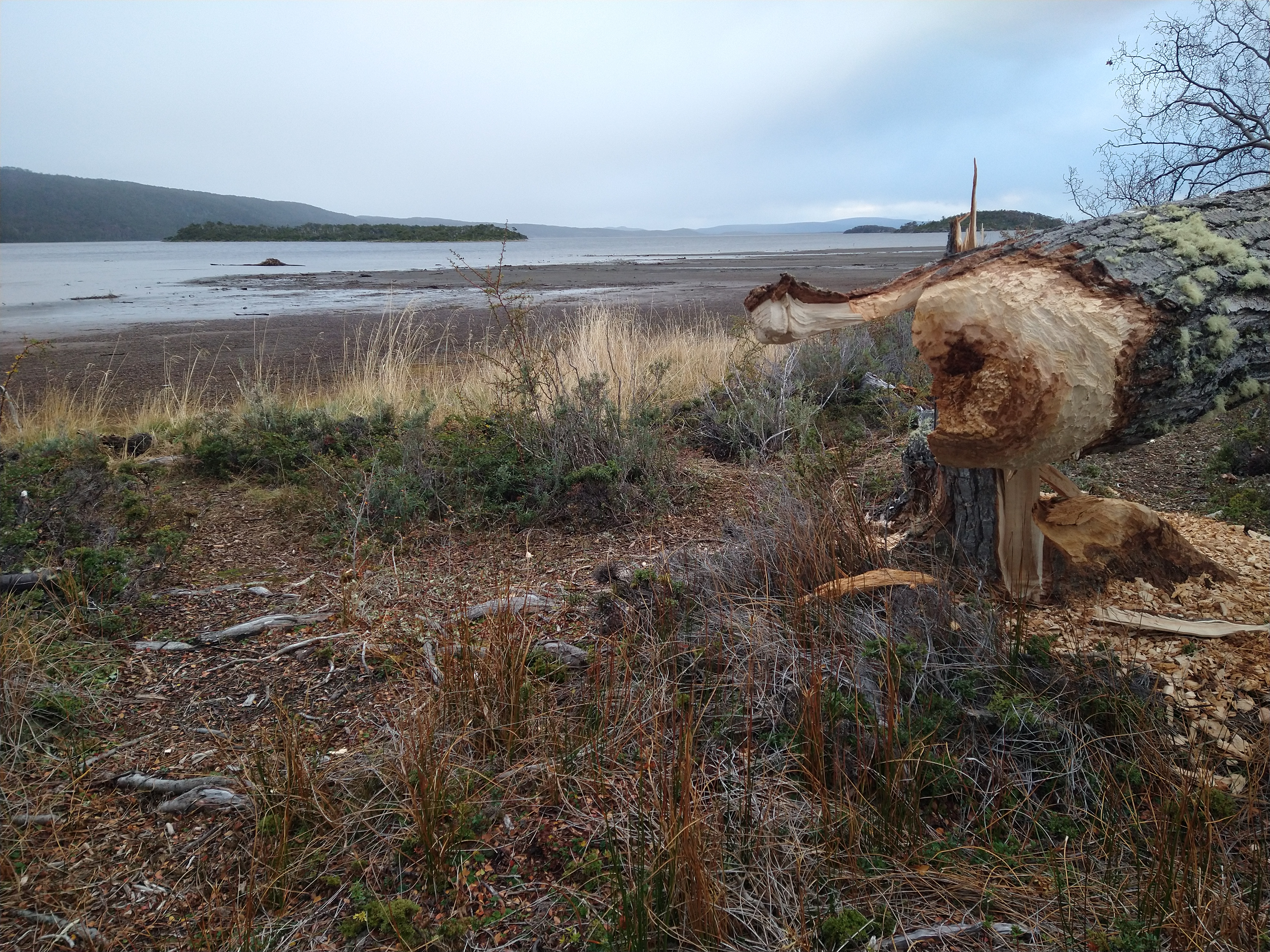
Despite some weather moving in the next morning, we stuck with our strike plan and set out with our packs carrying only sampling kits and food/water provisions. It would be a long day, but we hoped the lighter packs would help us cover ground more quickly. It did, and we were happy with our waders as we reached the only slightly frozen over bogs. We arrived at Lake Windhold early afternoon and noticed more beaver activity in the forms of a massive tree being felled and 2 new dams in the lake. We had just been there a little over a month ago and were shocked how quickly the beavers can invade. After water sampling, we took a break in the refugio that we had slept in back in April. We added our names on the inside of the wall among 100s of others dating back decades. It read, “Williams & Unda. Round 1, 23/4/23, Invasive Species Study. 5/6/23, Round 2, Geshido.” Geshido = Ge(t) Shi(t) Do(ne).
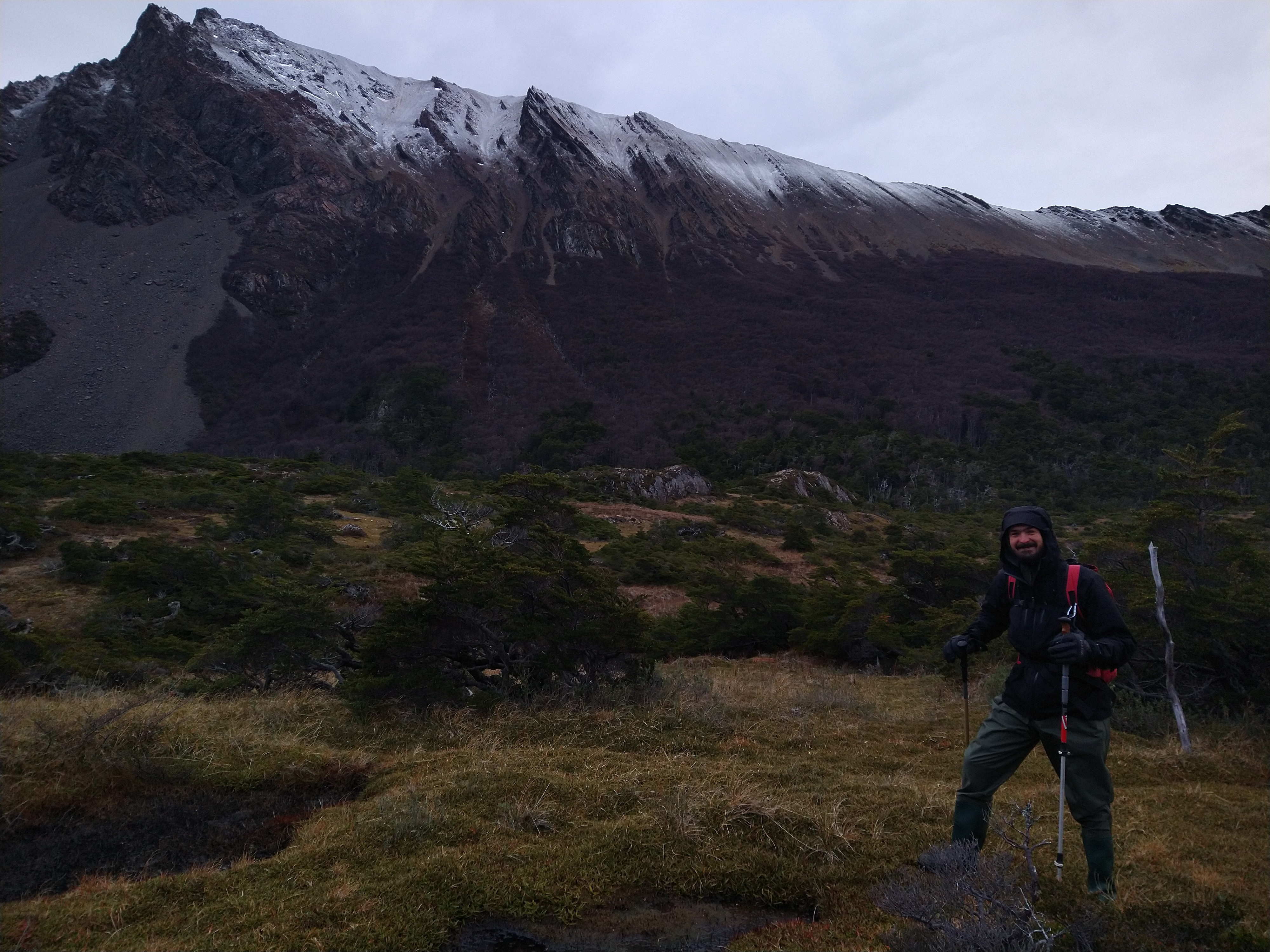
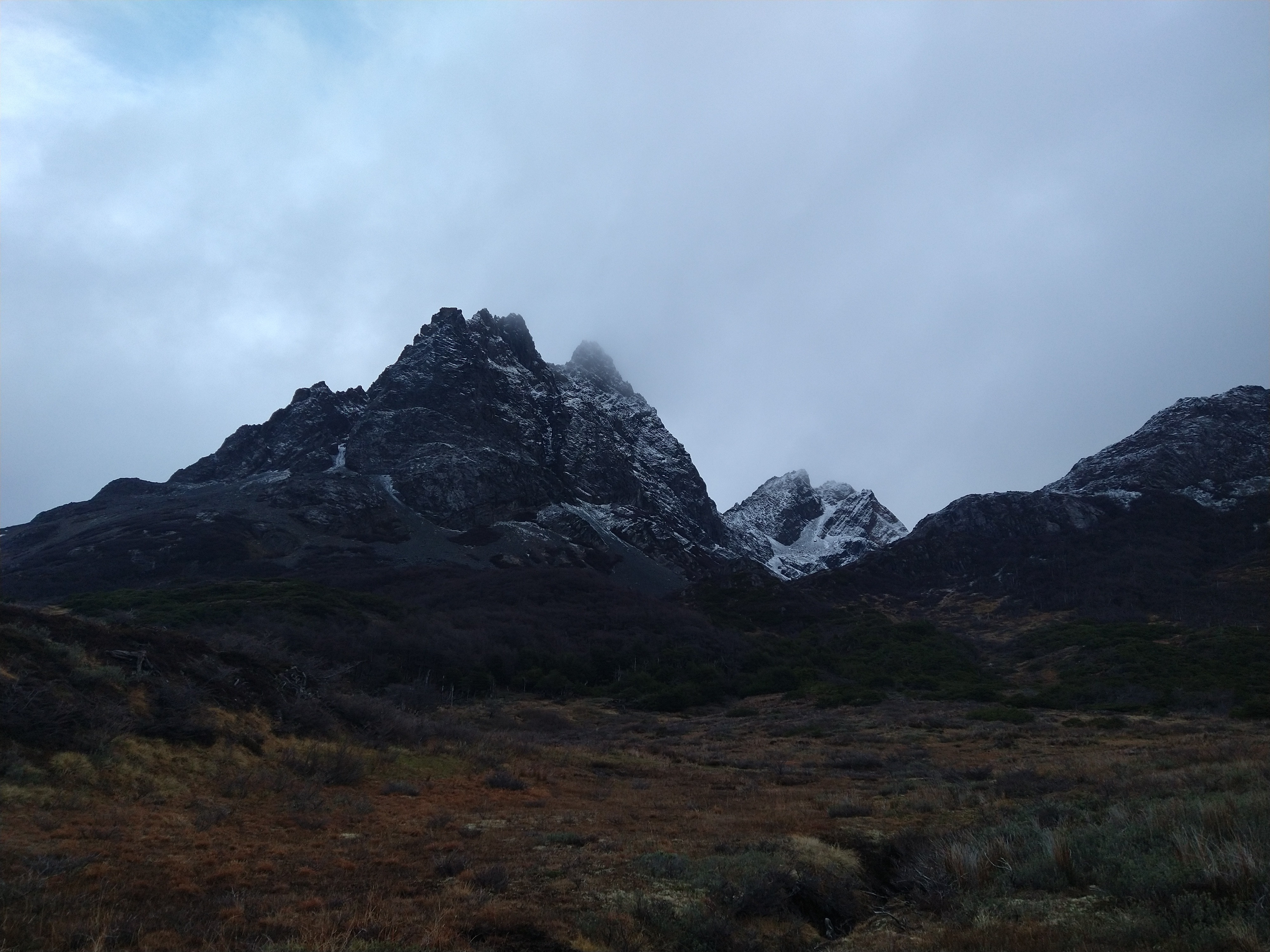

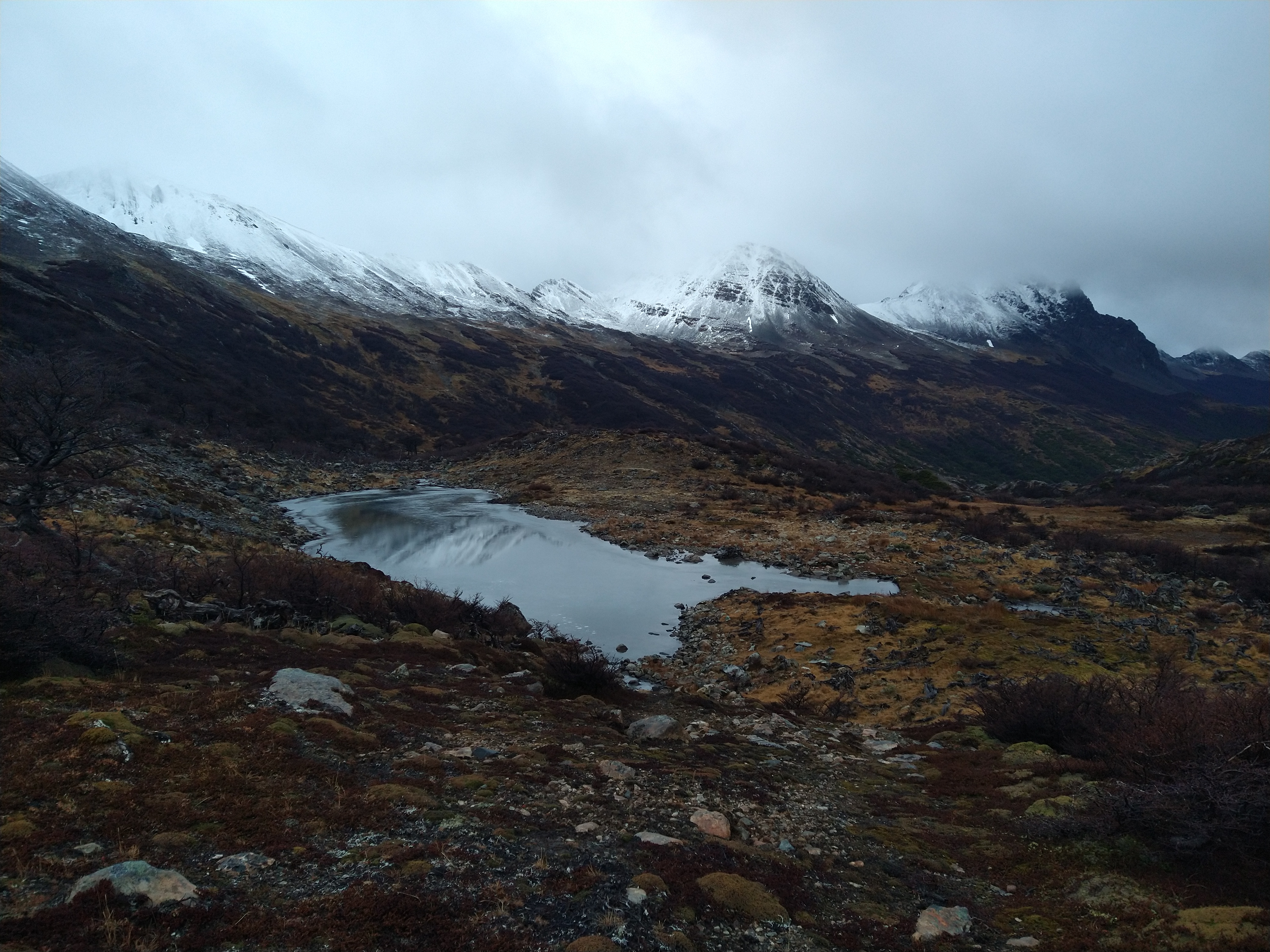
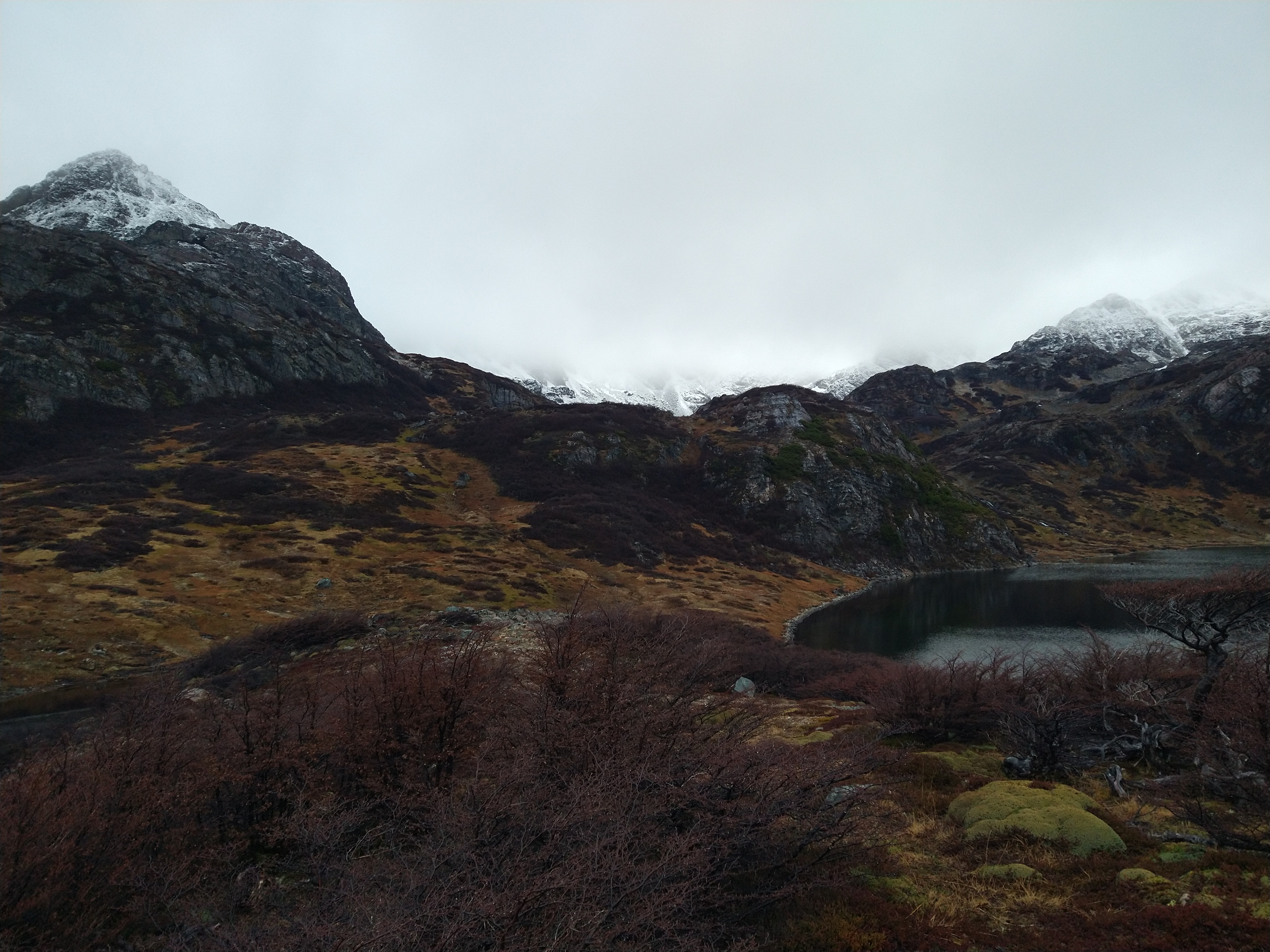

After we enjoyed some potato paste and asparagus soup in the refugio waiting out some rain, it was time to head back to basecamp. We were both tired after the first 10 km down to the lake, but like it or not we needed to stick with our plan of hiking back the 10 km since our camp equipment was there and the temperature was dropping fast. Now knowing the route well since it was our fourth walk now in the area, the trek back was fairly chill and the residual light from the full moon the night before helped light the way. We crashed into the tent around midnight, then headed back towards town the next morning after collecting samples from Alinghi Pass along the way.
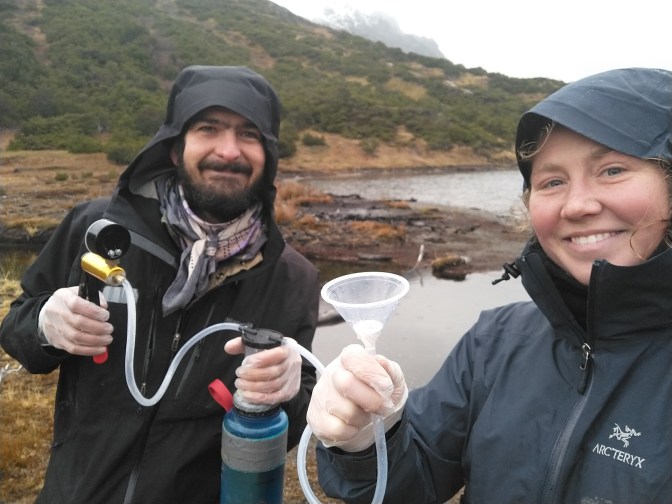
The next week involved some local shenanigans. With unstable weather, we were waiting for a good weather window to tackle the most dreaded re-trek of them all, Lago Navarino. This was one of the longest, most off trail treks we still needed to repeat. We were hoping the colder weather coming in would freeze over the bogs and we had a fantasy that maybe if it did, we wouldn’t move at the excruciatingly slow speed of 0.5 km/hr like the trip before. In between snowy days, we took the field car out West along the road to collect cameras and take the water samples at sites nearby the road. Sav was out of commission due to a cracked windshield, but also probably wouldn’t have faired well with the icy/snowy conditions. Even with the field car, we needed to abandon plans for a day of sampling after spinning 180 degrees (slowly) on an icy hill that the car just didn’t have quite enough power to get up. Another day that we tried, we got a flat tire on the way back. Then, while we were taking turns with the janky, rusty jack to lift up the car, I accidentally snapped the crank of the jack. Luckily we had service and were able to contact the owner of the car for some help. He agreed the jack was crappy and joked that the nickname for the car was “Powerful.” It was anything but powerful, but she did eventually get the job done. We also enjoyed an evening with my colleague and her family, and were able to chat about life over some wine and pizza, instead of just logistics of the project.

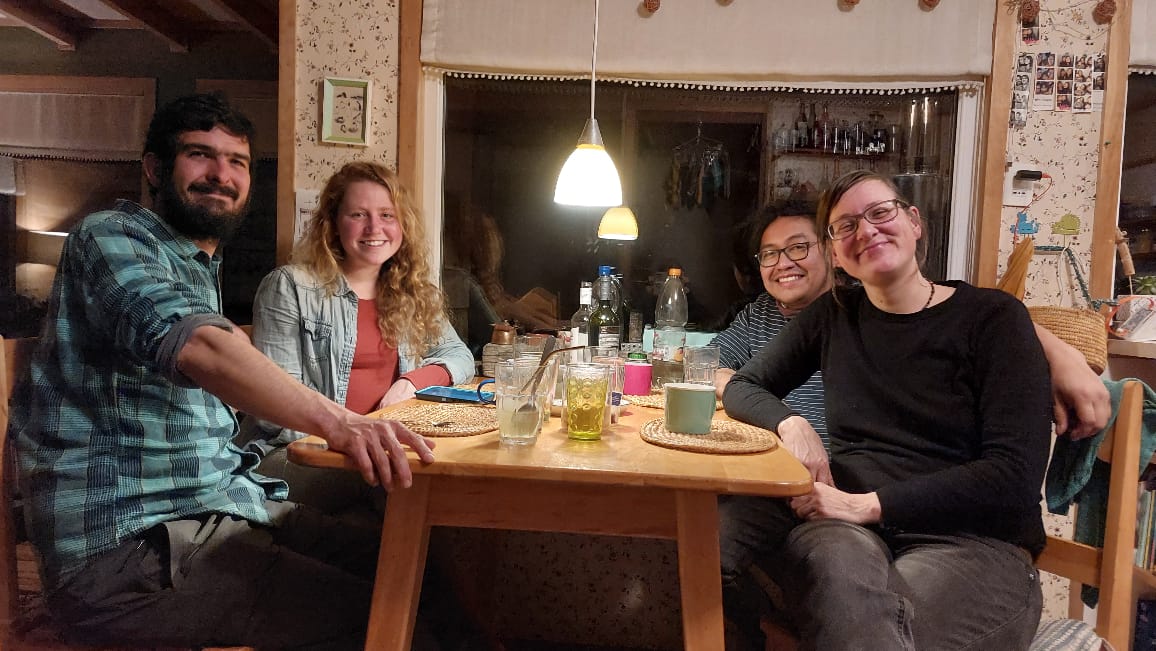
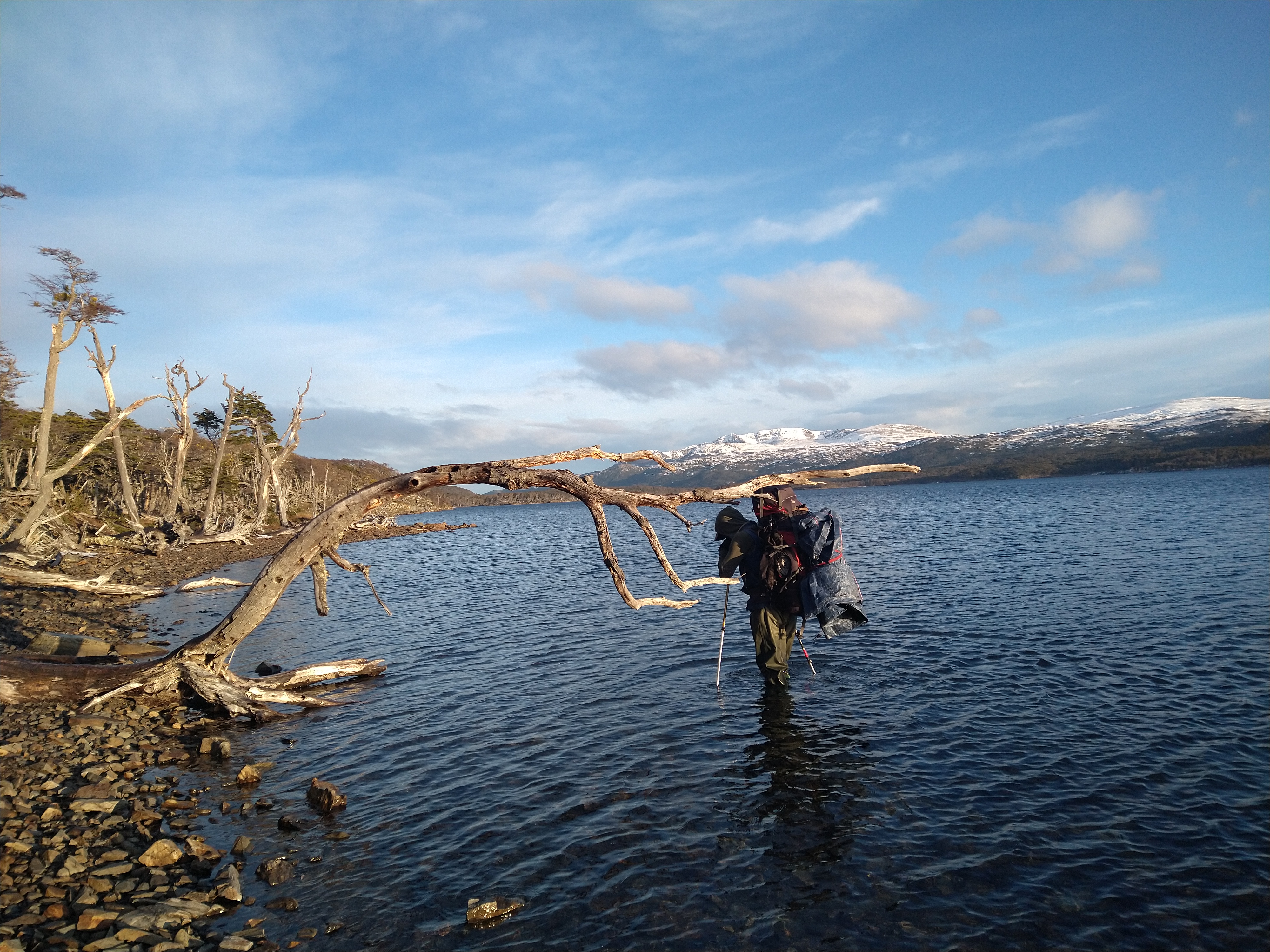
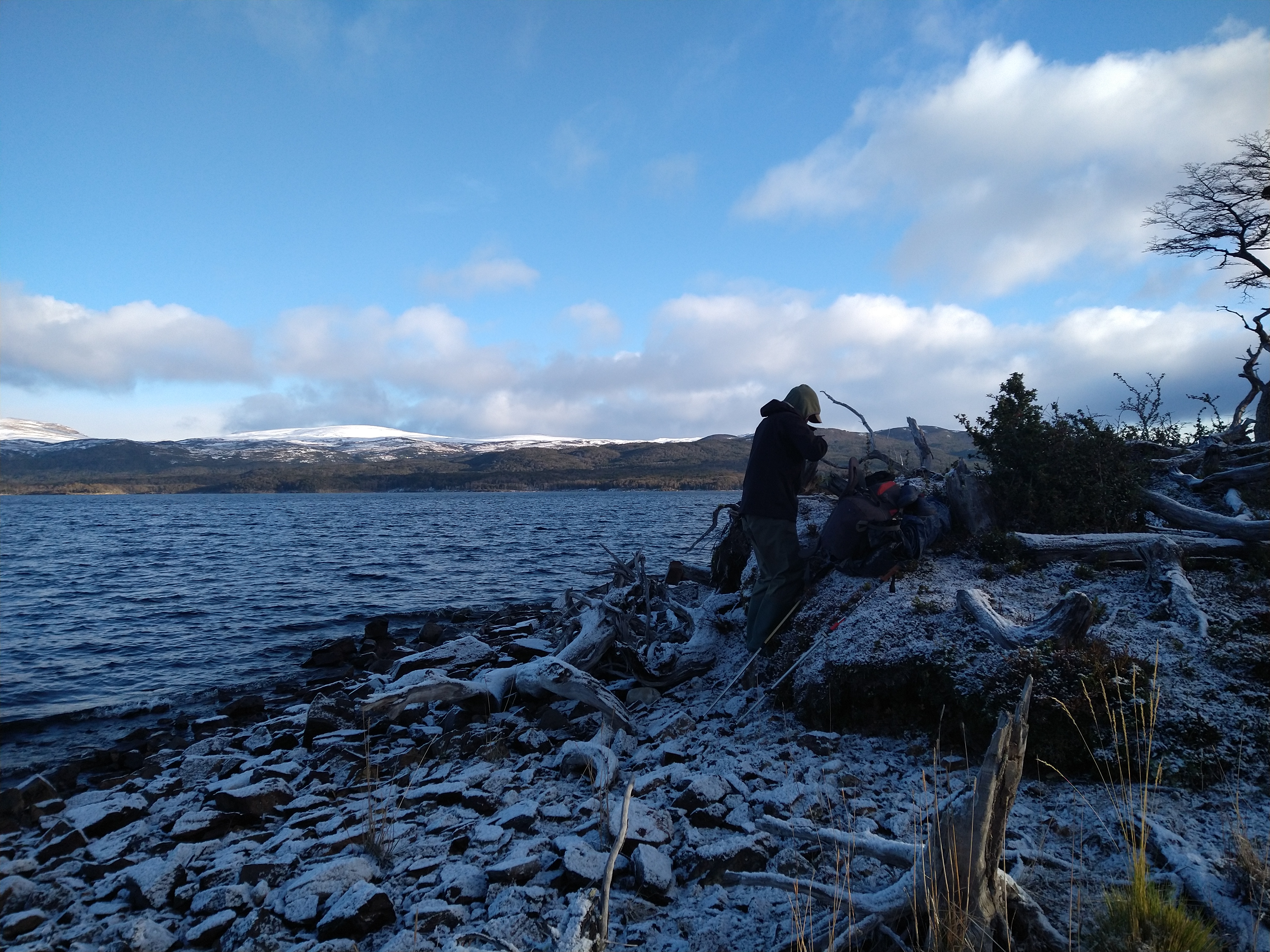
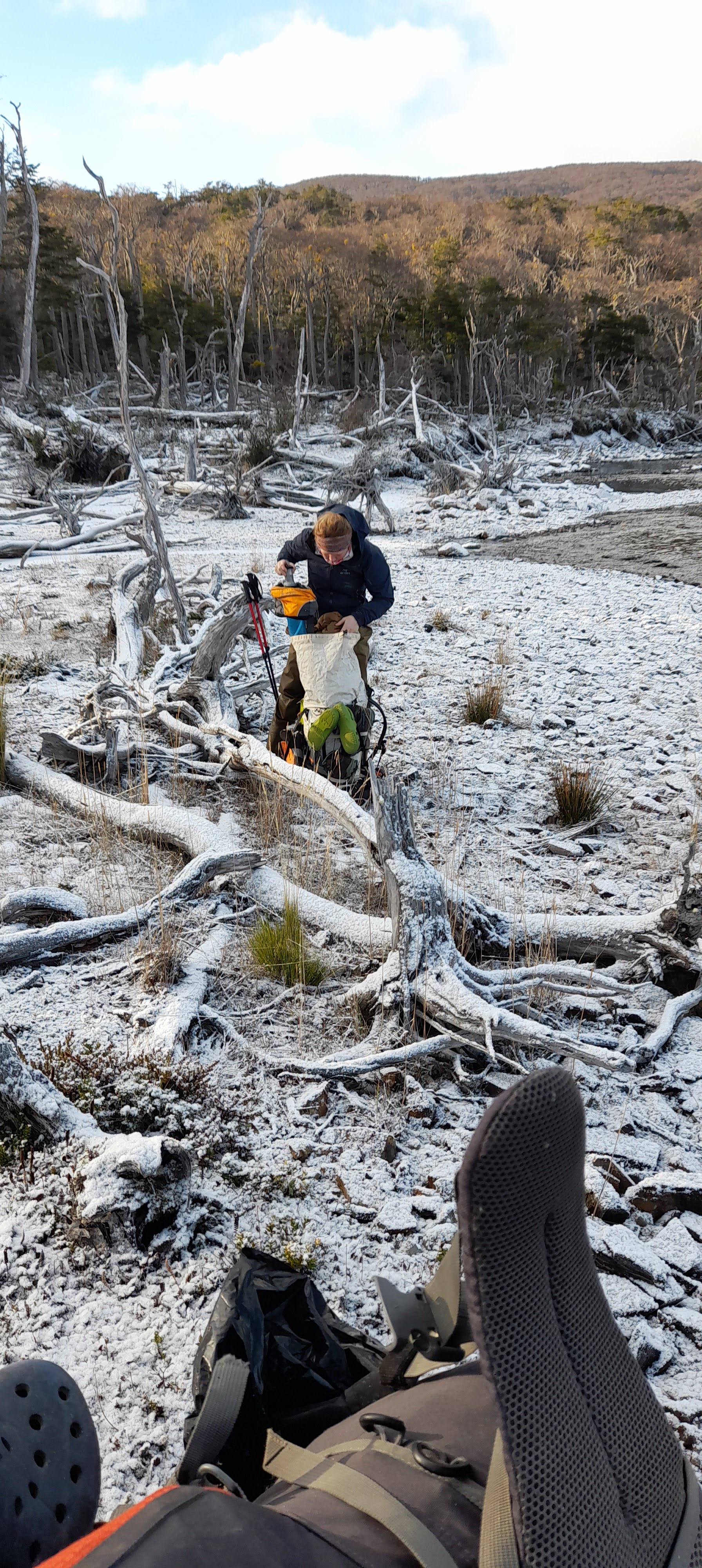
Eventually, the time came for our toughest hike to be repeated. We were running out of time with only 10 days until we’d take the ferry back North. We packed for 4-5 nights out, not knowing what the conditions would be like. We decided to go with the waders again since walking the shallow shore of the lake was much faster than bushwhacking/log hopping. It would be much colder now though. Once we hit Lake Rojas, we tried out this tactic and were pleasantly surprised with how much more quickly we could walk in knee-deep water compared to picking our way on land. The downfall was how icy cold the water was, and the waders were not great insulators. Nevertheless, we moved quickly and were even able to cut across some of the bays by submerging up to our hips. That first night by the lake was bitterly cold and some fresh snowfall made it difficult to get out of the tent the next morning.

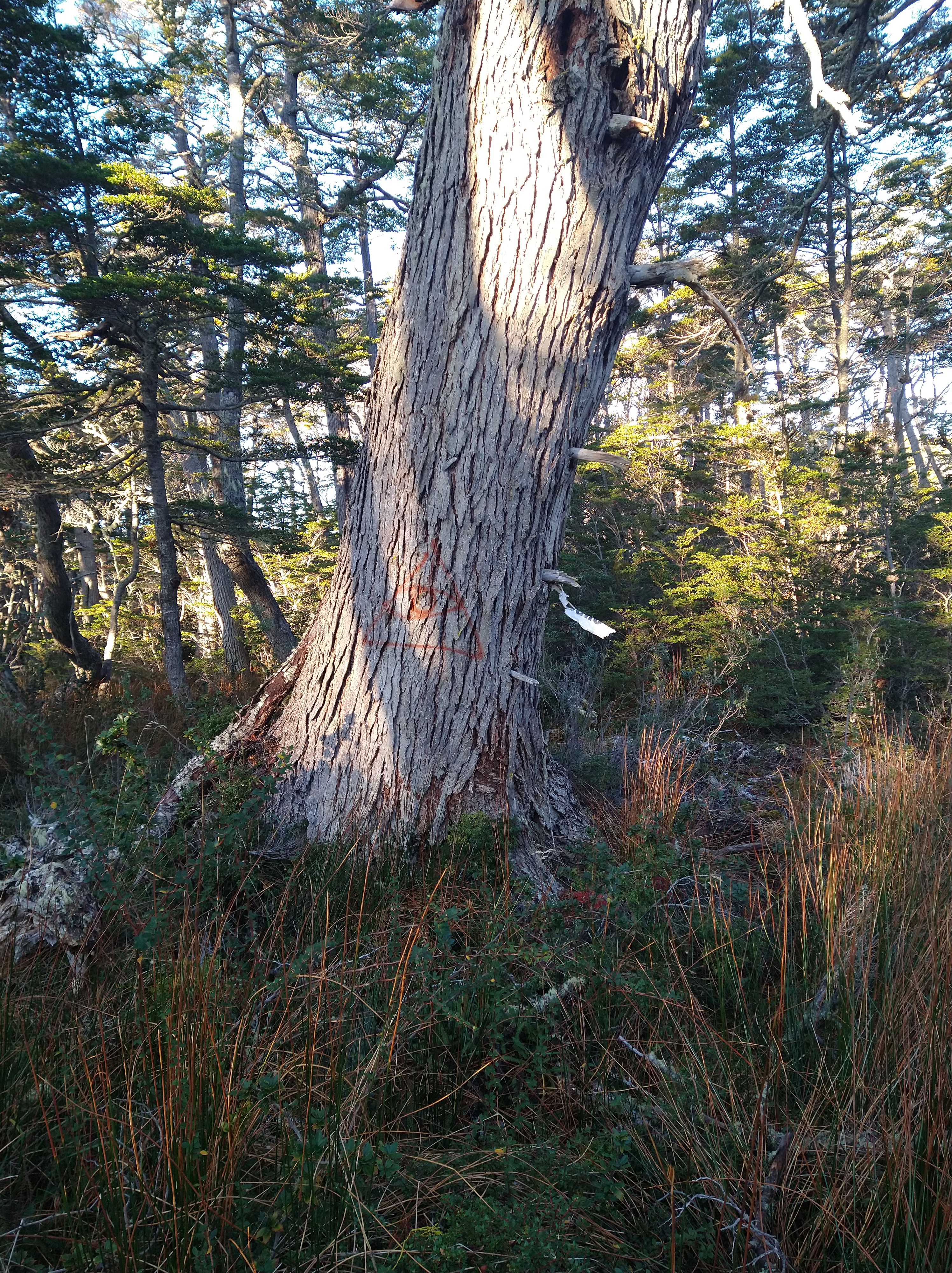
The section between Lago Rojas and Lago Navarino was the big question mark in our minds on whether we would be able to reach Navarino to retrieve the camera, or if it was too late in the season with potentially deep snow or unstable ice. This section also did not have any trail systems. So, when we were bushwhacking our way over a thickly wooded pass to the next bog and found some strange art spray painted on the trees, we were a little spooked.

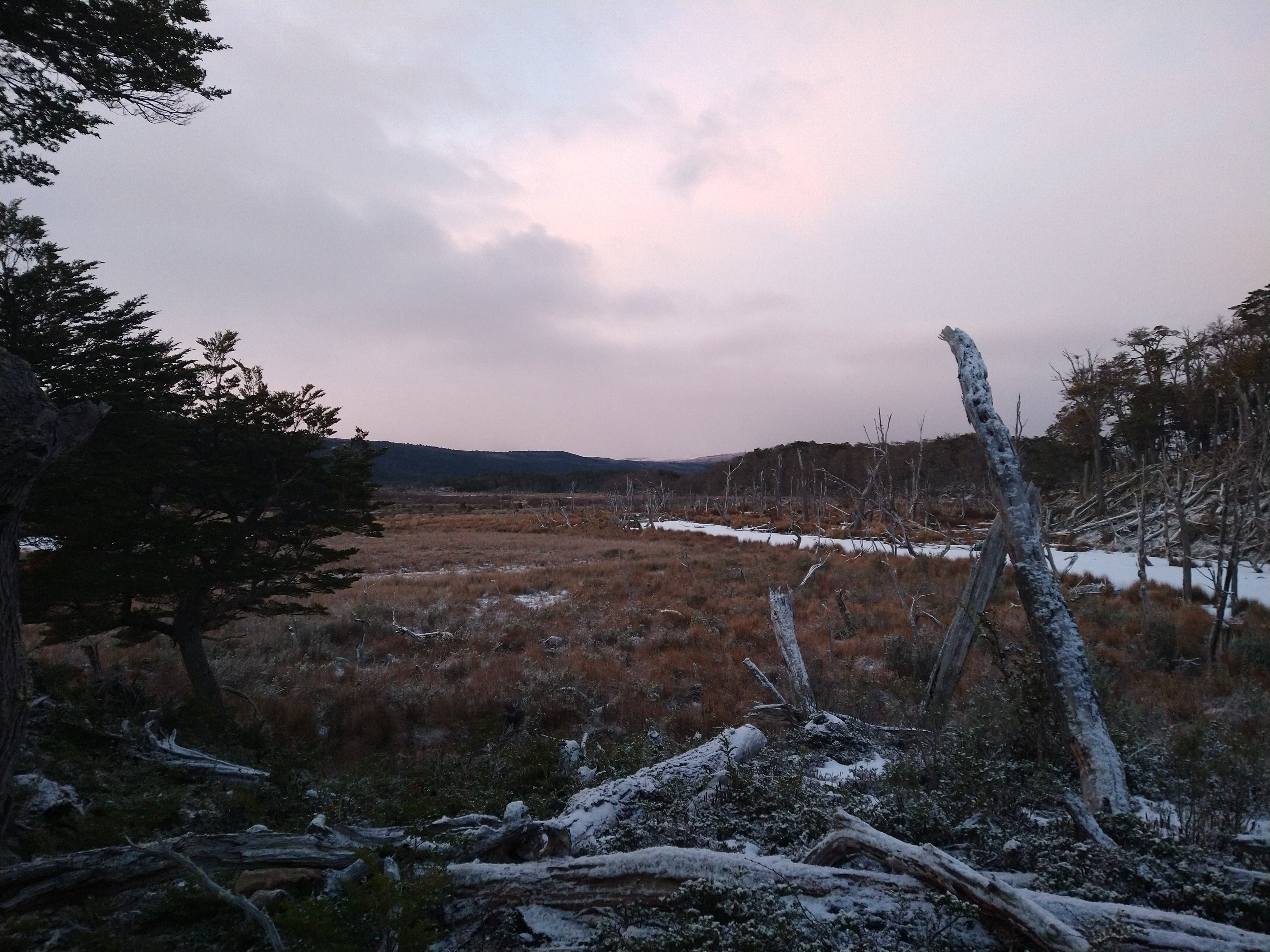
Some of the beaver dams were in fact frozen over enough to hold our weight, which made these sections better than the trip before. When we got to the bog, we found it was partially frozen over. But this meant some slick icy spots that would put you on your butt at a moment’s notice, and other soft, mossy sections that would cause you to sink thigh deep in bog. We tried microspikes with the waders, perhaps the first time this combo has ever been done here. But I was worried about puncturing the waders when we would undeniably get caught up in the boggy bits and trip. I took mine off, since a puncture would make the lake crossing back to the road impossible. In the open section of the bog, we were met with various challenges. The squishiness of the bog, thin ice over the beaver dams and channels, and either deep snow or thick grass and brush that made our pace back to a crawl, sometimes literally, again. The days were incredibly short now, especially in valleys, with only about 5 hours of daylight per day. After the sun set that night and we both broke through some sketchy ice, we decided to call it a day and camp up on an island. We considered trying to push through the night to make up the kilometers, but ultimately decided that even if we did continue all night, we would still be behind schedule given our current pace. And with the uncertainty about which sections of ice would hold us, it would be silly to continue in the dark. While we were placing the cameras, there was the reassurance that whatever ones we could not retrieve, staff or students could help us out in the spring when the conditions were less harsh. It was a difficult decision for us to make to leave the camera out there and not collect water samples, but it seemed like the best choice. The next day we retraced our trail back to the first campsite feeling kinda bummed, then out to the road the next day where someone from the hostel would pick us up.




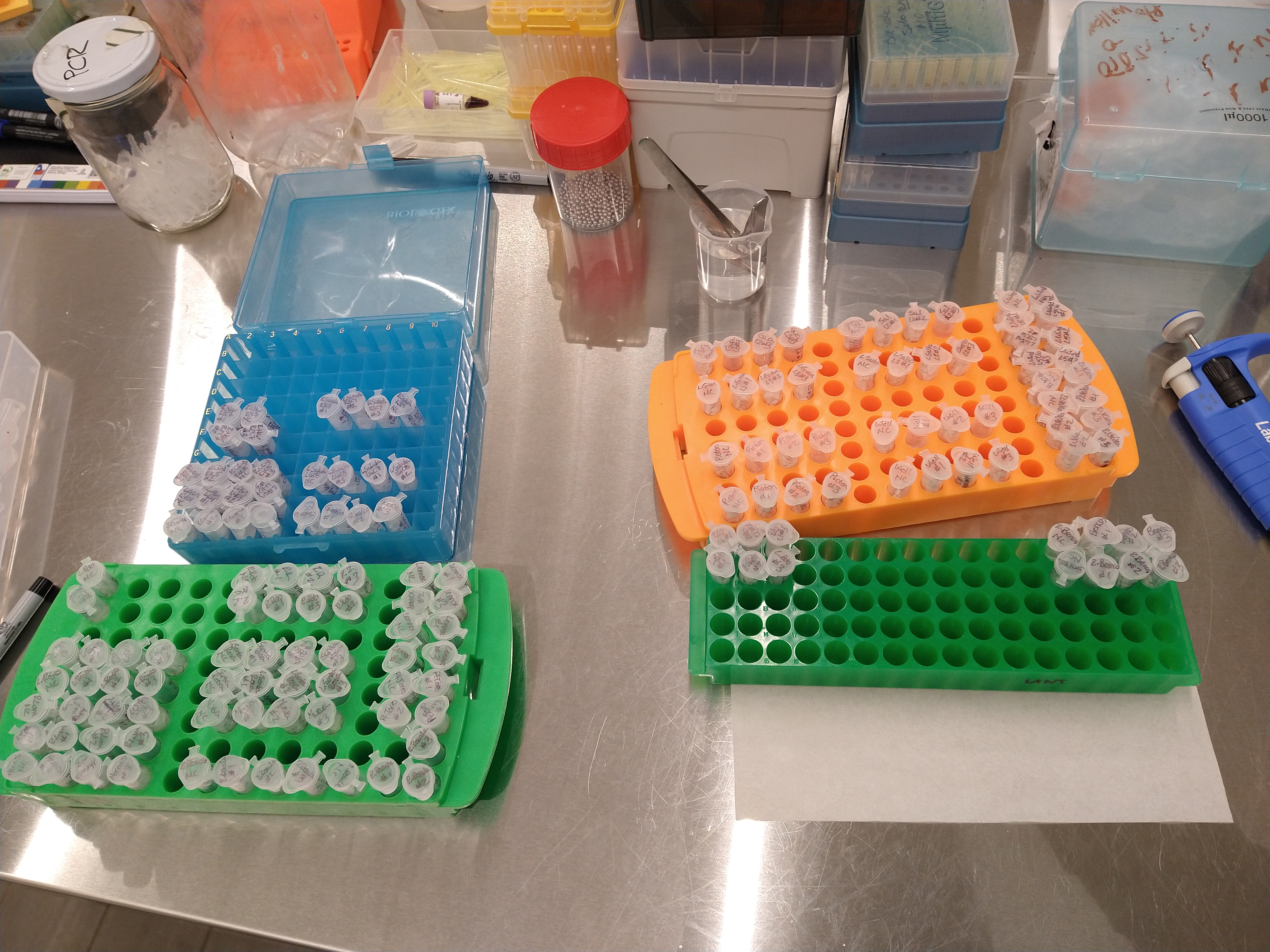
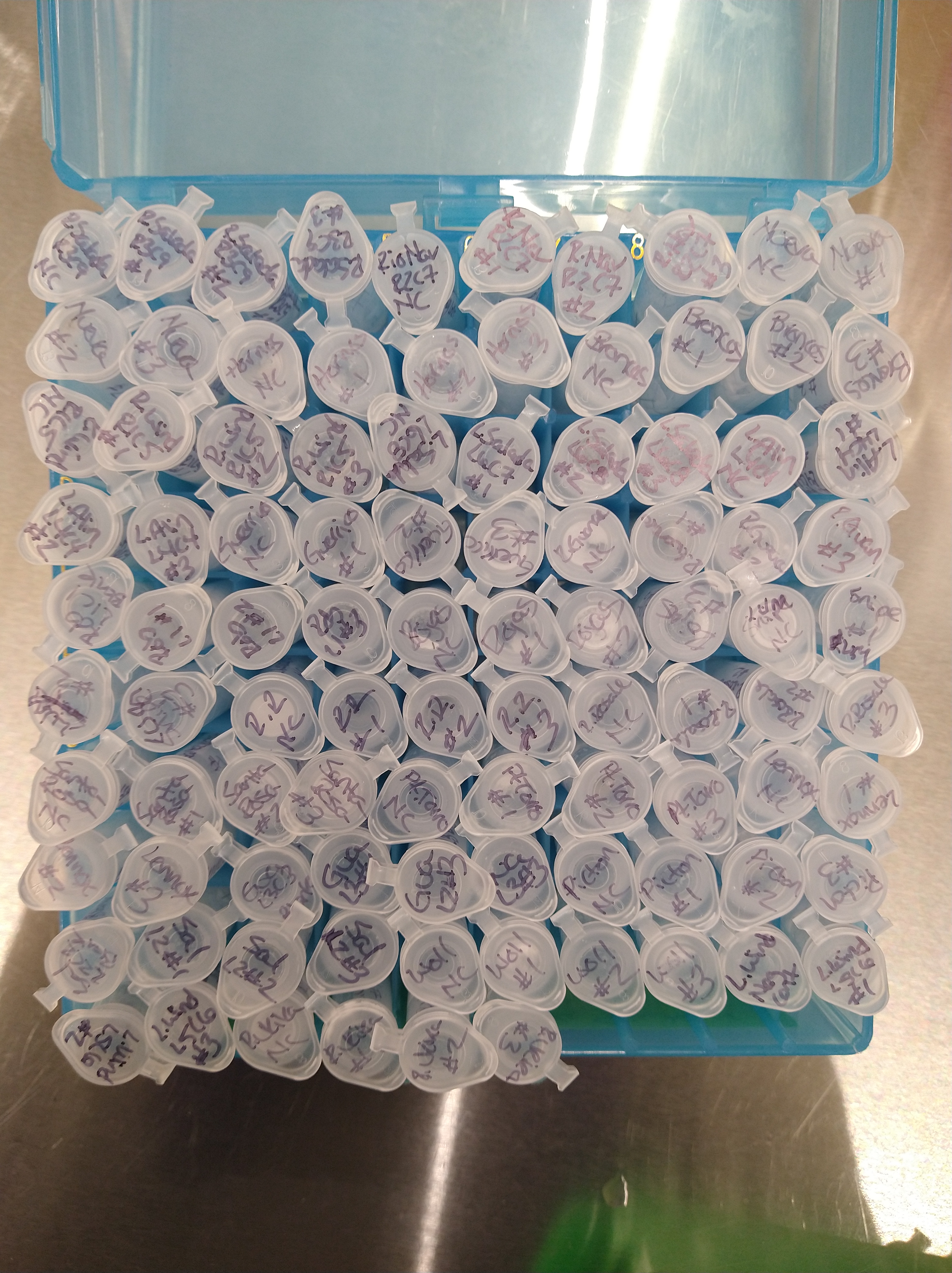
Back in town, we had a few more sampling sites to visit. At one site, sadly the camera got destroyed. Despite a sticker on the top of the camera explaining the study, someone smashed it to bits and took the SD card. Why they didn’t just steal it and sell it rather than smashing it, who knows. But we lost that site from the project. Once all of the water samples were collected I spent a day in the lab halving the water filters and tissue lysis buffer to have 2 replicate tubes (of ½ filter, 500 ul buffer ATL) to have a working box of samples and a back up box. Given the remote location of the island, the DNA extraction kits didn’t arrive in time for me to complete the lab work. They literally arrived on the same ferry that we would be leaving on the next day. It’s unclear now if someone else at the institute will complete the DNA extraction and qPCR to detect DNA from mink and dog, or if they will ship the samples to me in Germany where I can complete the project there. Either way, I know it will continue to be a joint effort among all the team members in the project and the most time intensive part of the study has been completed, the field collection. The samples are now safely in -80C at the institute until they can be processed.
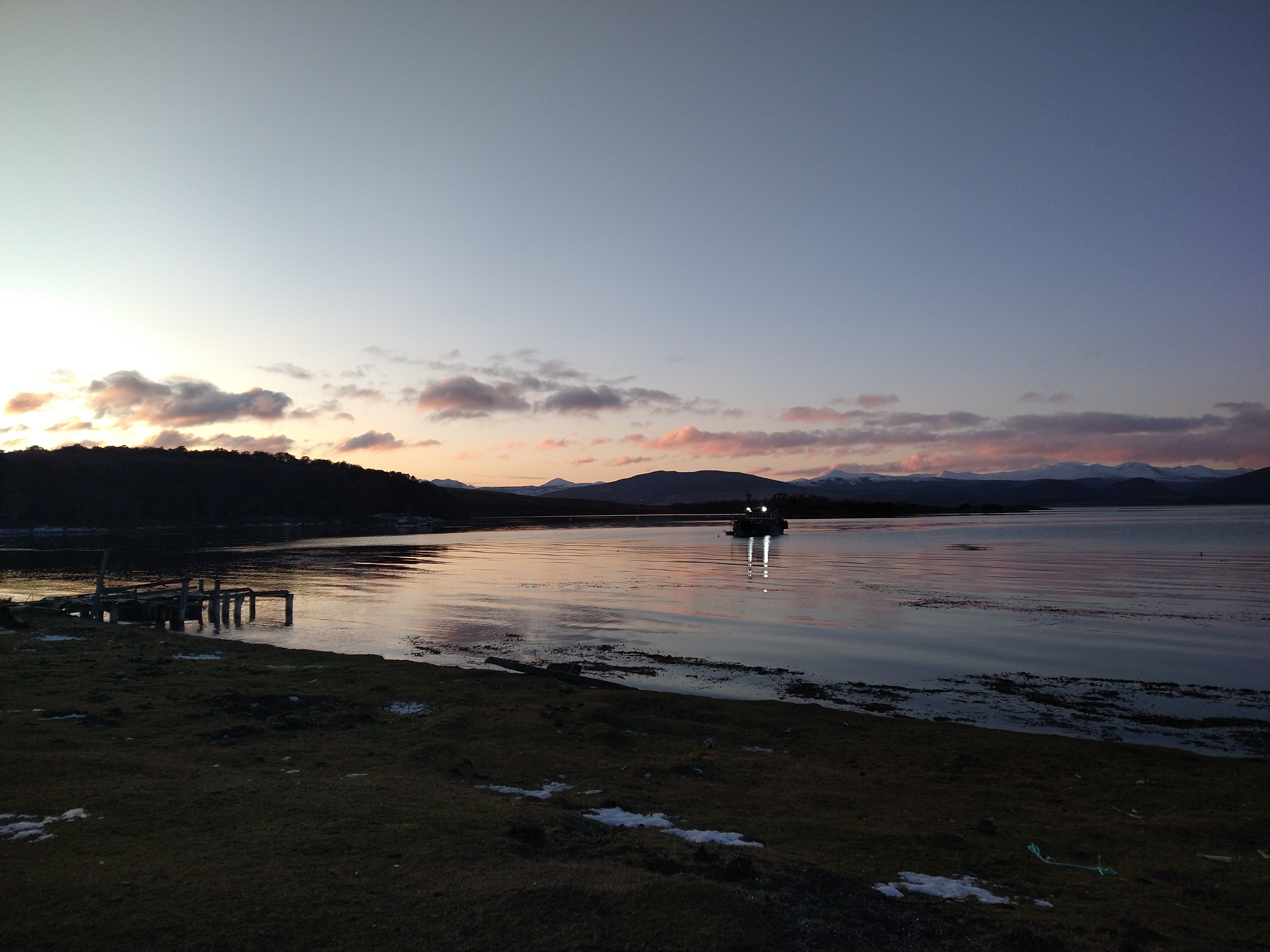


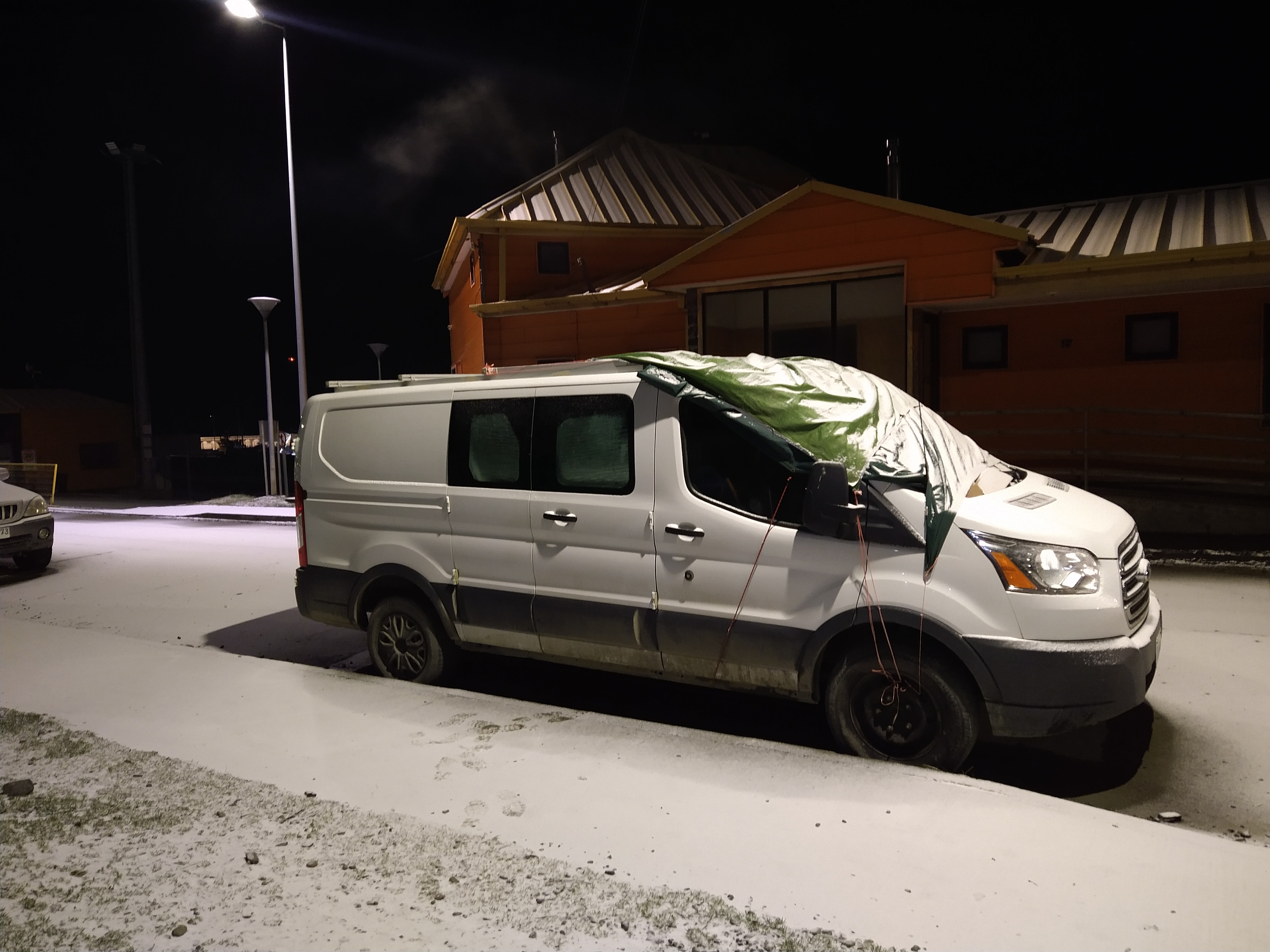

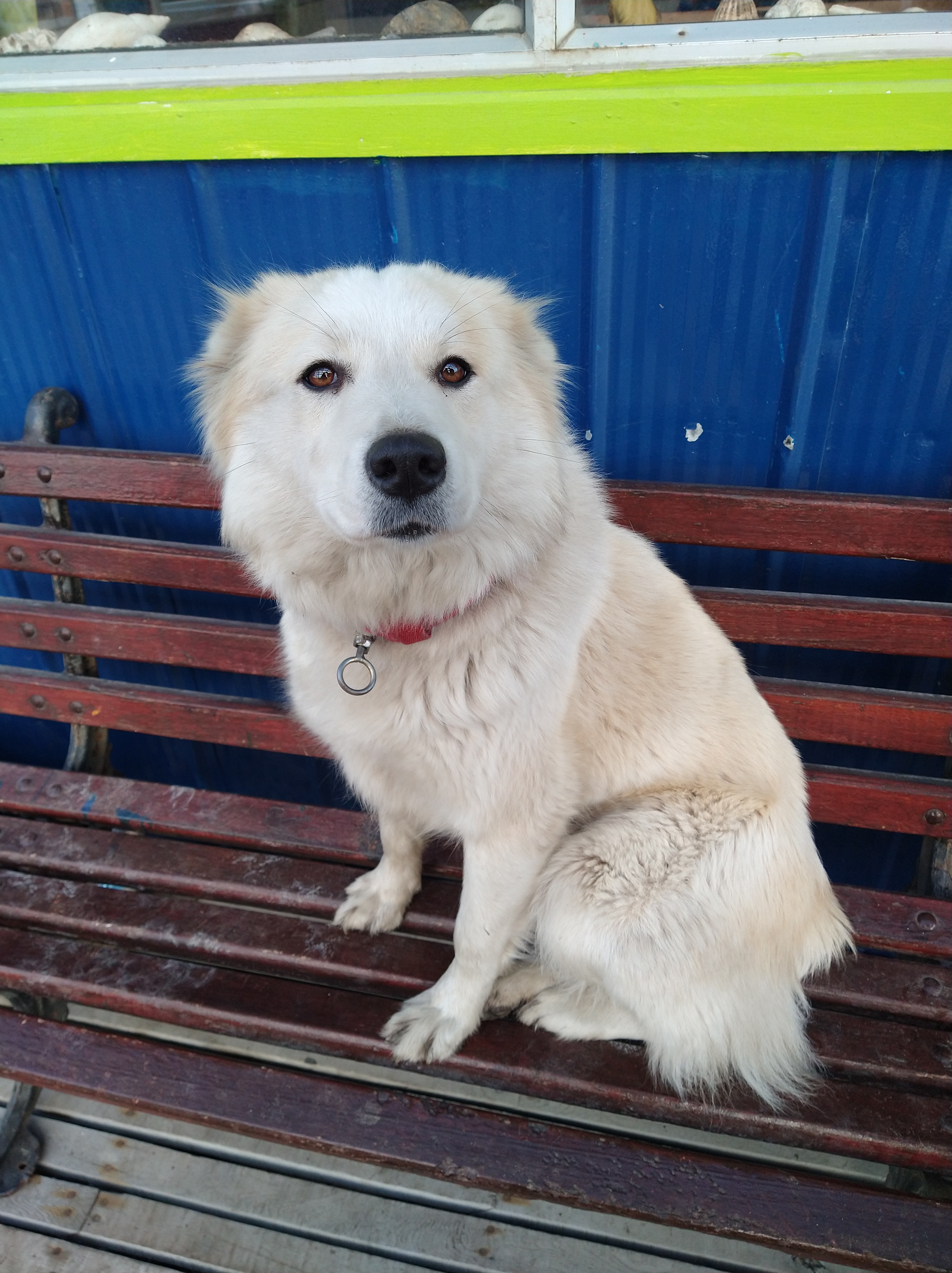
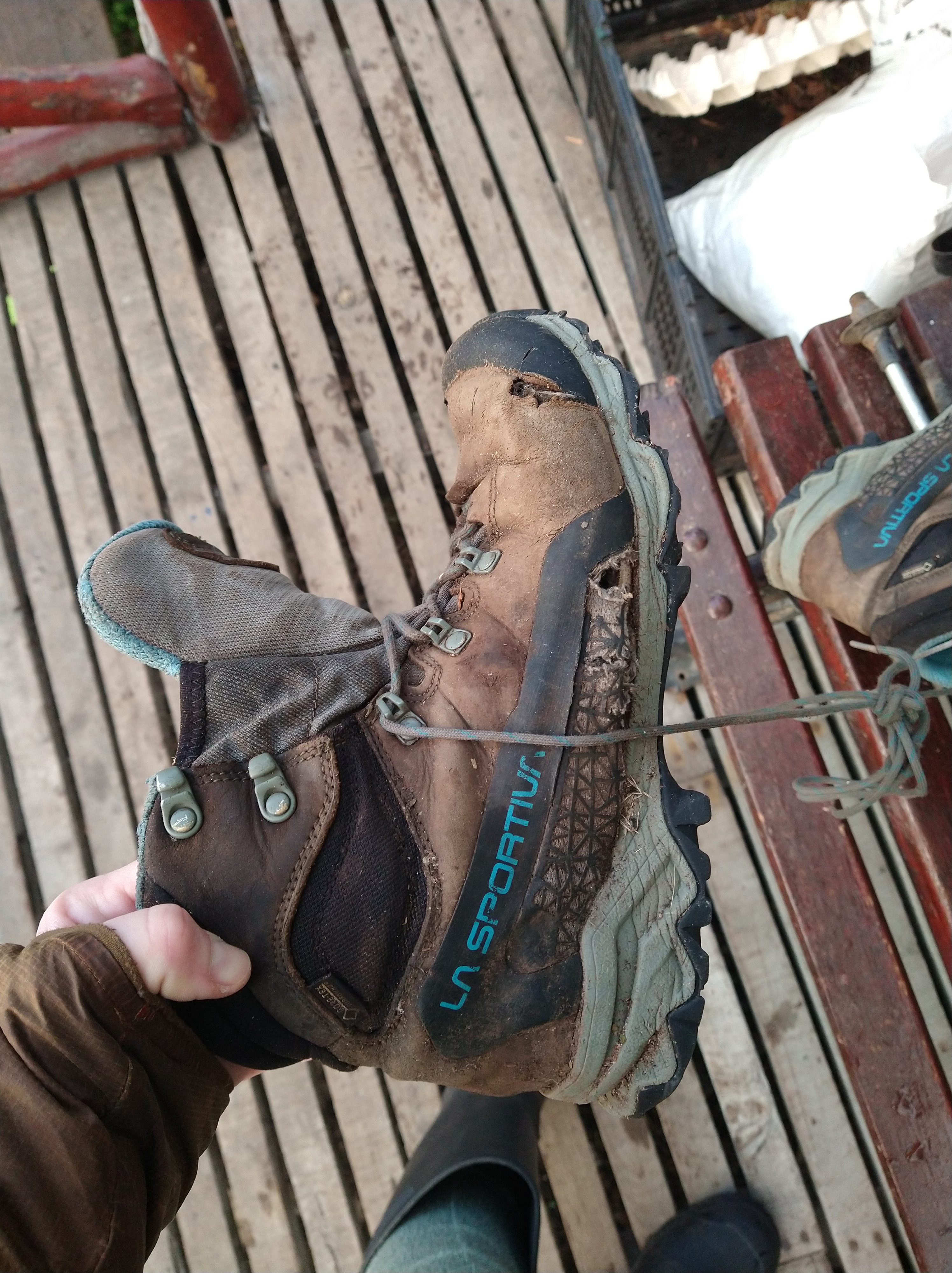
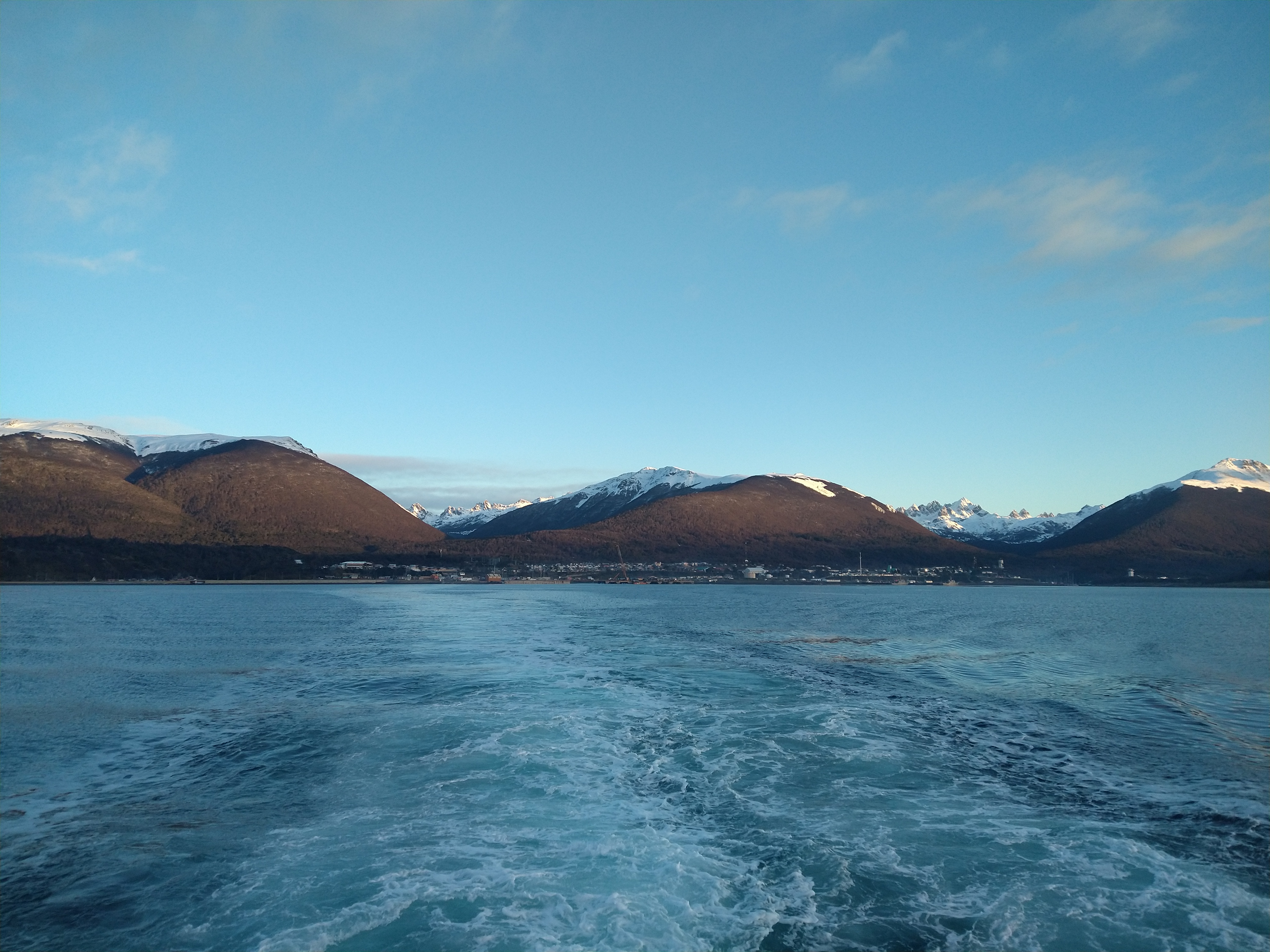
From there, we simply packed Savannah back up. Mila, our porch dog friend, was sad to see us leave. It seemed like she knew it was goodbye as we were packing our things. I decided to retire my hiking boots down there since this would be their last hurrah and they were now barely functional. It was a somber day when the ferry arrived. We were certainly exhausted from the effort of the study, but the place kind of started to feel like home. We did have a pretty special send off though… As the ferry passed through the beagle channel, dozens of humpback whales were breaching. We squealed with excitement as they would surface right next to the ferry! What a spectacular farewell!
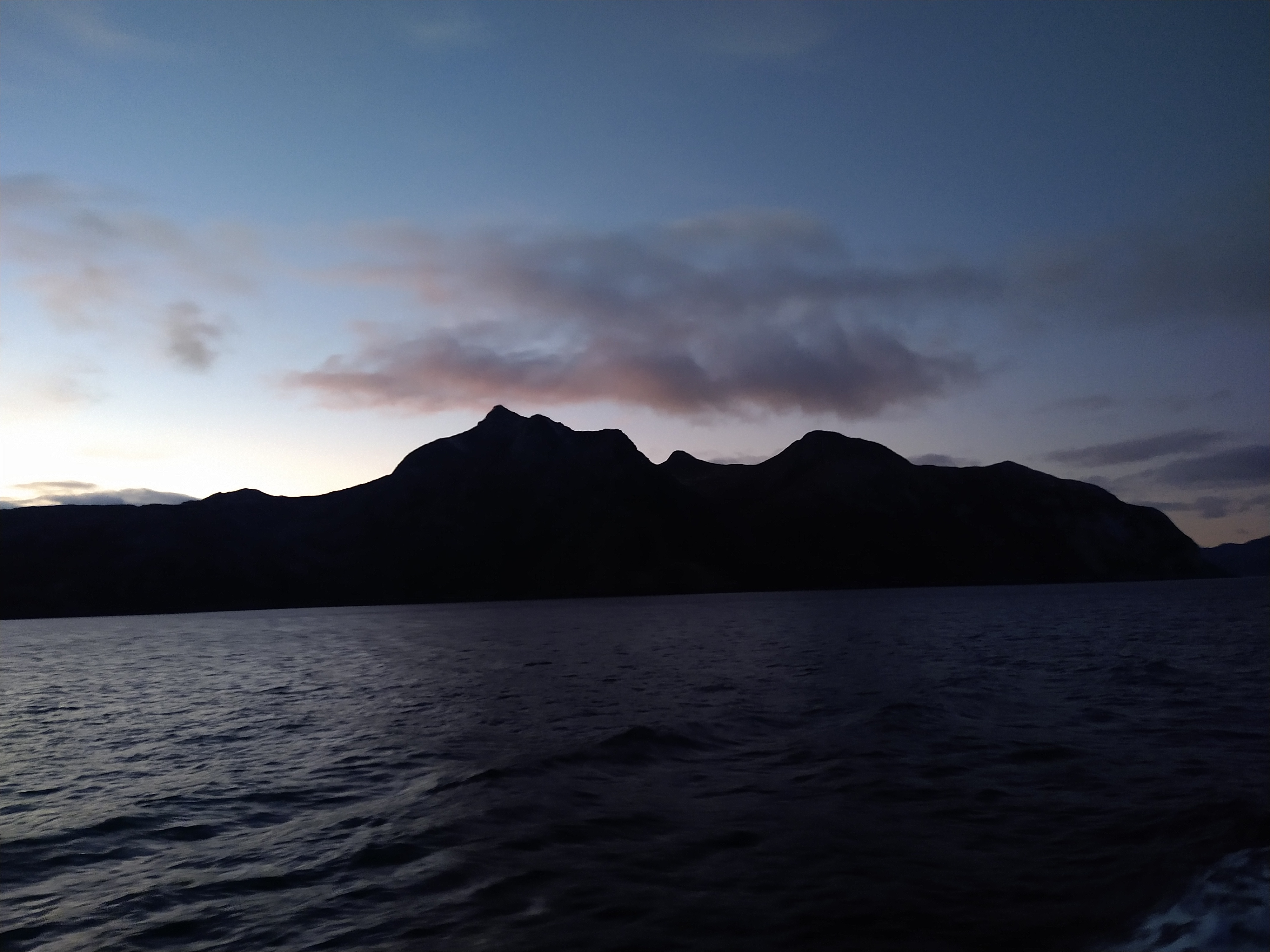
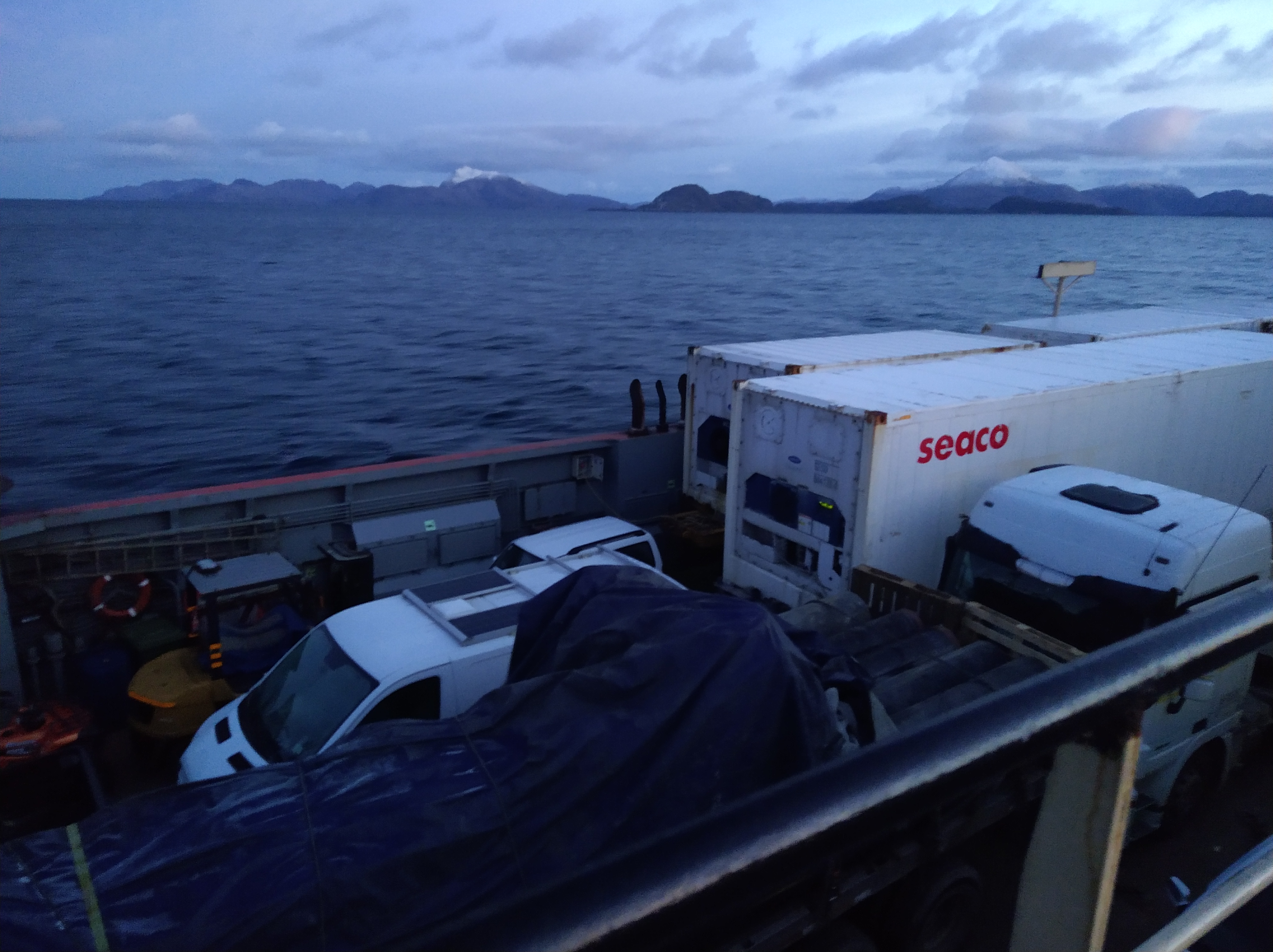
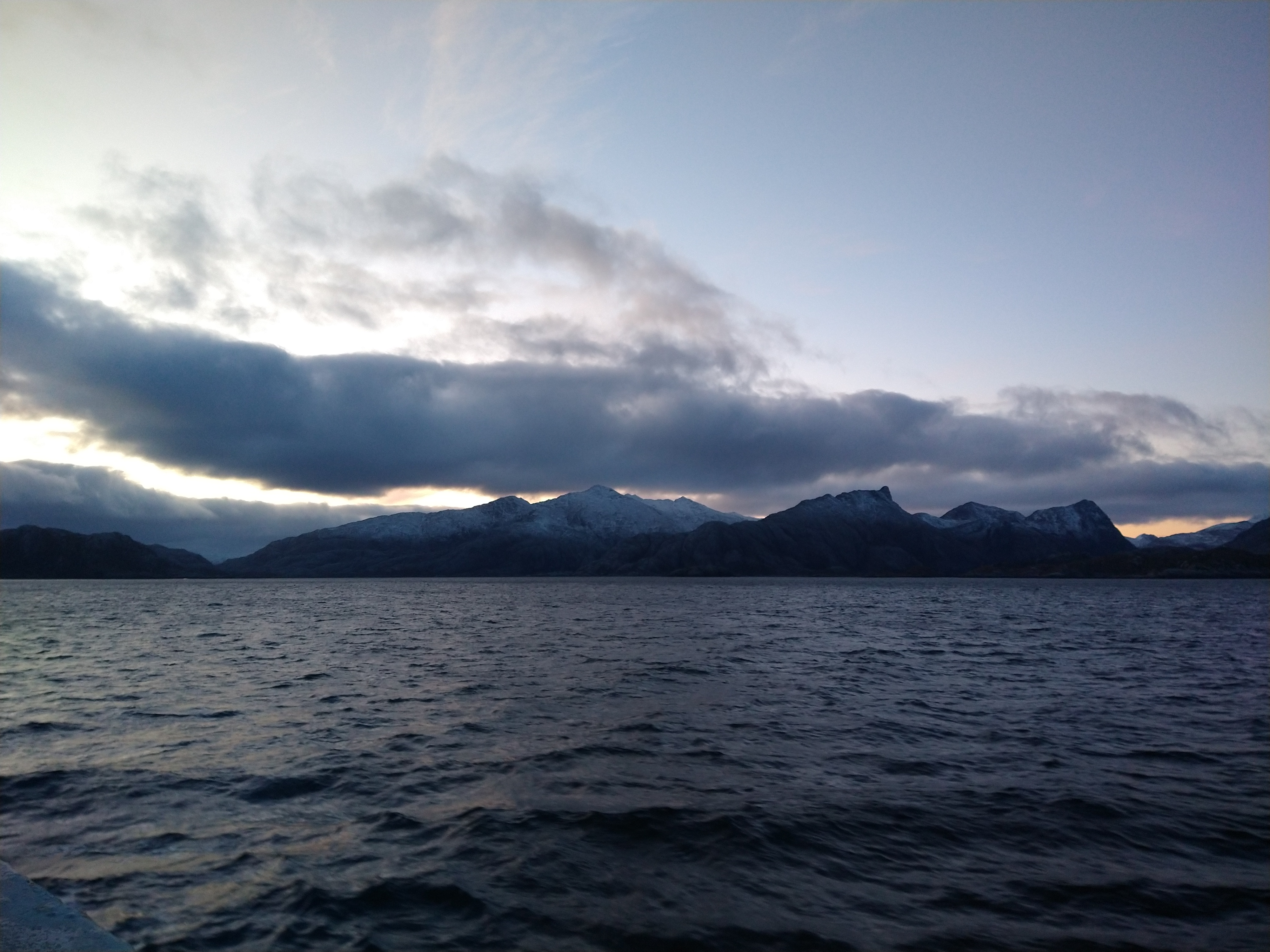
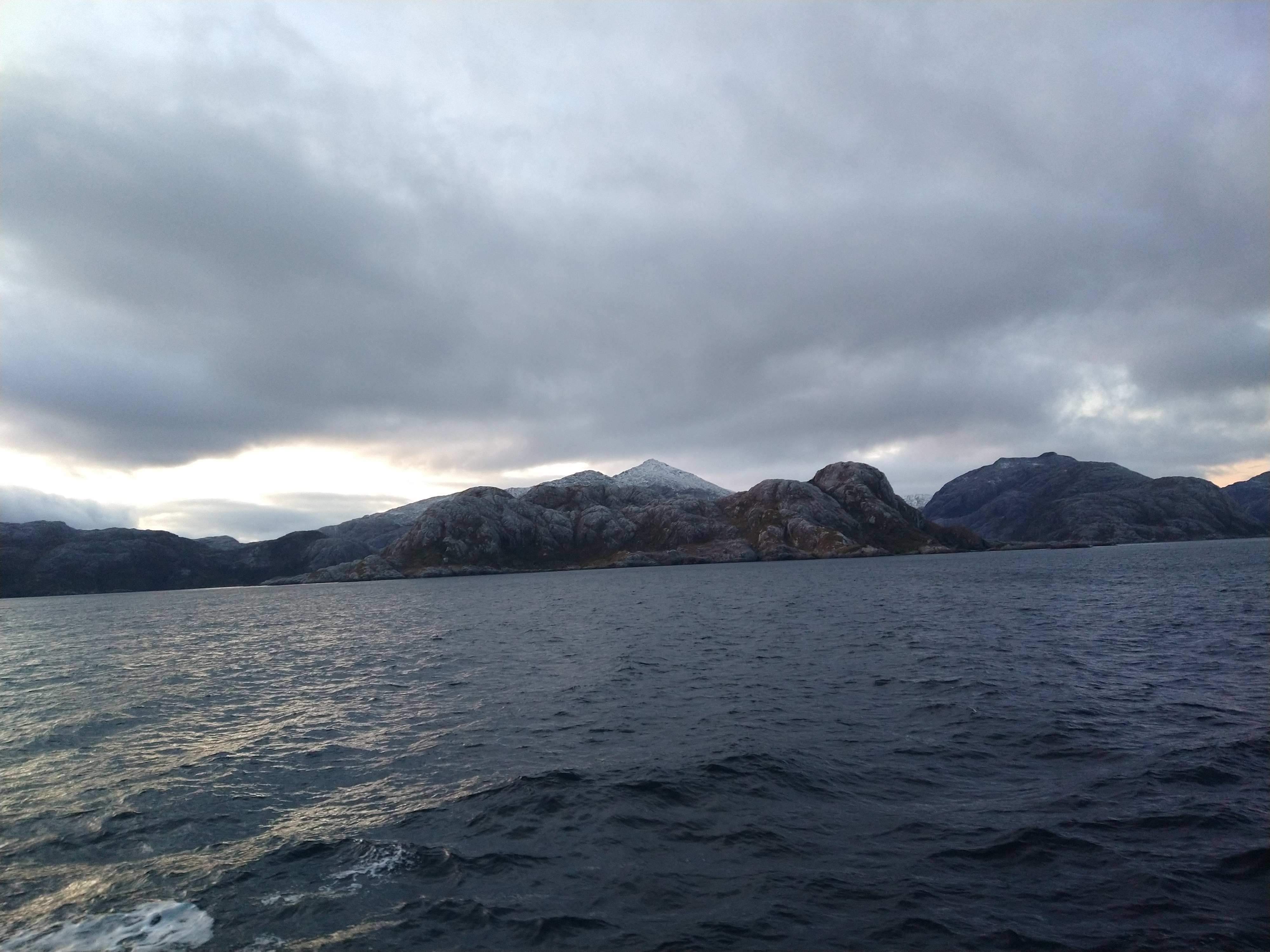

In closing, some stats on the trip:
Total days in the CHBR: 84 days
Nights spent in a tent on a trek: 22 nights
Approximate distance trekked: 250 kilometers
Number of Sampling Sites: 28 sites with paired camera and eDNA water sampling
Liters of water pumped: 84 liters

Apart from the project ending on Navarino Island, my journey South has come to an end as well. I’m currently neck deep in paperwork trying to import Savannah into Chile, where she’ll be parked in Punta Arenas until I return from Germany (in about 2 years). It’s so far been successful but at a slower rate than I had hoped. I cancelled our tickets home to NY and am waiting to pick a new date until the paperwork is finalized and Savannah is parked safe with a friend. The feelings around the closure of this chapter can’t be put into words. It was the best and hardest thing I’ve ever done, and I’m so grateful I decided to pull the trigger and go for it.
Until the next adventure, cheers! And, if you’re gonna get it… take it big!
Final map of campsites, here!

 kelwill
Oh my gosh, Kelly Elizabeth Williams…..what a long and winding road you have traveled through South America. Hard work and some rest makes Kelly a happy girl! I’m sure your parents are disappointed that you aren’t home yet. I really hope you will be able to get home before heading to Germany. God speed, stay safe and know that you have a whole lot of people that love you and admire the heck out of you! Love you, Kel Kel!
LikeLiked by 1 person
Oh my gosh, Kelly Elizabeth Williams…..what a long and winding road you have traveled through South America. Hard work and some rest makes Kelly a happy girl! I’m sure your parents are disappointed that you aren’t home yet. I really hope you will be able to get home before heading to Germany. God speed, stay safe and know that you have a whole lot of people that love you and admire the heck out of you! Love you, Kel Kel!
LikeLiked by 1 person