The Navy trip to the islands of the Cape Horn was something we were especially looking forward to and felt very fortunate to have an invite. Well, sort of an invitation, as it turned out many of the Navy officers on the ship asked us how we ended up being able to join them. Networking is a wonderful thing and opens opportunities I never knew existed. Through working with a professor at the University of Magallanes, who had also traveled with the Navy in the past, she was able to apply for a permit for us to go and set up trail cameras and take water samples at 7 different sites along the Navy’s restock mission. Basically, each main island in the Cape Horn has a Navy station with a lighthouse to respond to ships passing by. Since the Cape Horn has such a foreboding reputation, as does the Cape of Good Hope around the horn of Africa, these stations need to be operated 24/7/365 for any ships passing by to get updated weather information. One family, typically a male Navy officer and his wife and kids, live on this island for one year. The family lives in complete solitude except for the bimonthly resupply of food, fresh water, gas, and other consumables. On these trips, maintenance on water pumps and generators would also be completed.
In the days leading up to our departure, we prepared sampling kits for each island and fine tuned the water pump. It was unclear how long we would be out with the Navy, they estimated about a week. We studied maps to try to get an idea of where we could find water on each island. Some appeared to have rivers and streams, but others looked like they may just be a big chunk of rock. The day before we left, they asked if just one of us could come on the trip, preferably “the male”. Unamused that it was assumed that “the female”, me in this case, was not the one leading the project, I was annoyed but tried to understand. Perhaps it was a dorm issue where there was not enough room for a mens dorm and a womens dorm. Eventually we worked out that both of us could come along, and that I was leading the project and really needed assistance to be able to complete the sampling.
We boarded the ship in the evening and got a quick tour of the vessel. Nacho would sleep in the mens dorm down in the haul of the ship and I would be sleeping in a temporary womens dorm that was set up in the infirmary. The infirmary was a much roomier habitation, since it was meant to care for anyone who got ill or hurt on the trip. I shared the room with another woman who was traveling with her husband from New Zealand. He was an older artist who was doing watercolor paintings of the Chilean coast. Besides these two, there was one other non-Navy guy on board who was a photographer currently living in Germany, though from Chile. The 5 of us would usually eat meals together and converse in English since it was what we all could have in common.


The first night on board was a rough night at sea as we skirted Navarino Island on the West side and continued South to our first stop, the Island of the Cape Horn. I was in a top bunk, as usual. As the ship heaved and tipped, I was worried I might roll out of the bunk! I hooked my toes around the chains that held the top bunk in place and tried to starfish. I could hear items get tossed around in the boat and wondered how Nacho was fairing in the dorm below. The next morning I learned that he too got tossed about that night, and that he was a bit concerned with how much sloshing of water he heard in the floor below. Apparently the freshwater is kept below the floor he was sleeping on, but at the time he wasn’t sure the source. The woman whom I was sharing the room with expressed her discomfort and said, “This is a nightmare!” From then on, we secretly referred to them as the nightmare couple who seemed to maybe not have been quite ready for an adventure at sea.
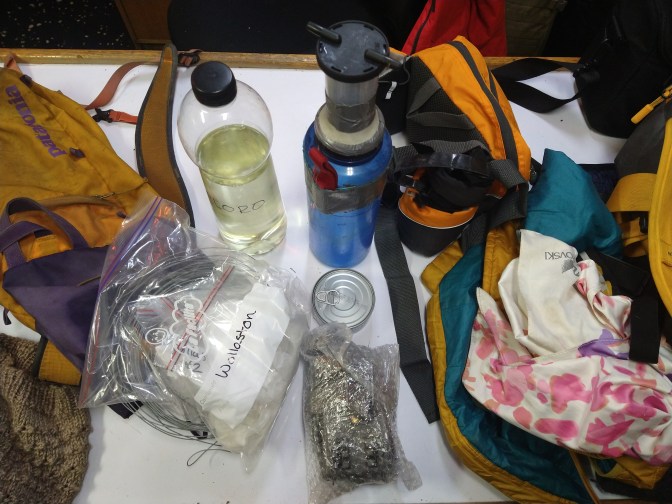
Unsure of what exactly awaited us out there, we tried to be as prepared as possible and start to implement what would be our routine for the rest of the sampling sites. We geared up with cold weather gear after experiencing the wind and rain up on deck. For each sampling trip I packed my yellow daypack with the water pump and bottle, a kit of funnels, filter paper, tubes, and gloves, and a water bottle filled with tap water for a negative field control (to monitor for contamination in field). In Nacho’s daypack pack: a can of tuna to set as a lure in front of the camera, a wire or nail to set the bait, a tomahawk to nail it, his first aid kit, and a radio. Before each stop, Nacho would go up to the main deck and talk to the captain to get the details of our arrival time and how much time was expected for the day. We were also then given a radio for them to keep tabs on us and where we were on the island. On the sheet where the radio checkouts were recorded, our radio was assigned “Science Team.”
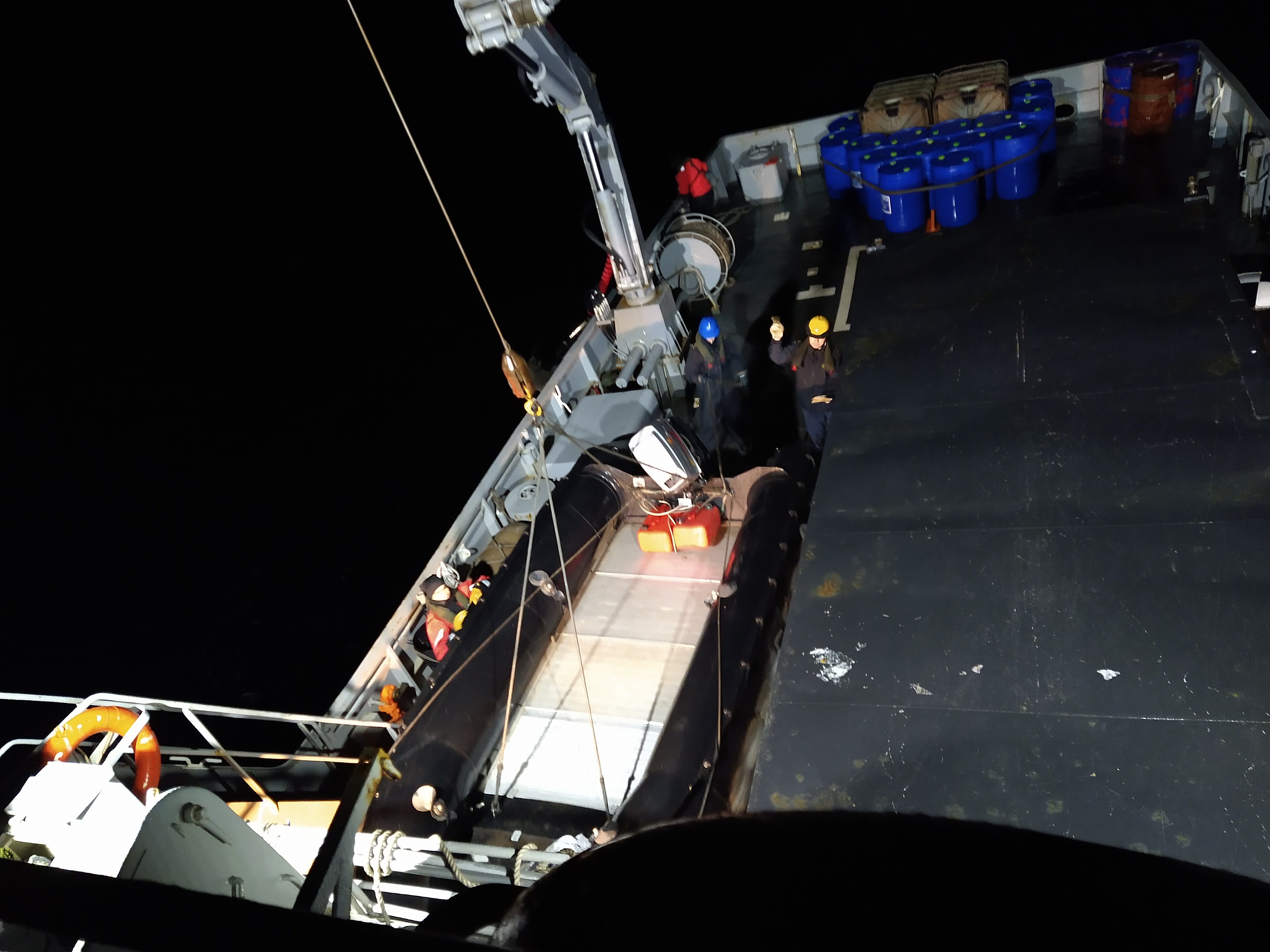

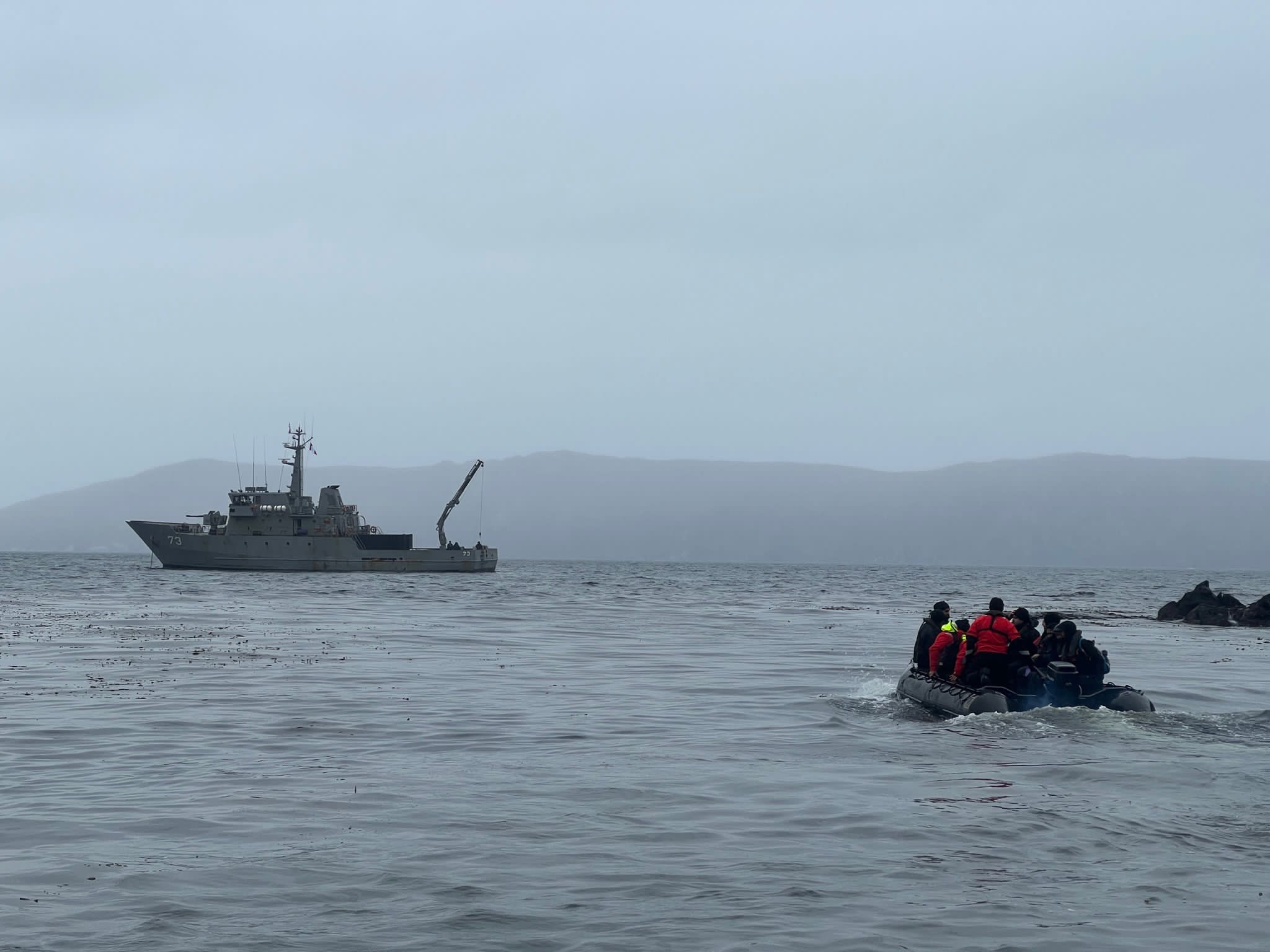
We were told to be ready to disembark from the ship at dawn, around 7 AM. As we stepped out onto the back deck, we watched as a crane lifted a black dingy (inflated raft with a motor) up and over the side of the ship. I’m not sure what I was expecting, but it wasn’t a dingy. I guess I thought the Navy posts had docks that the ship would dock at. I was excited and pleased with the addition of more adventure. Once the dingy was in the water, the Navy guys began to load up people and things that were going to the island. Sometimes we would go on the first boat, other times other things took priority, and we waited a bit until one of the two rafts had room. To get to the raft, you needed to swing a leg up and over the side of the ship, get footing on a slick rope ladder, climb down, and time the last step off the ladder and into the boat with the waves. I probably haven’t climbed up or down a rope ladder since getting into my tree fort as a kid!
It was a fast buzz over to the island from the ship and soon we were hopping off onto the shore of Cape Horn Island. It was just becoming light enough to see the landscape. The wind howled and spat rain at us, it had a very much end of the world vibe. It was incredible. We walked around the trail of the island; it was so much more barren than I imagined. Not for lack of plant life, but it appeared that besides birds, the environment was too harsh for much land life. A large albatross statue sat above the Navy home next to a poem written about the sailors lost at sea. The poem described how the souls of the sailors were carried in the wings of the albatross and helped them reach the afterlife. It was a reminder about the intensity of this place in the world.
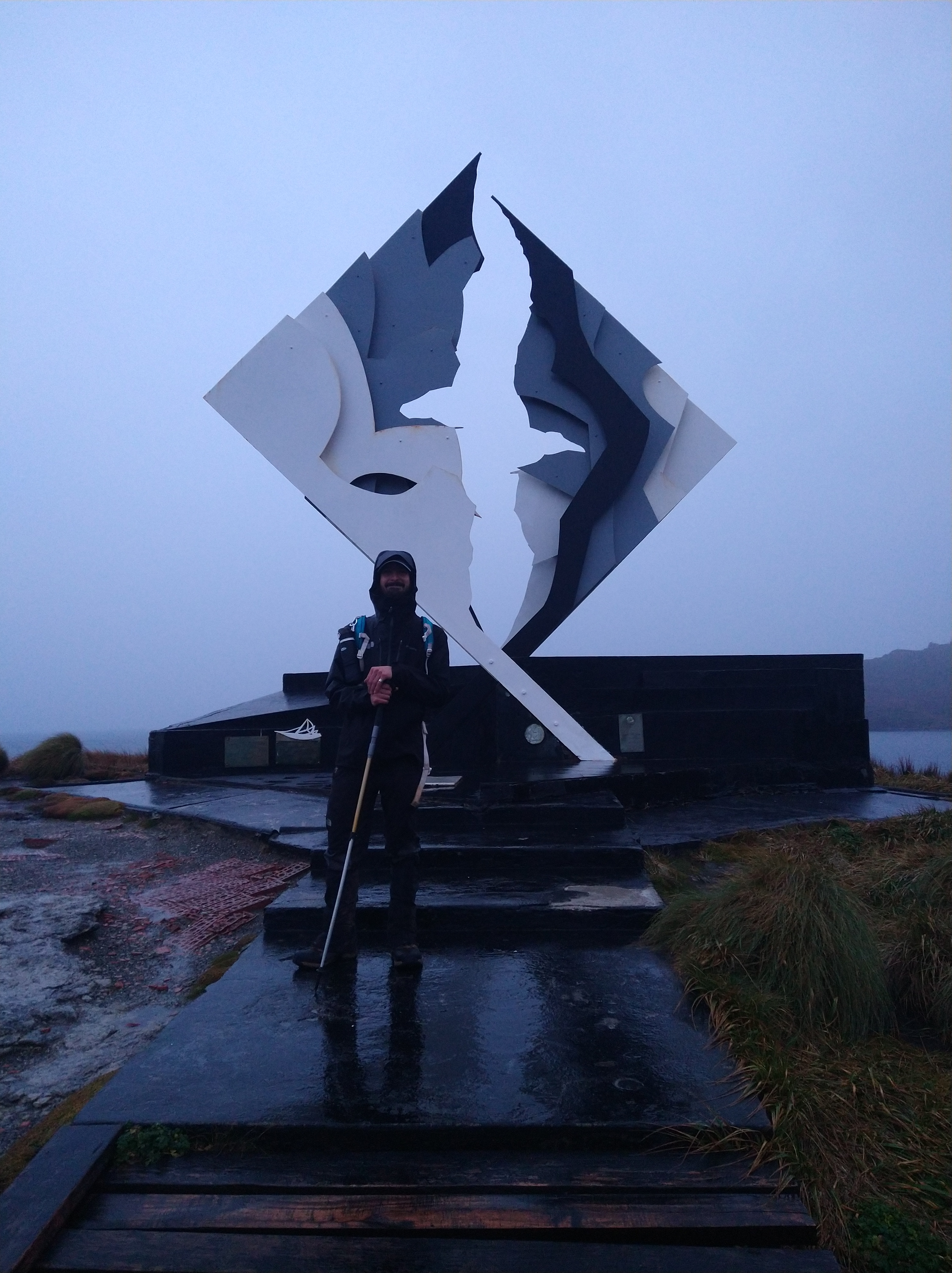
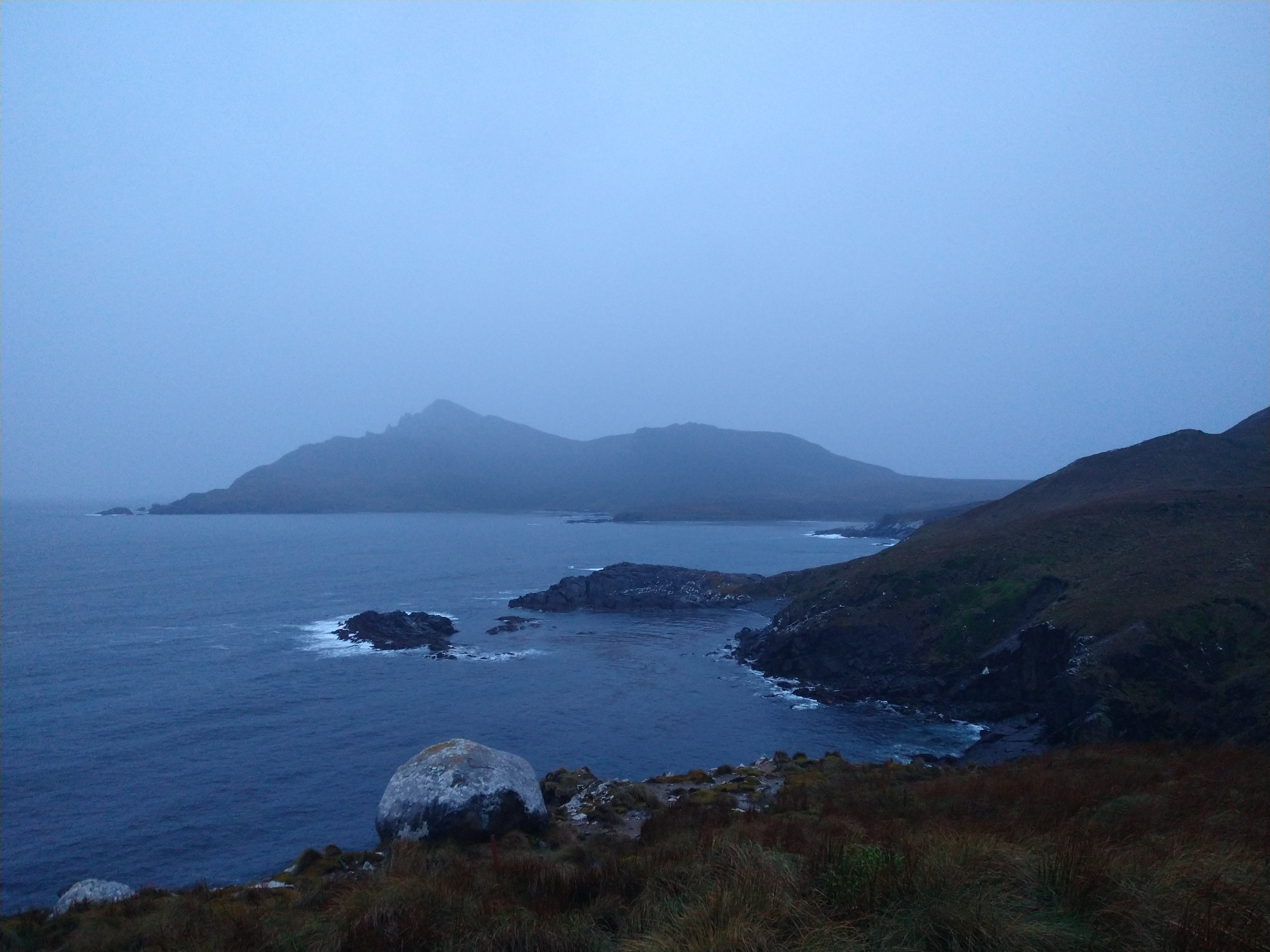
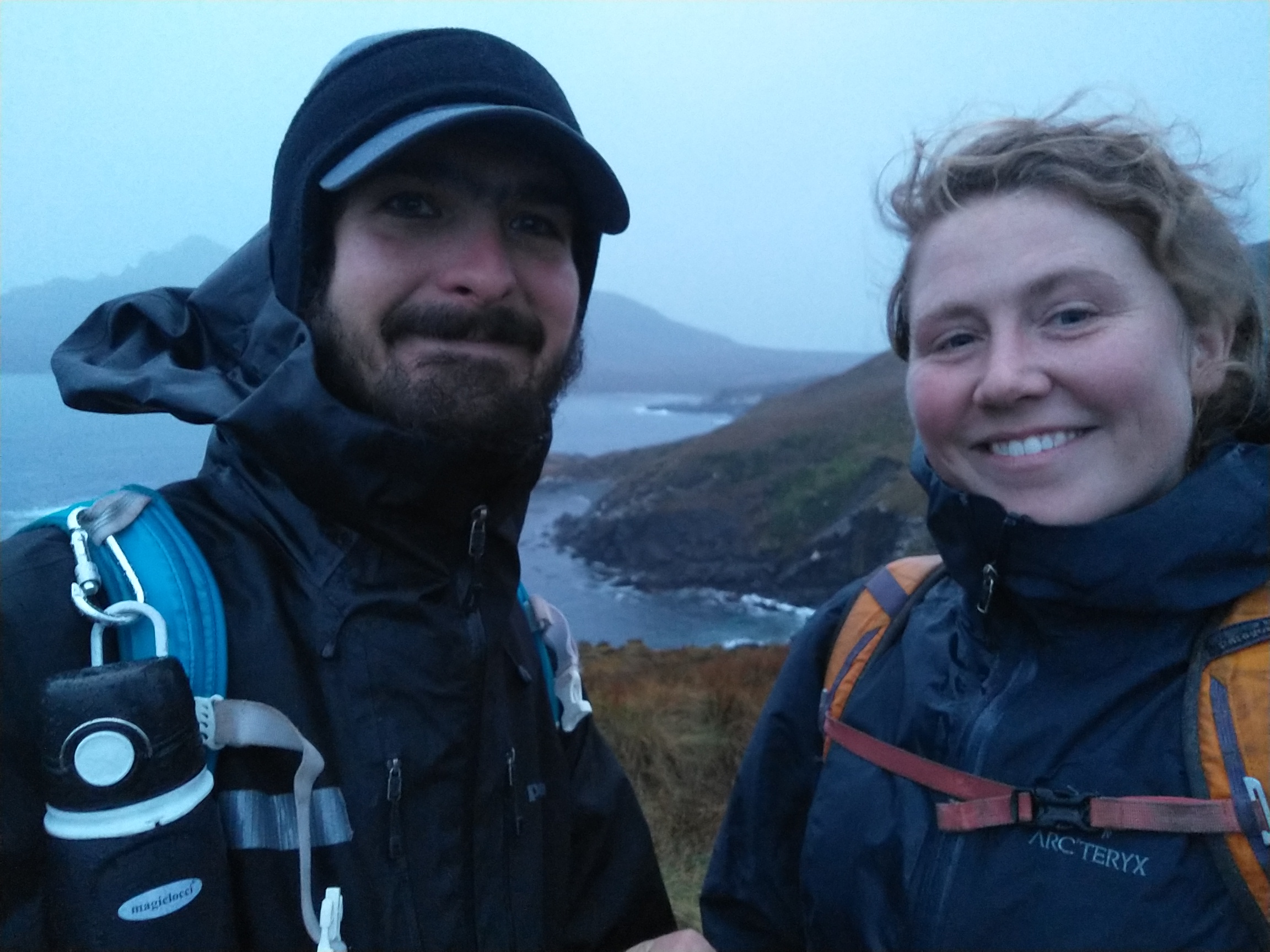


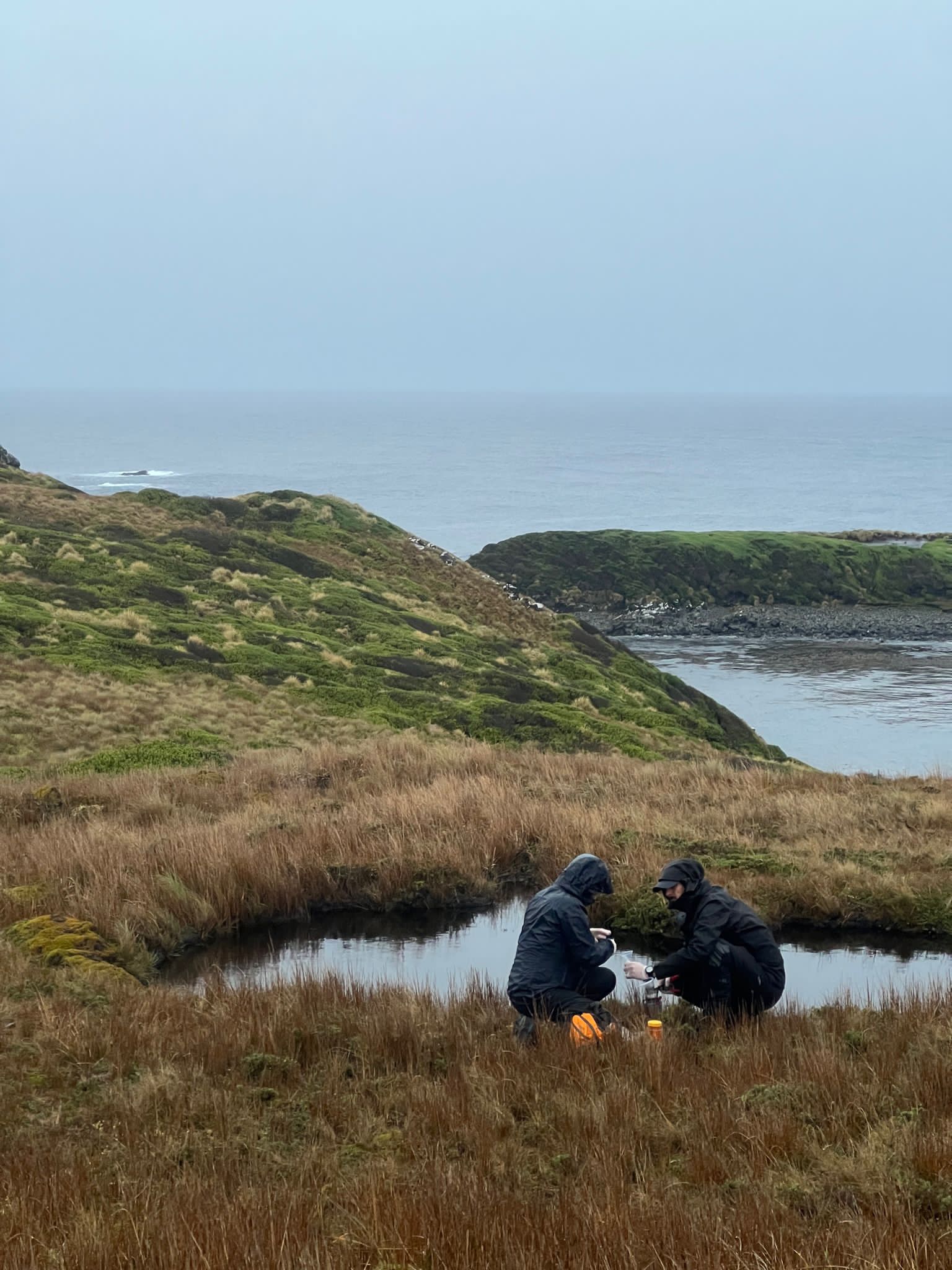
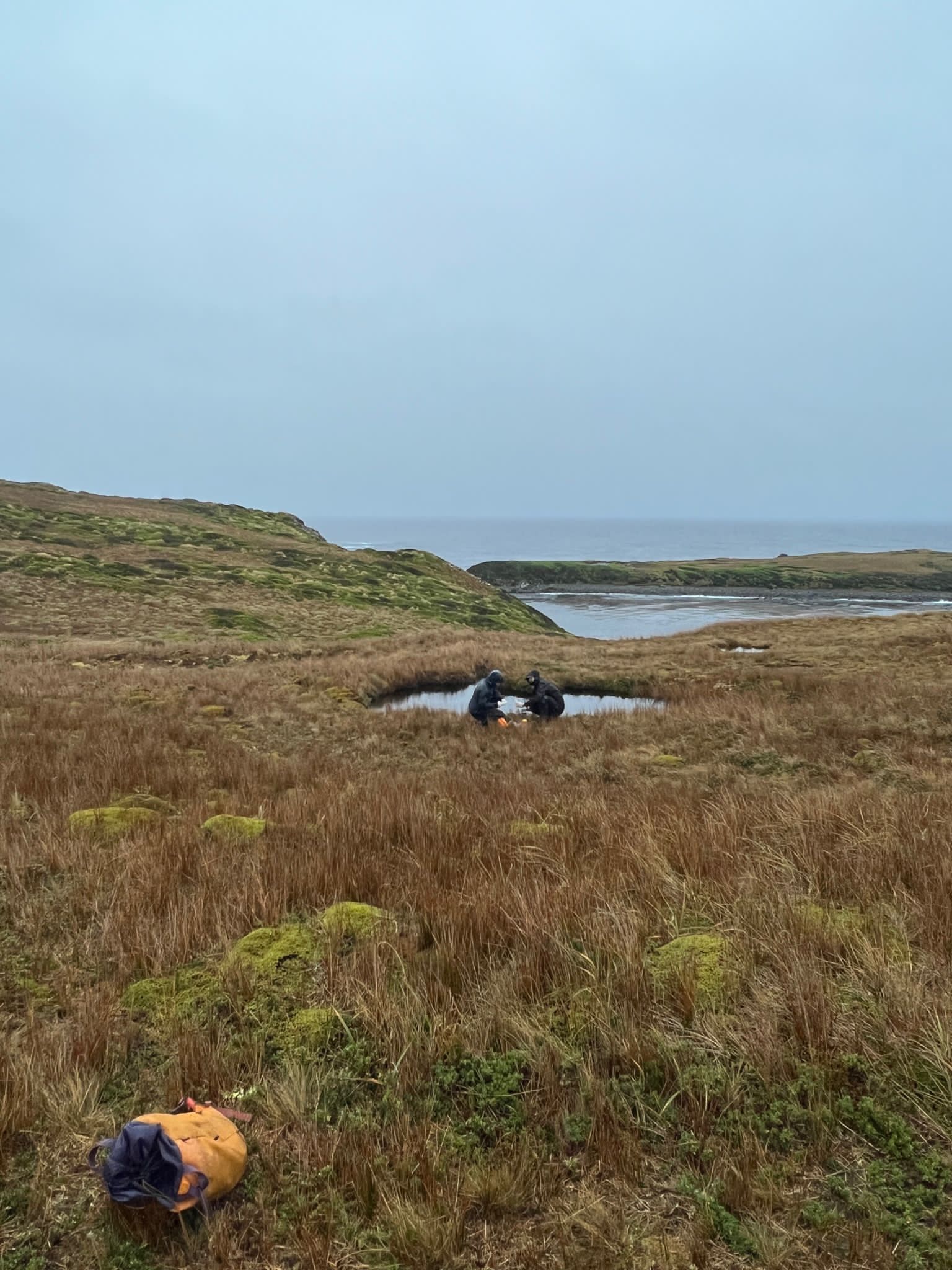
There didn’t appear to be a whole lot of water on the island, at least in the proximity of the station where we had time to explore. I would have loved to be dropped on that island for a few days and check out the mountains across the bay. We settled with a small lagoon to get to work, which was actually just next to the boardwalk. I realized I made an oversight in our plan. There weren’t really any trees on the island to attach the cameras to, only some low brush that would be blown with the wind too much. I should have thought to bring stakes to secure the cameras. We improvised and set the camera on one of the supports beams of the boardwalk. Not ideal, and people walking the boardwalk would trip the camera. But not many people would likely be visiting the islands in the next month, especially in the winter. Once the camera was set, we started water sampling. We had nailed down a routine to make sampling quick and efficient. Nacho would assemble the brake pump to the water bottle with the silicone tubing, then attach the sterile funnel I’d give him from the kit to tubing that attached to the water bottle. While he did this, I’d fold the cellulose nitrate filter paper into quarters, then use sterile forceps to arrange the four triangles of the filter paper tightly into the funnel. The goal was to pack the funnel tight enough with the filter paper so that pressure could build, and all water would interact with the paper therefore catching any DNA in the sample. I would then hold the funnel with the filter paper in the water while Nacho pumped the brake pump to build pressure and draw the water through. The German photographer snapped some photos of us at work, and from the photos we look focused. But in truth we were usually cracking jokes or Nacho would be singing the Black Eyed Peas “Pump it” song and try to pump as fast as he could before his forearm was burning. We filtered 3 liters of water per site and returned the filtered water back to the source. This was important, since it is highly regulated to take any biological samples away from the islands, even water. The only way we got the permit to work here was to specify that we were just filtering the water and taking the filters with us, not the water itself.

After we finished at our sampling site, we poked around the quarters of the Navy officer and family. There was a communal room with information about the lighthouse and work that was done in the Cape Horn. There was also a small church built next to the house. This ended up being true for each island, the house was always accompanied with a church. While the Navy guys hauled stuff from the dingies to the house, the captain and his family (kids and all) visited with the family residing on the island. It seemed important to include the benefit of a social gathering as well, for the adults and the kids. They shared a meal and sat around the table catching up for a few hours. Once the work was done, the captain and his family would be the first to head back to the main ship. We all gathered on the beach to start taking turns getting rides back to the ship and watched as the dingy motor died with the captain and his family aboard. The other dingy came to the rescue and everyone hopped from the broken boat to the functional one, it was quite an ordeal! It took a bit longer to shuffle everyone back to the ship now only having one boat, but by midday we were back on board and headed towards the next stop, Wollaston Island.


Between each sampling site, I needed to sterilize the equipment to make sure we didn’t get cross contamination between each island. To do this, I’d soak the pumping equipment in bleach, then rinse with tap water and then ethanol. Wollaston was in the same island chain as Cape Horn, so within an hour or so we’d be at our next site.
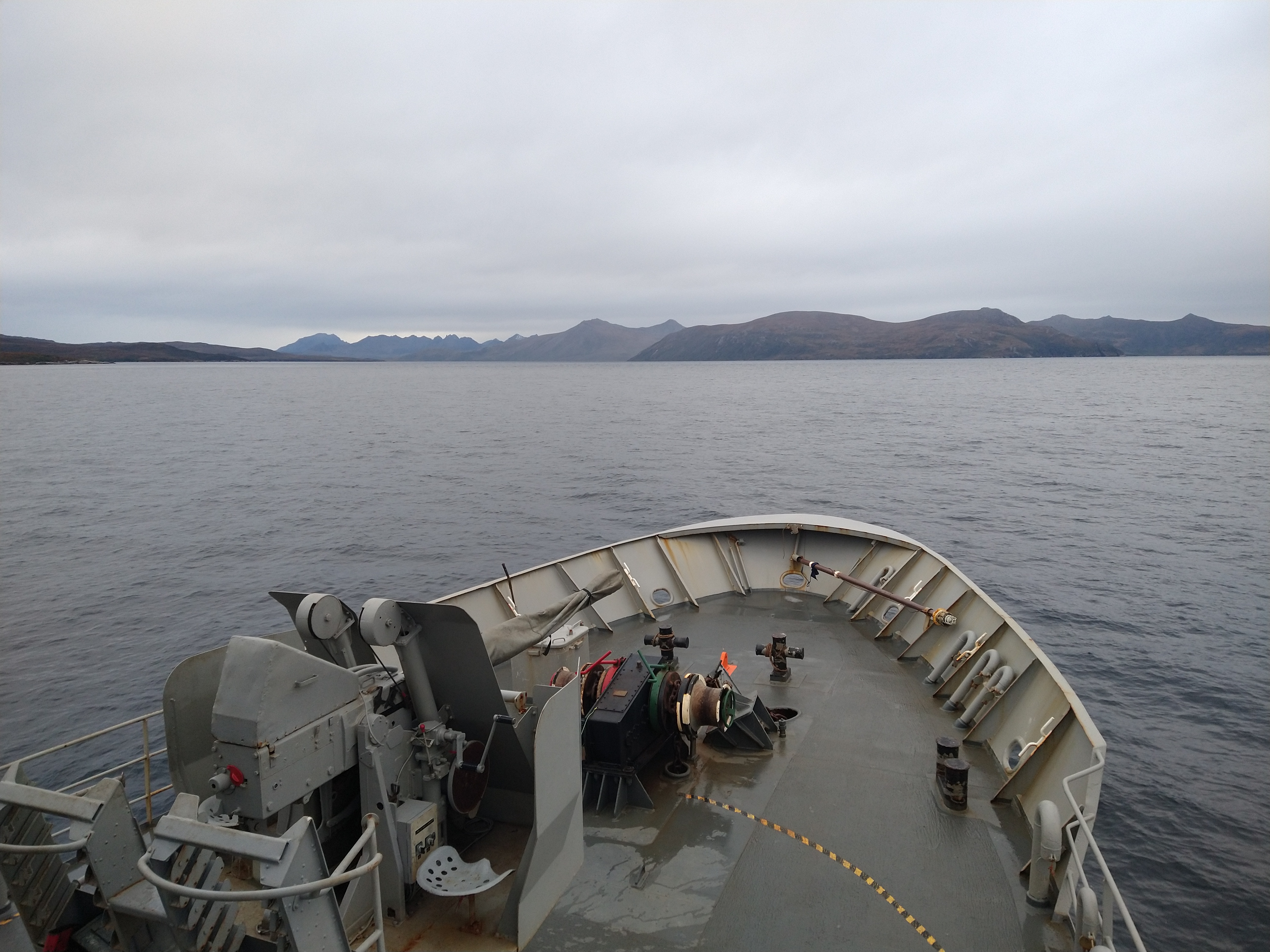
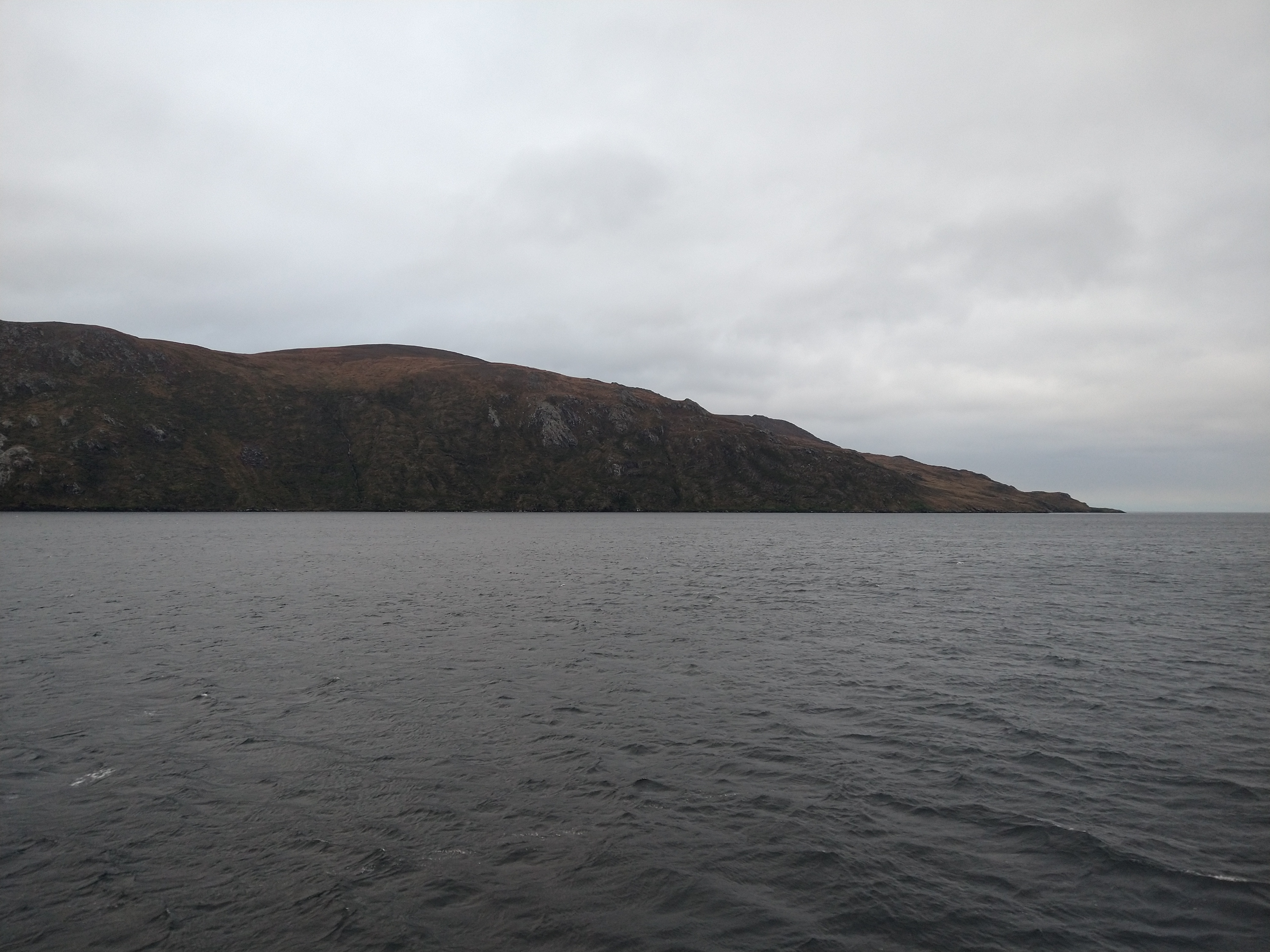
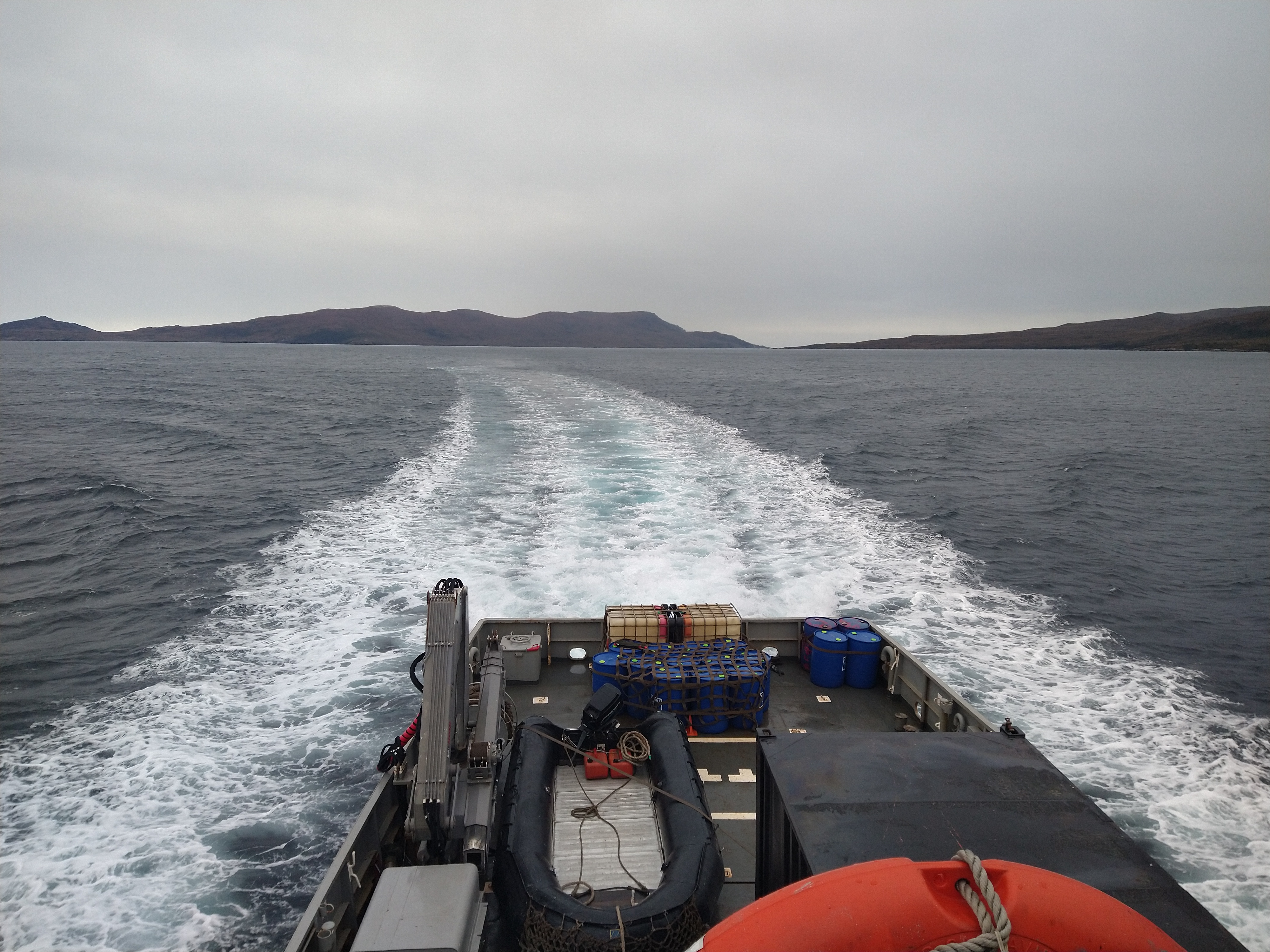
Once the equipment was ready and the bags were packed with the next water sampling kit and trail camera, we spent most of the ride outside on the upper deck. Despite the rusty appearance, the ship was fast. Its name was “Isaza,” and a mean looking barracuda illustration was her logo. We cruised by islands of steep rock rising from the sea. They had sort of a lonesome draw to them. Besides Antarctica, this was the bottom of the world. Though barren looking across the grey of the sea, the Cape Horn was teaming with birds. We watched Albatross soar alongside the ship, they were huge. I can understand now why the poem at Cape Horn Island proposed that these birds represented the souls lost at sea.
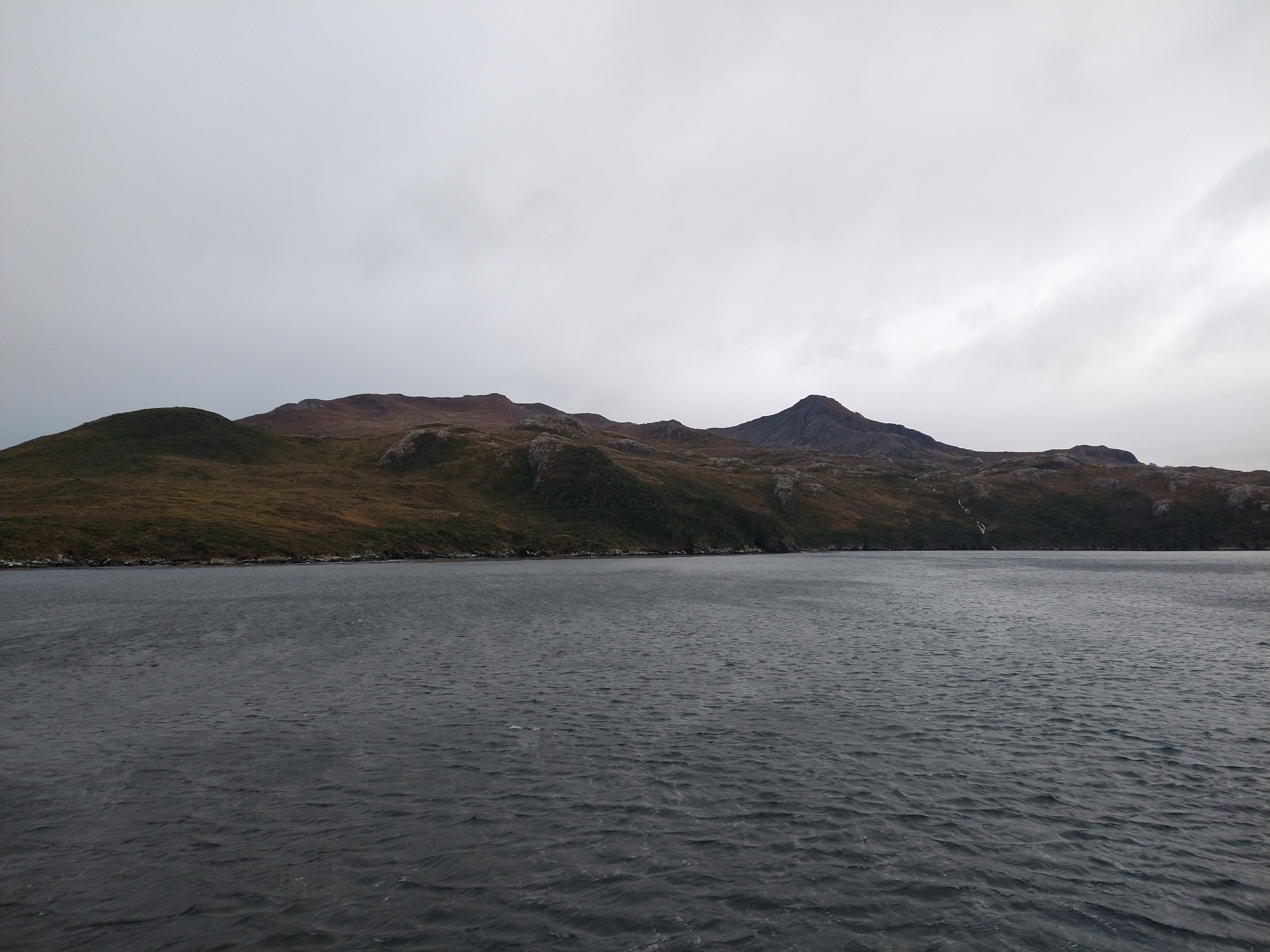
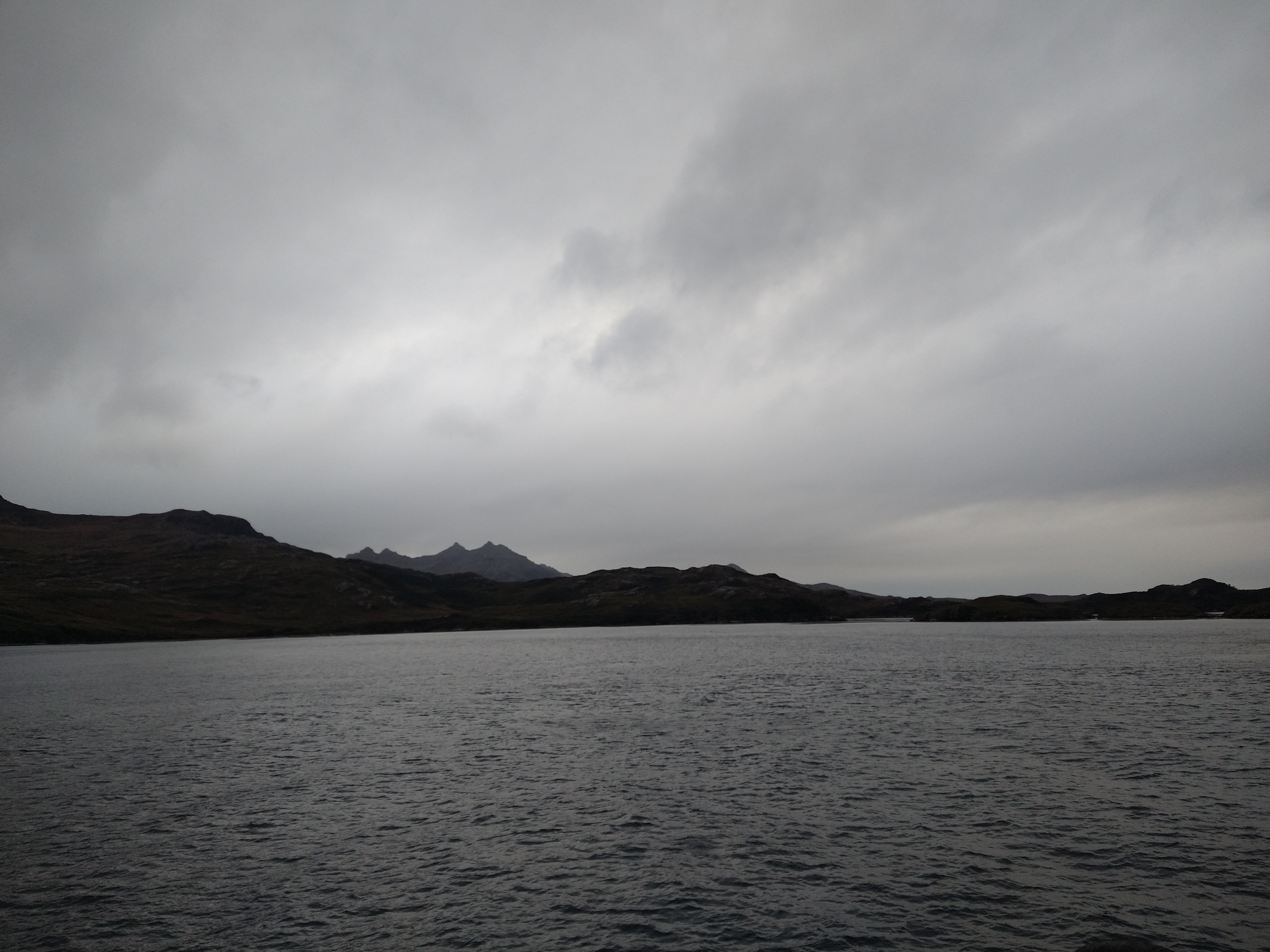
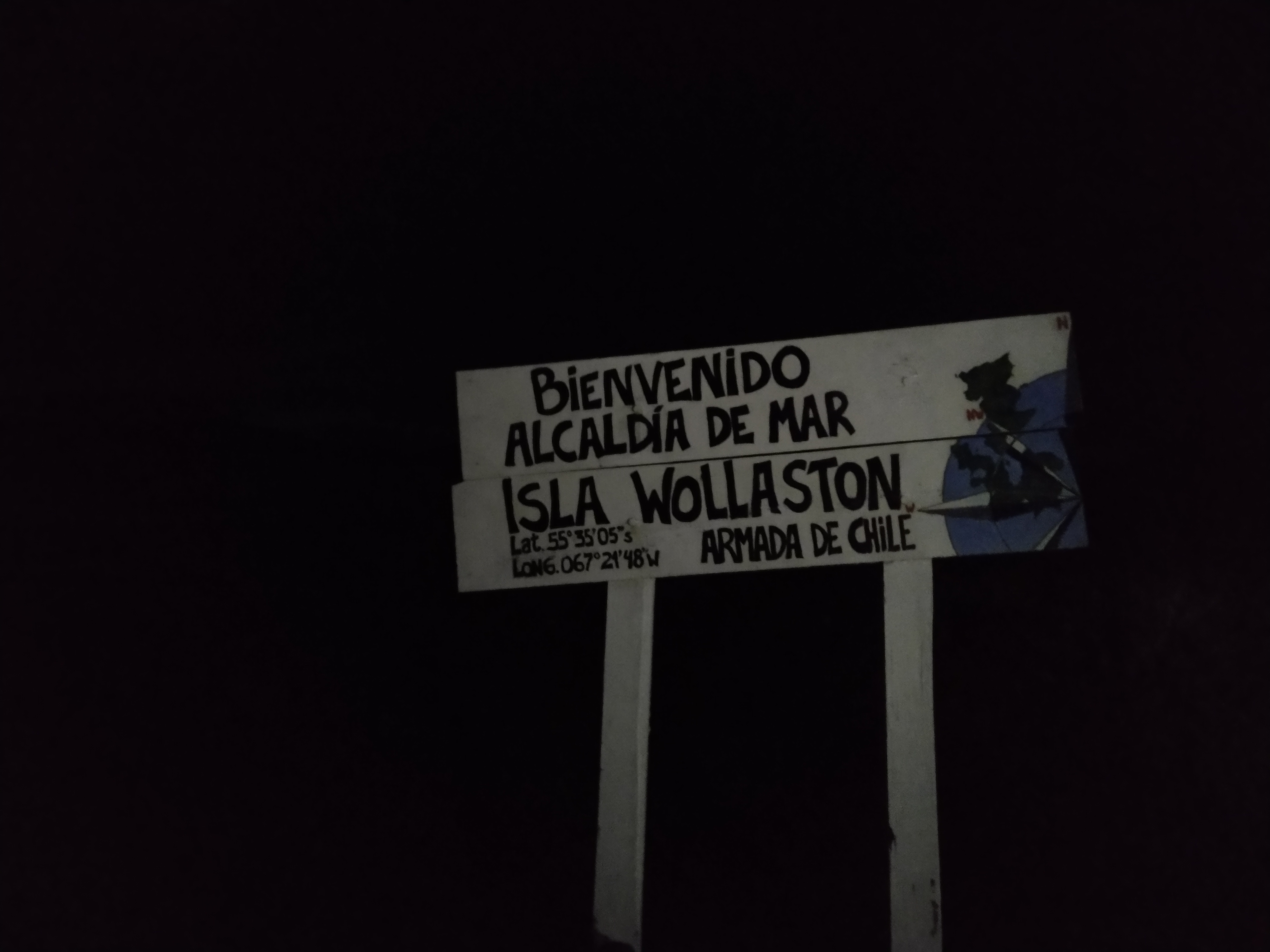
We arrived in a bay at Wollaston in the evening, climbed over the side of the ship into the dingy, and sped off to the island. Whenever we’d arrive, Nacho would speak with the Sea Mayor (Navy officer in charge of the island) and explain the study and that we’d be leaving a camera trap on the island. It would be picked up in August by the professor supporting this study. He’d also ask where would be the most likely place we could find water. This was especially helpful when we would arrive at an island at night, such as with Wollaston. Here we were told that there wasn’t much water besides shallow lagunas, which always had some pockets of water but could vary throughout the year. The local pet showed us the way to her drinking hole. She was a spunky Cocker Spaniel with a little jacket on to keep her warm. She trampled through the laguna before we sampled, hopefully she left some DNA behind to detect. We sampled into the night and set up a camera on a little stump near the laguna. After, we radioed in that Science Team was done and whenever there was room on the boat to let us know.


The Navy guys worked hard throughout the night, carrying up heavy propane tanks, boxes of food, lumber, etc. The meals throughout the trip reflected this, they were huge! And after seeing the intense physical work these guys did all day, it made sense. There were three squares a day. Breakfast included bread made onboard the day before, butter and jam… nothing special, but the lunches and dinners were huge. I usually could only eat half and gave my other half to Nacho. Meals ranged from soups, pork and rice, lentils, cooked vegetables, empanadas, and sometimes a desert like sweetened/soaked oats and apricots. I learned a cuisine tradition that is apparently honored throughout the entire Navy. Cazuela is a chicken stew with big chunks of chicken thigh, potatoe, carrot, and corn that is served every Thursday. This is to remember and honor the Naval battle of Iquique during the War of the Pacific, where the captain of the ship Esmeralda perished, and the ship sunk. Before the battle, on a Thursday, the crew ate this meal because the captain insisted that they be fed and full before they fought.
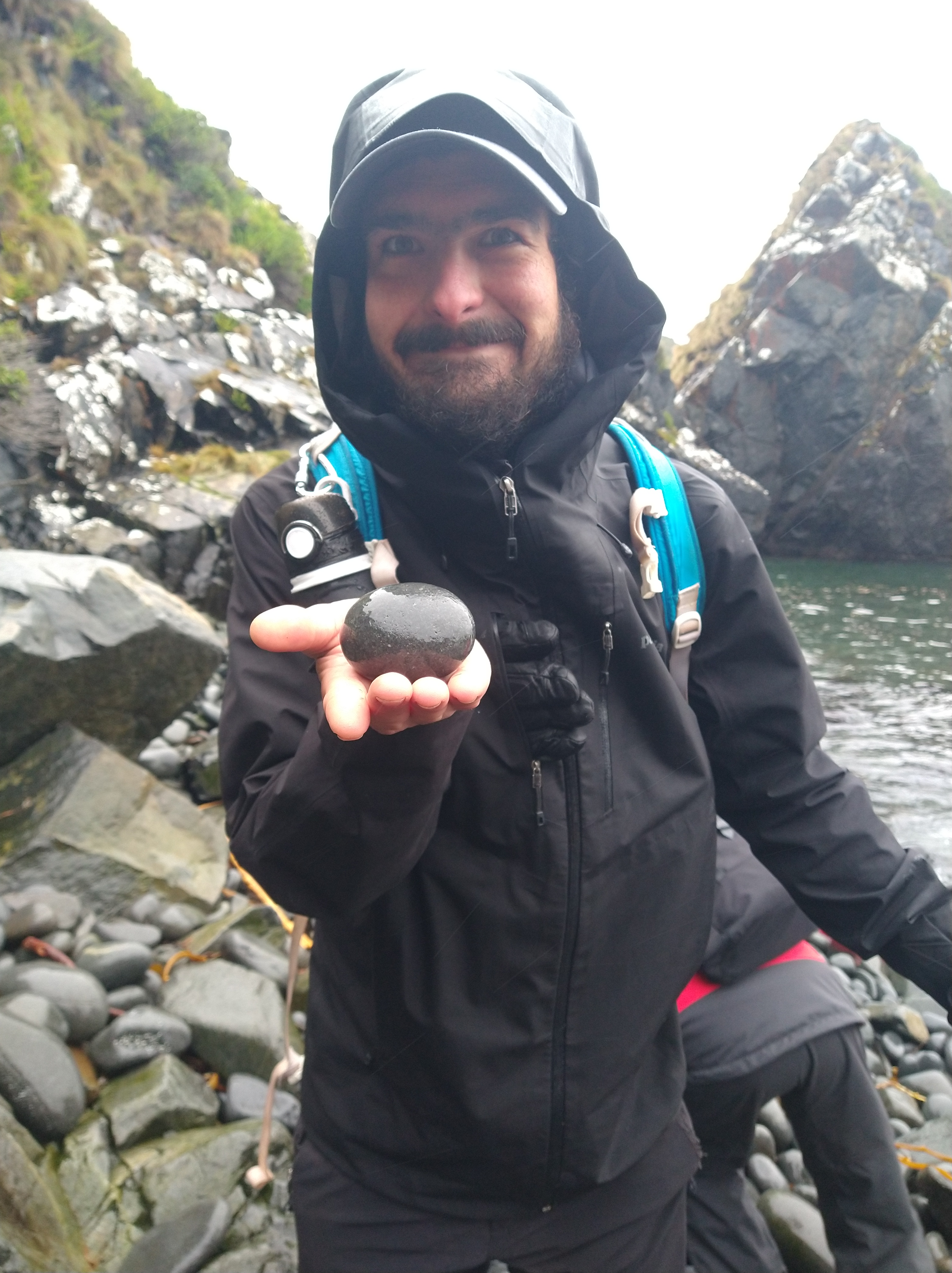
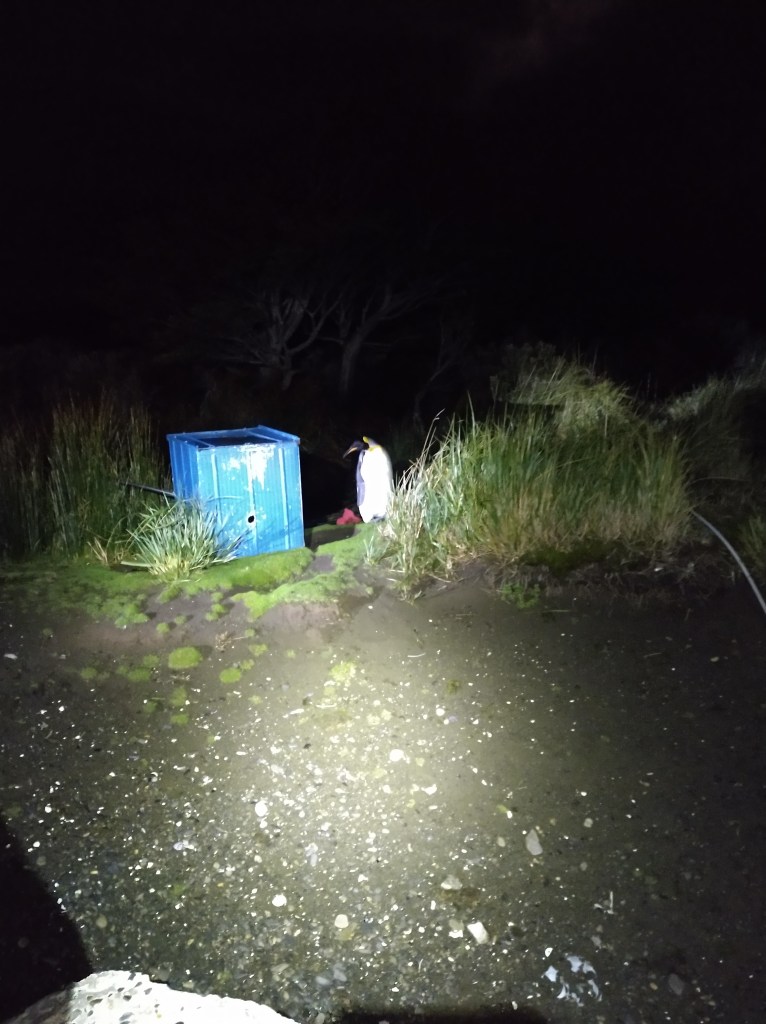
We found out that there were 2 shifts that the Navy worked in order to work all day and all night. Therefore, some stops would be in the middle of the night. We realized we would not be getting much sleep on this trip, except for naps between each stop. Around midnight we loaded on to the dingy to head to the next island, Isla Lennox. There was not a lot of work to be done here for the crew, we were told we had about 2 hours to complete the science we needed. The Sea Mayor here told us to follow a hose about half a kilometer where we would find a lake. We tramped through the swamp trying not to lose the black hose. Once at the lake, we saw lots of beaver activity. The grass here was unique as well, sort of like prickly short blades of grass that reminded me of golf turf. We could hear waves crashing on a coast nearby, but it was out of reach of our headlamps. We completed the sampling by 2AM and waited for a ride back. The guys picking us up were always super helpful and friendly, and often offered a hand to help us hop up into the boat. It was always super slick and kind of a big jump to perform while timing the tide, so the extra boost was always appreciated. Before we left, we met the resident penguin! Apparently this penguin was injured some years back and the Navy officer working the post nursed it back to health, so now he’s a common visitor. Once back on board, we sterilized equipment, packed bags for the next stop, and tried to get as much REM in the 4 hours we had until our next location.
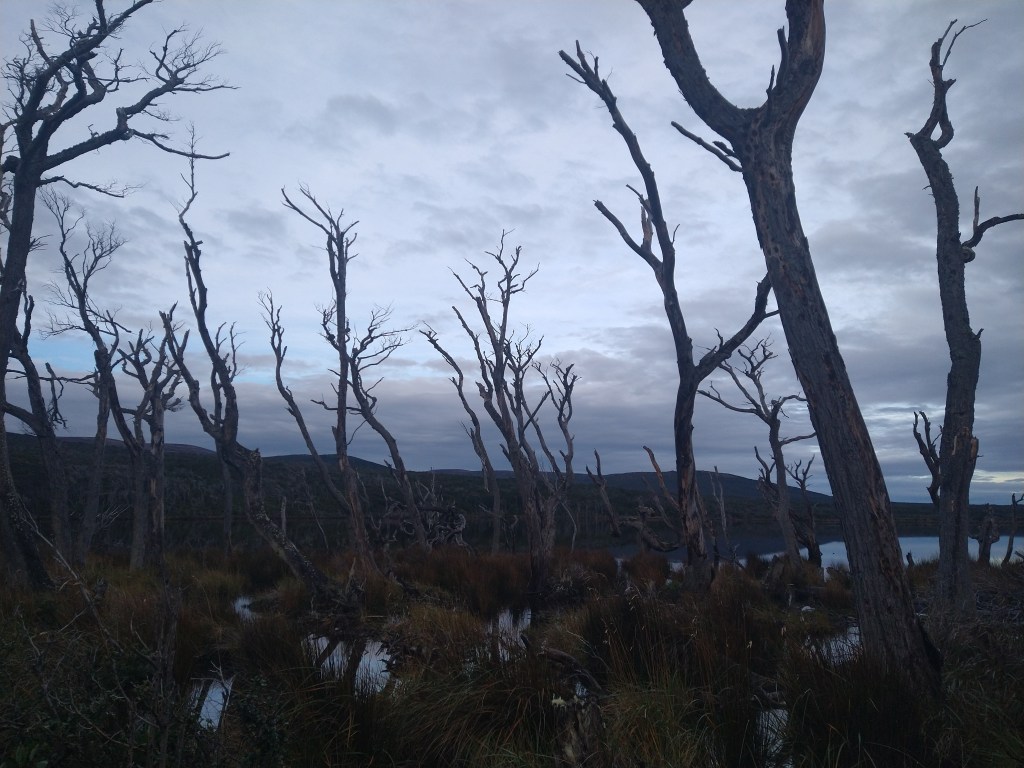
Isla Nueva was our next stop, and there was a lot of work to be done so we were granted the day to explore. We loaded up in the dingy at dawn and were told that this landing would be a bit different than the others. This shoreline was long and therefore the waves created a surf. To beach, they would speed up the dingy to surf on top of the wave and reach the shore. This was pretty fun. Two guys in wetsuits helped land the boat and assist us off, helping us time when to hop out. It was easy to find the massive lake behind the home of the mayor, though it took awhile to find a good location given the dense brush. Eventually, we found a stand of dead trees near a large beaver dam and set up shop there. We were getting pretty efficient at this point and could get everything deployed and collected within an hour.
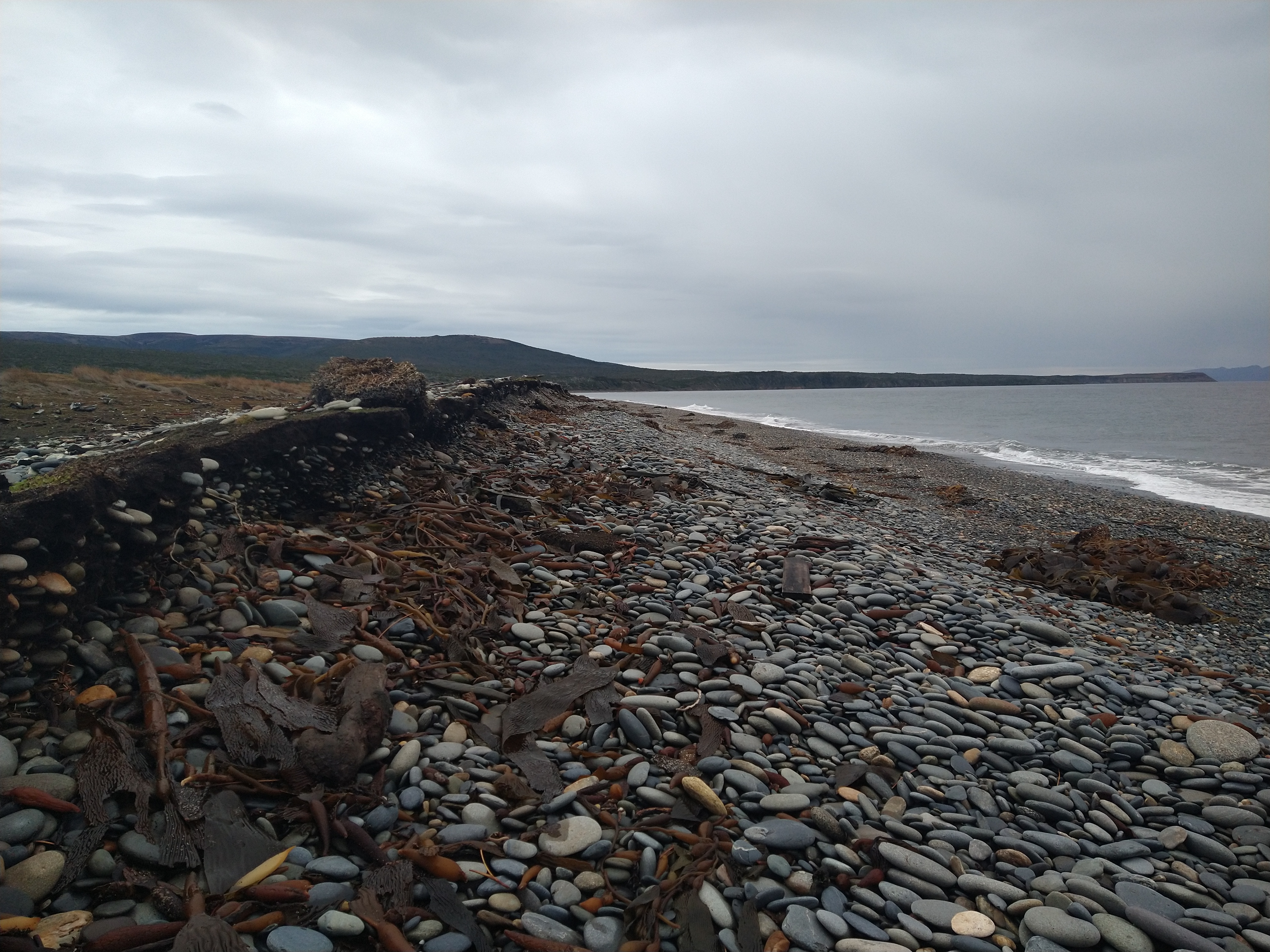
With some free time now, we explored the island a bit in search of wild horses, which for the island, are also an invasive species. We walked a few kilometers along the coastline, past a lighthouse, then spotted three horses. They were certainly wild and smelled us coming probably before we saw them. The group moved warily around us as we walked slowly along the shore, giving distance and moving parallel to them. They’d prance off, but then curiously circle back to check us out. As they stood alert watching us, the wind whipped their sweeping manes and tails. They had a fierce gracefulness about them, simply stunning.

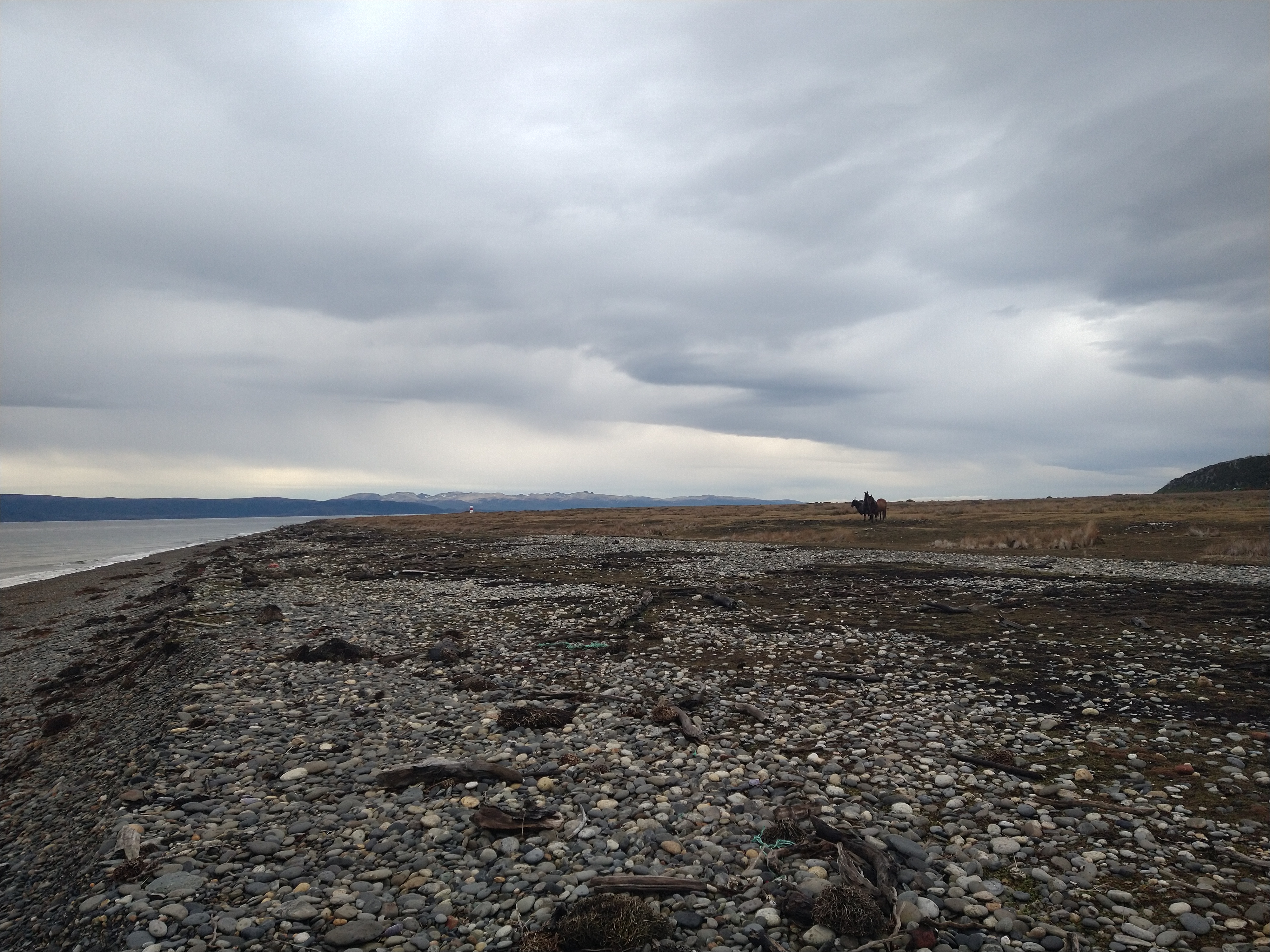
Weather blew in around the same time as our turnaround time. Back at the Navy house, a double rainbow blasted across the sky. As the sun was setting, we started loading back into the boats. The guys in the wetsuits helped us in with the surf, but the tide was coming in now. And, I noticed we were in the problematic dingy boat just as the motor died. The raft started to get tossed in the waves and I watched Nightmare lady’s face show panic. A big wave breached into the boat shoving me into Nacho and soaking us up to our waist. Two Navy guys paddled hard with the emergency wooden paddles in the boat, while another tried to get the motor started again with the pull cord. For a moment, we weren’t sure if we’d all get dumped out or not, as the guys with the wetsuits tried to keep us from getting sidelined with waves. Finally, the motor started, and we broke through the surf.


That evening, we’d actually be returning to Puerto Williams on Navarino Island to restock on fuel and supplies for the next round of stops. We considered sleeping in Savannah, but after learning we would only be stopped in town for 8 hours, we stuck to the boat. Nightmare lady decided she had enough of this adventure so her and her husband took advantage of the town stop and ended their trip. We wished them well on their travels North to paint the rest of the coastline.
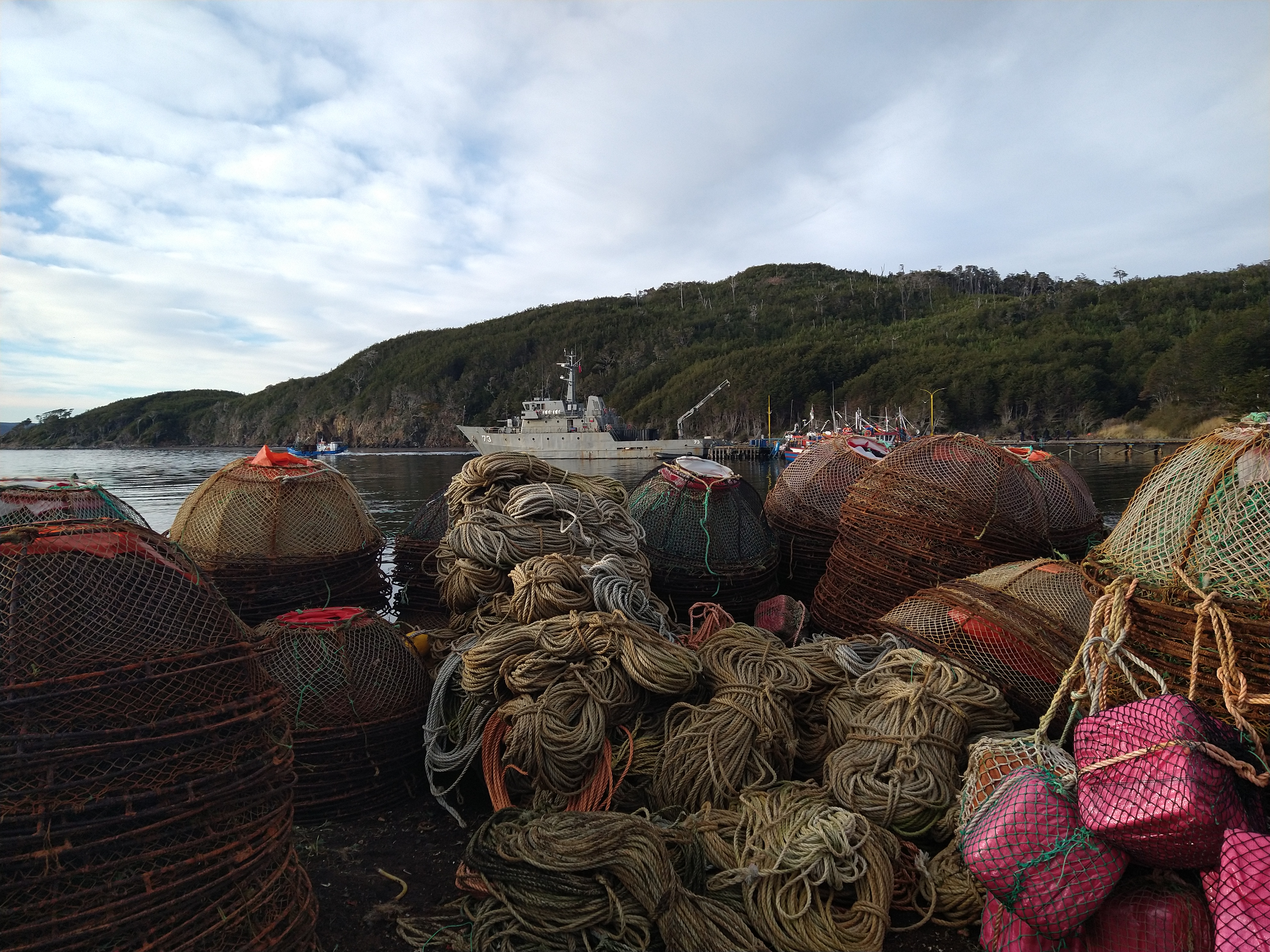
The next morning we jetted off to Puerto Torro, about a 2 hour trip from Puerto Williams. We had been to Puerto Torro before (last post), and it was technically part of Navarino Island, but we decided to add another sampling site here. We were greeted by our same scraggly doggo friend who, despite the sufferfest of the last hike, decided to tag along for a bit. We followed a 4-wheeler road to where some runoff from the mountains formed a little river. This ended up being pretty dammed up by beavers and nearly stagnant between each dam. It’s incredible how beavers can act as powerful ecosystem engineers. After setting up the camera and collecting water, we had some extra time to walk around the little town. We walked by stacks of probably thousands of crab cages. Our photographer friend was especially keen to capture this scene in his photos. He used a large tripod with what looked like an old fashioned boxy exposure camera, but it was actually digital. Spirits were high when we returned to the ship as the chef was signing along to music while preparing a ton of food. We learned it was the ship’s 29th birthday that day and we would be feasting a little more than usual. Pretty cool to spend the birthday of the ship on board!
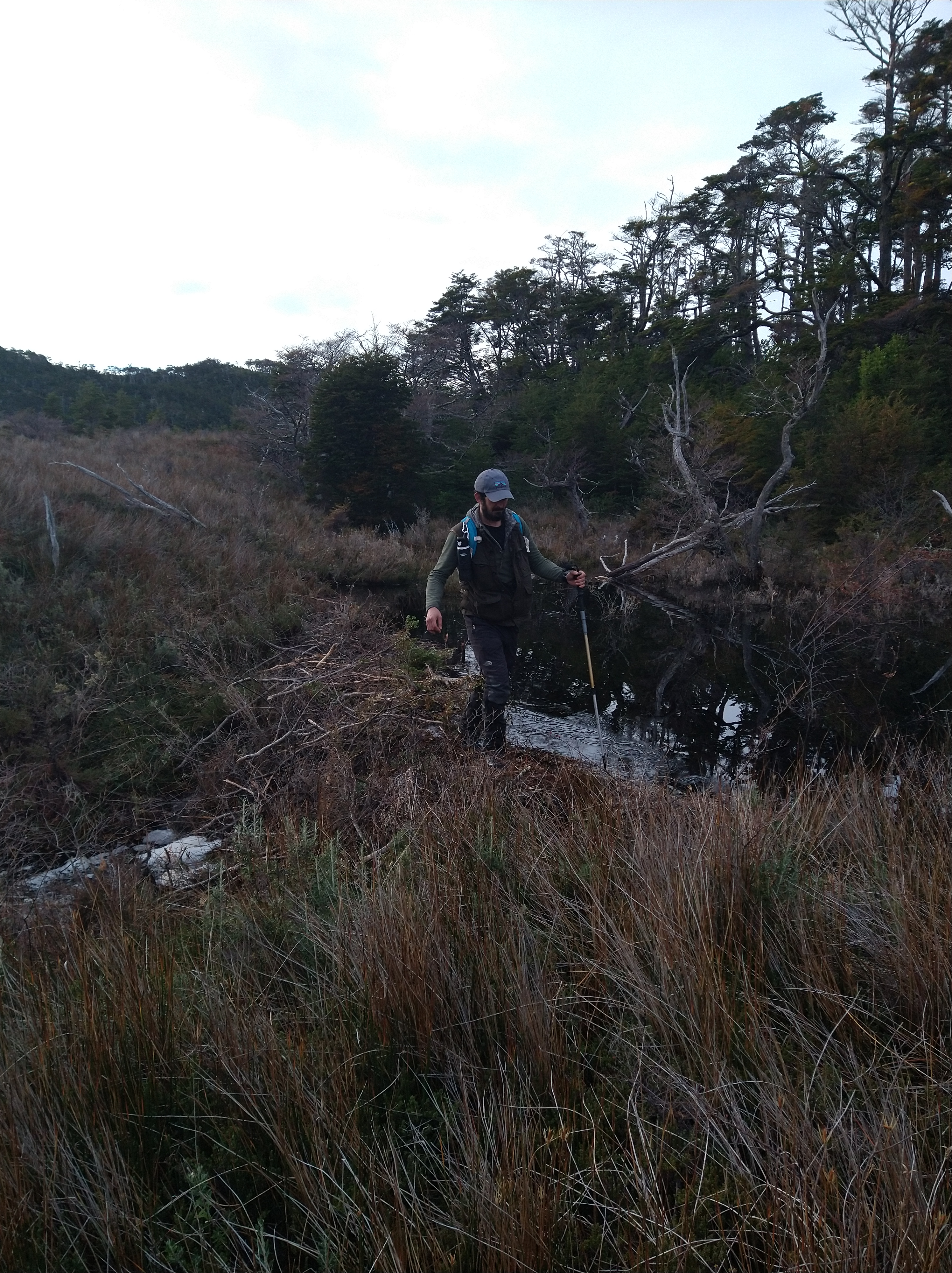

Our next stop was Picton Island, where we would be arriving that evening. We arrived around nightfall and prepared for another sampling in the dark. Headlamps were charged and we had extra clothes in case the temperature dropped at night. We were becoming quite used to the rope ladder by now, to the point where the Navy guys didn’t bother offering a hand as we crawled over the side of the ship. Once on shore, we chatted with the Sea Mayor about where to sample. He was a bit concerned about sending us out into the dark, but we assured him we were equipped and had been doing night excursions on this trip. Nevertheless, he walked us down to the coast and gave us some specific directions on where to follow a bay up until we could find the river that fed into it. He mentioned that there were a lot of beaver dams up there, big surprise.
As we started to make our way hustling up the coast, we heard some foot steps behind us. Looking back, we saw that the brother of the captain (who like us, was sort of like a tagalong on this trip), stumbling along the slick rocks to join us. He wasn’t really prepared for this adventure, without a light source and only sneakers on, but he was curious about what we were doing and wanted to watch. We gave him an extra headlamp and slowed our pace a bit to stay as a group. As we hopped over ditches and along the eroded shore of the bay, this guy seemed quite excited to be on this adventure. When we finally reached the river, and found freshwater to sample, he offered to take some photos of us working. Since on our sampling trips we’re working under time pressure or our hands are frozen from filtering freezing water, we don’t have many photos of the work. I was grateful for the offer to document some of the work and passed him my phone. We ended up getting about 100 very blurry photos of the process, the guy was too excited to stay still enough for a clear photo!
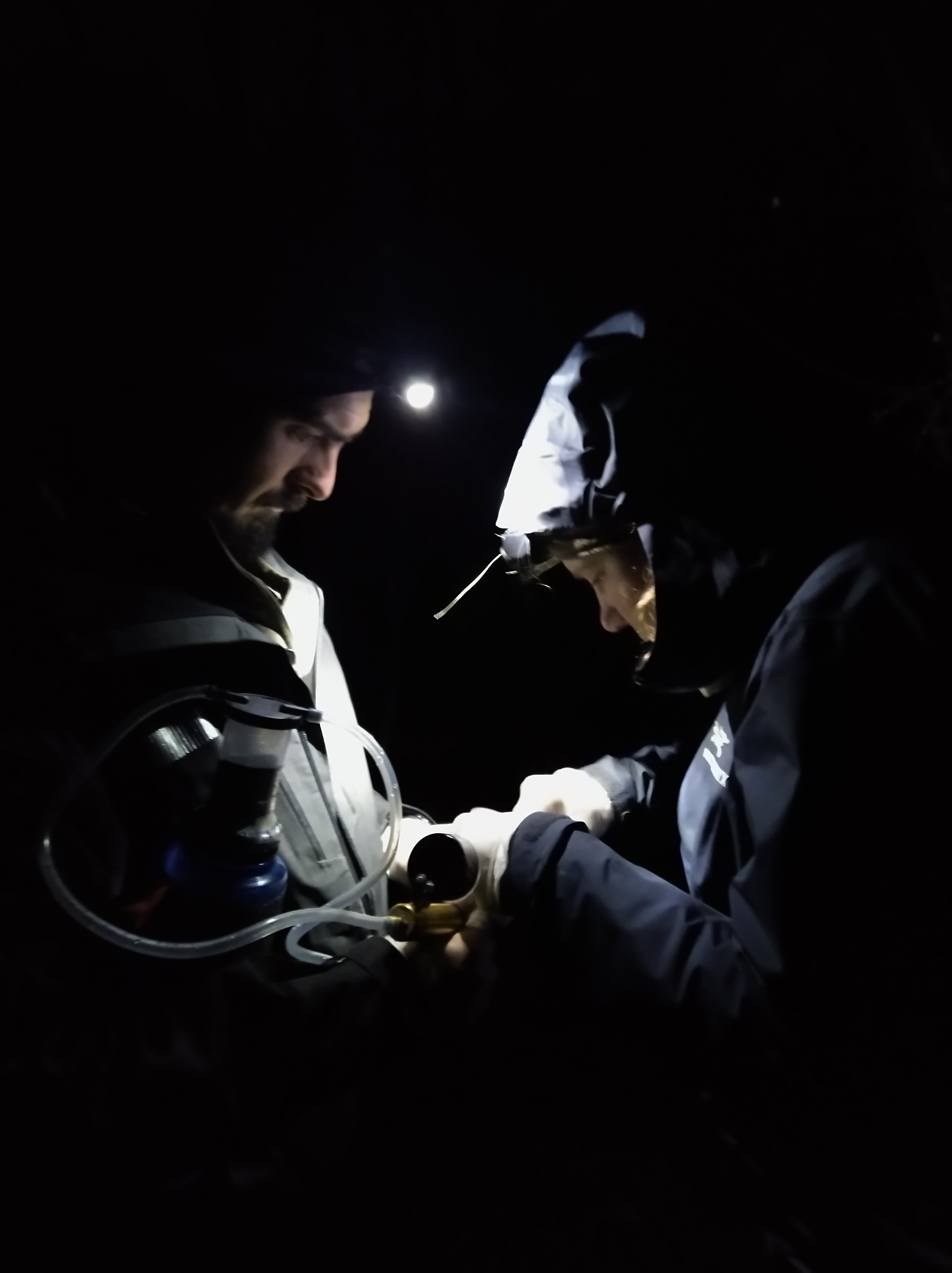

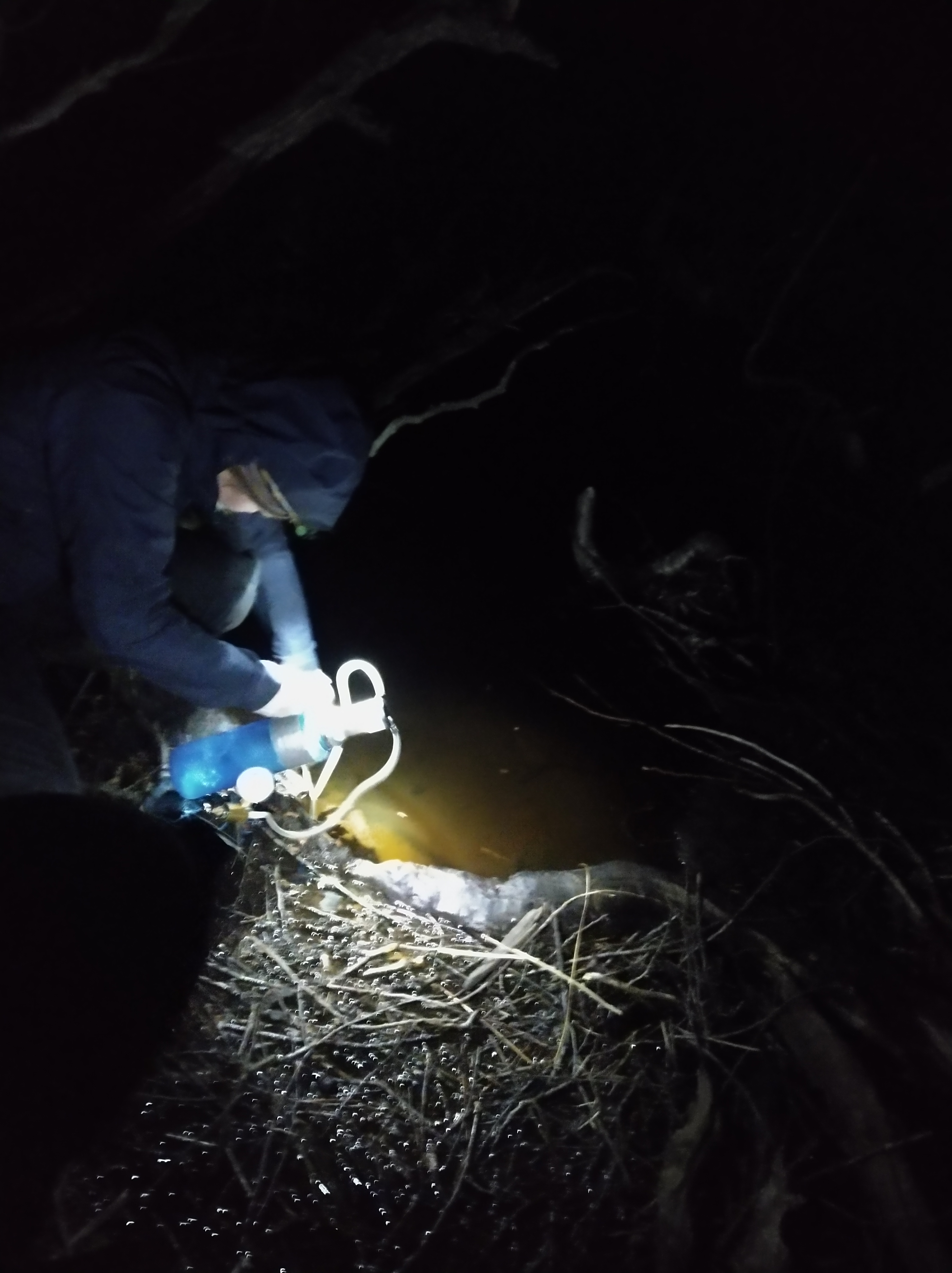
We safely returned the brother to the captain and chatted with the group for a bit. This sea mayor was especially interested in the project and with Nacho’s help translating, we could explain the goals of the project in more detail. He told us he had a dead mink under his porch, bingo! I needed some mink tissue as a positive control for genetic analysis. In my kit I was carrying extra ethanol and tubes in case an opportunity like this arose. We dug out the stinky carcass from under the house, Nacho cut off the tail, I plopped it in a tube with some ethanol, and we had a bonus prize from this island. We arrived back to the ship again around midnight and retired to our separate dorms to crash. Apparently, some of the Navy guys were impressed with how far we’d walk each night. One guy told Nacho they liked to watch our headlamps race off at night to find water while they’re doing their rounds on the dingy!

The ship left the shores of Picton Island and crossed the channel to Snipe, our last stop. This was the smallest island in the channel, and the one that looked like it was just one rock sticking out of the sea. We took the dingy over at sunrise and quickly went to work scouting out the island. At 800 meters in diameter, we hiked up to the highest point on the opposite side of our landing within half an hour. No signs of natural water sources… we dropped down the other side and separated to cover more ground. This was a quick stop for the Navy, so we didn’t have much time. What looked like low brush cover turned chest deep and it felt like swimming through thorny underbrush. At times I would have fallen flat on my face since I couldn’t see where I was stepping under the vegetation, but I got caught by the brush to break my fall. We found some traces of soggy swamps, but no water bodies with enough water to sample. In the end, we just placed a camera trap. There weren’t any trees and I didn’t want to set it in the brush to avoid getting 10,000 photos of branches blowing in the intense wind on the island. In the end, we arranged some rocks on a grassy outcrop and strapped the camera to our cairn. There were some bones of small birds up there, likely from larger predatory birds, but perhaps mink as well. We’ll see in a couple of months when the cameras are retrieved.
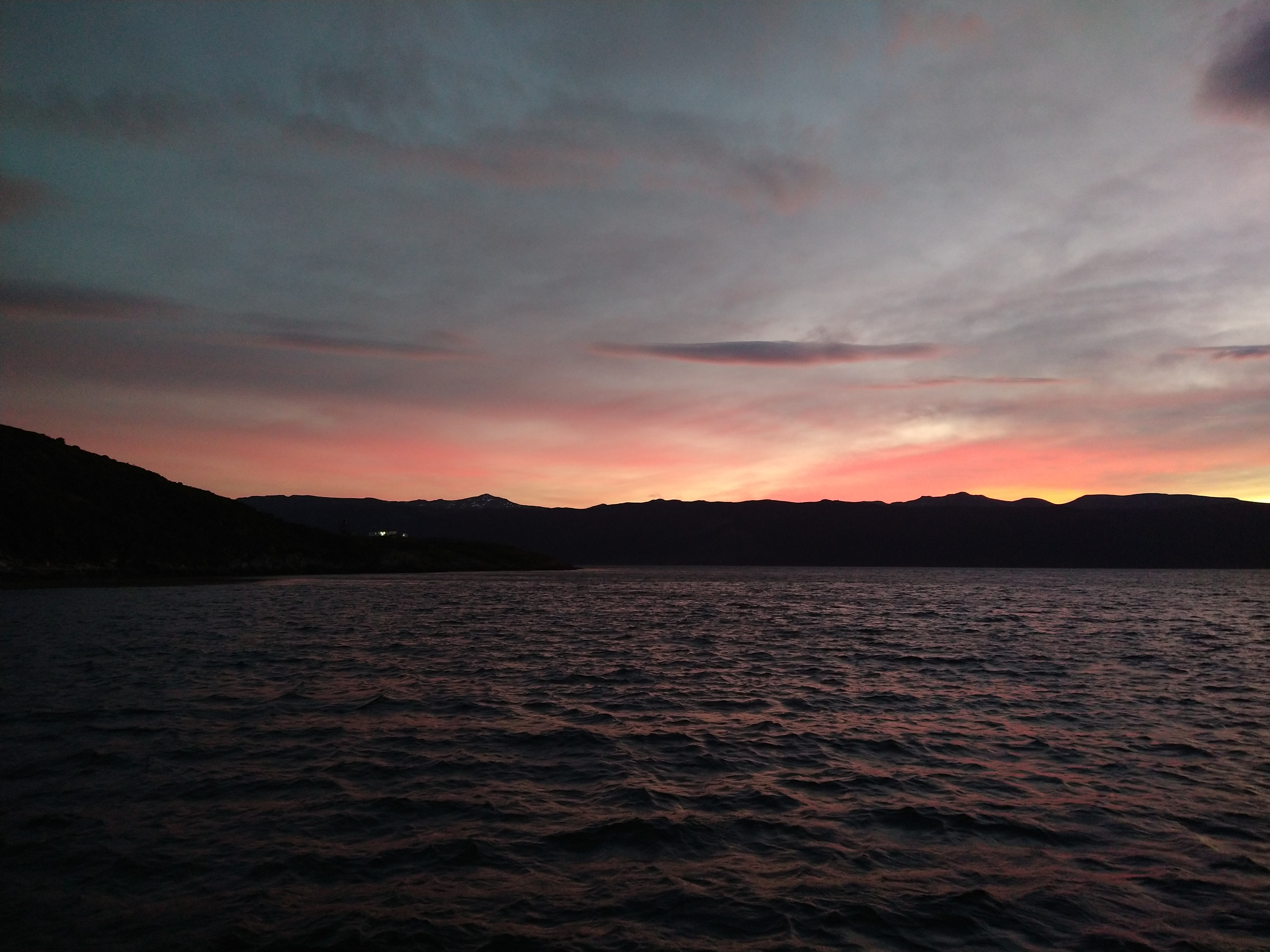
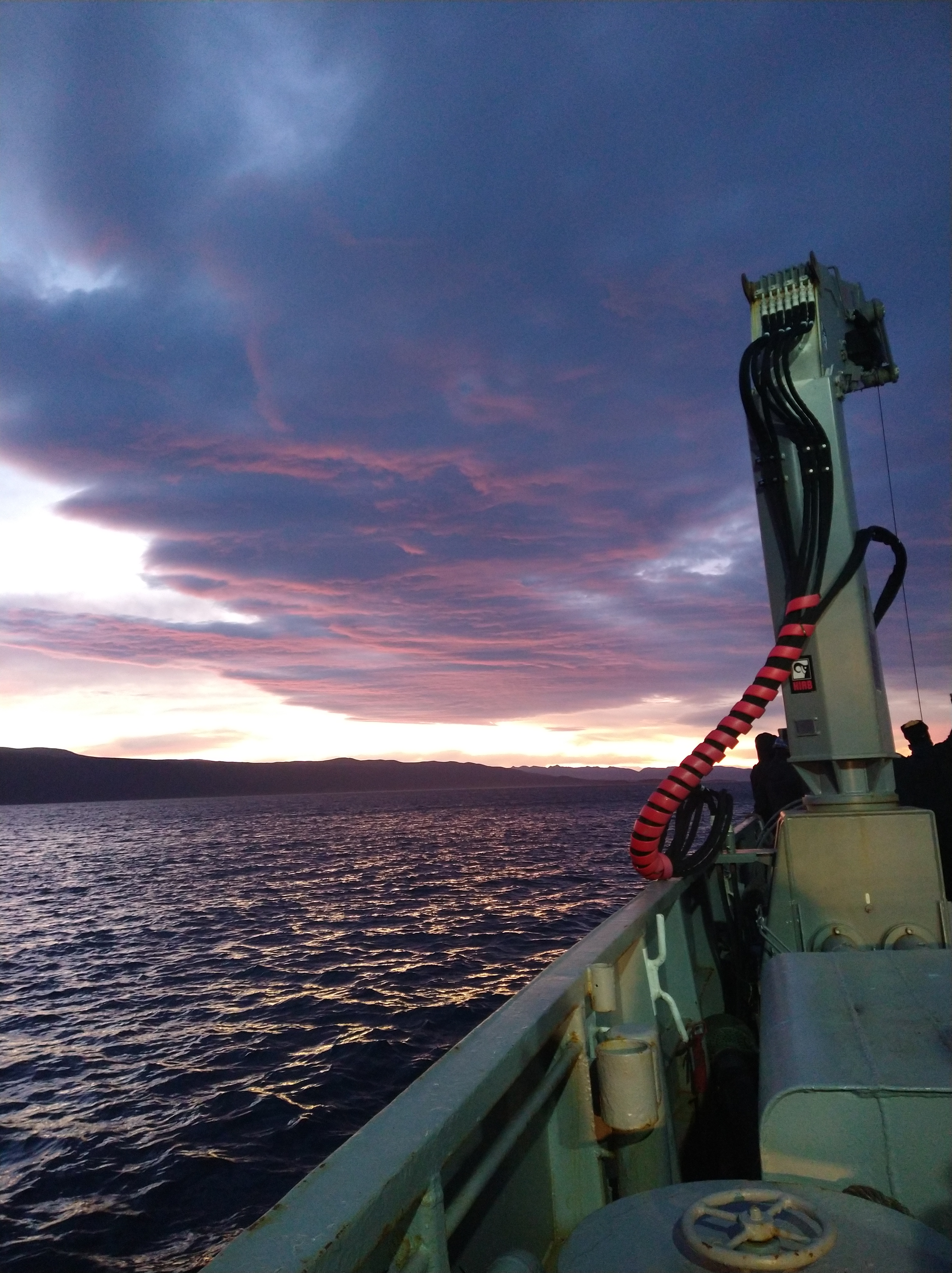
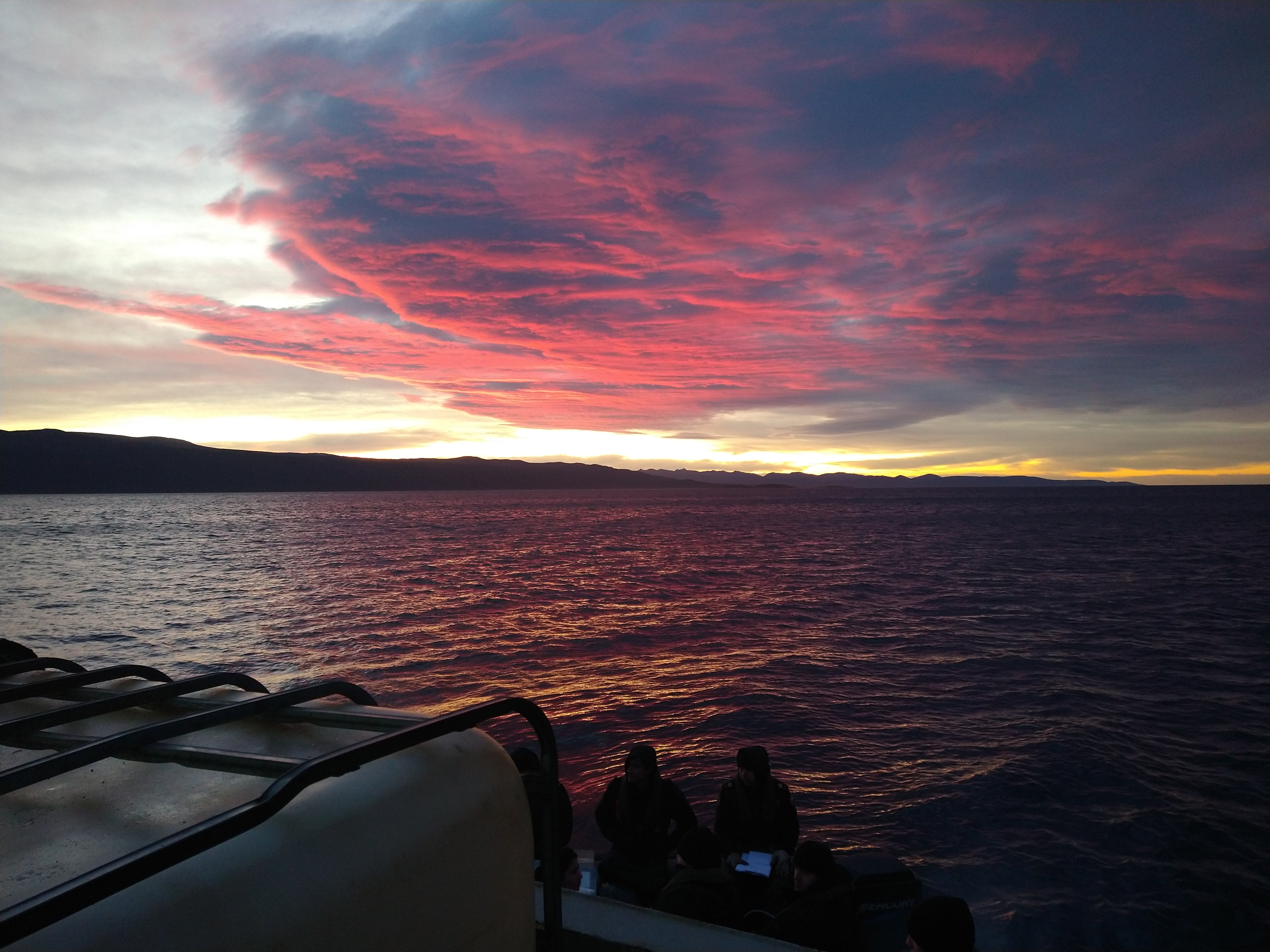

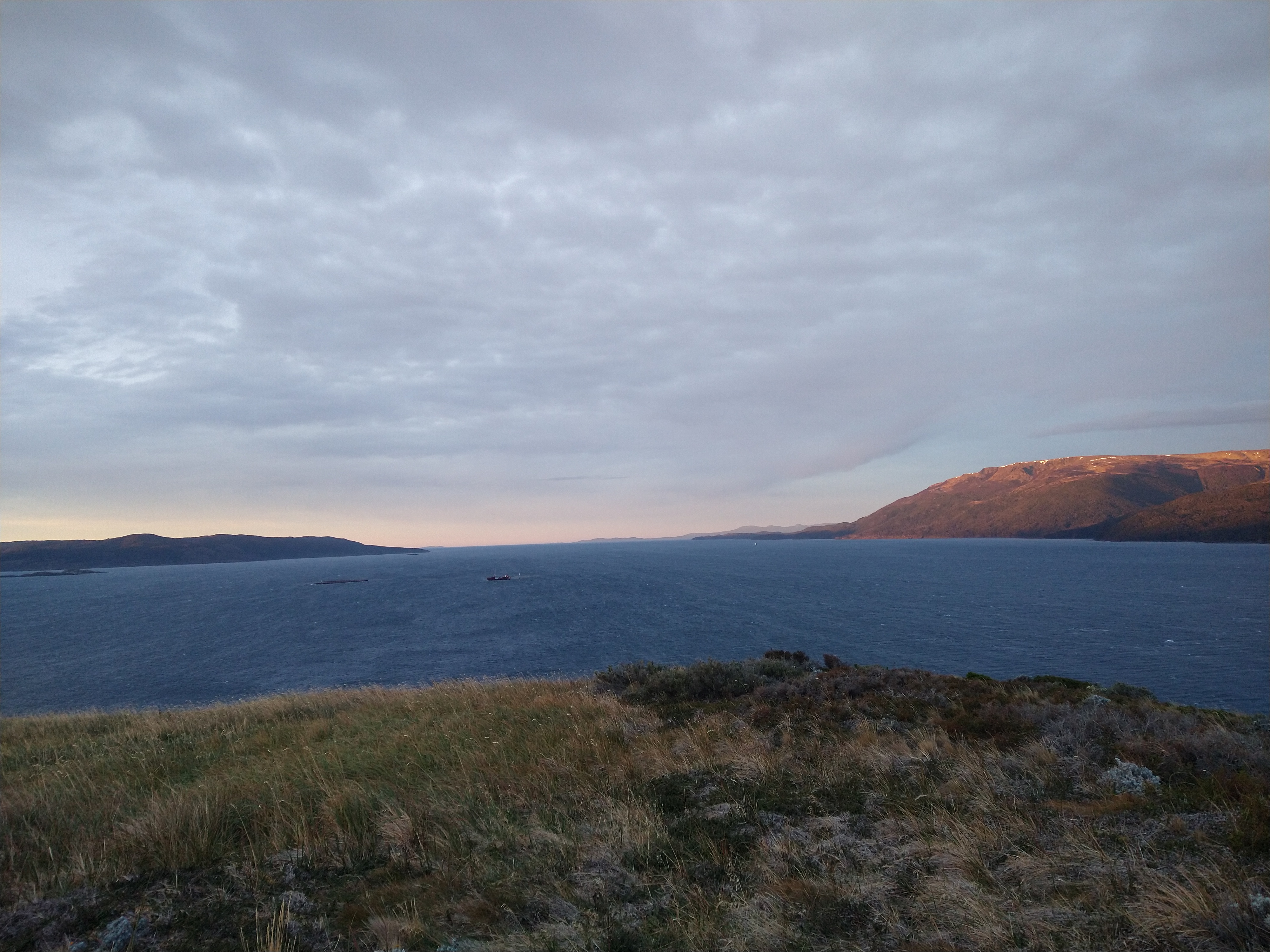
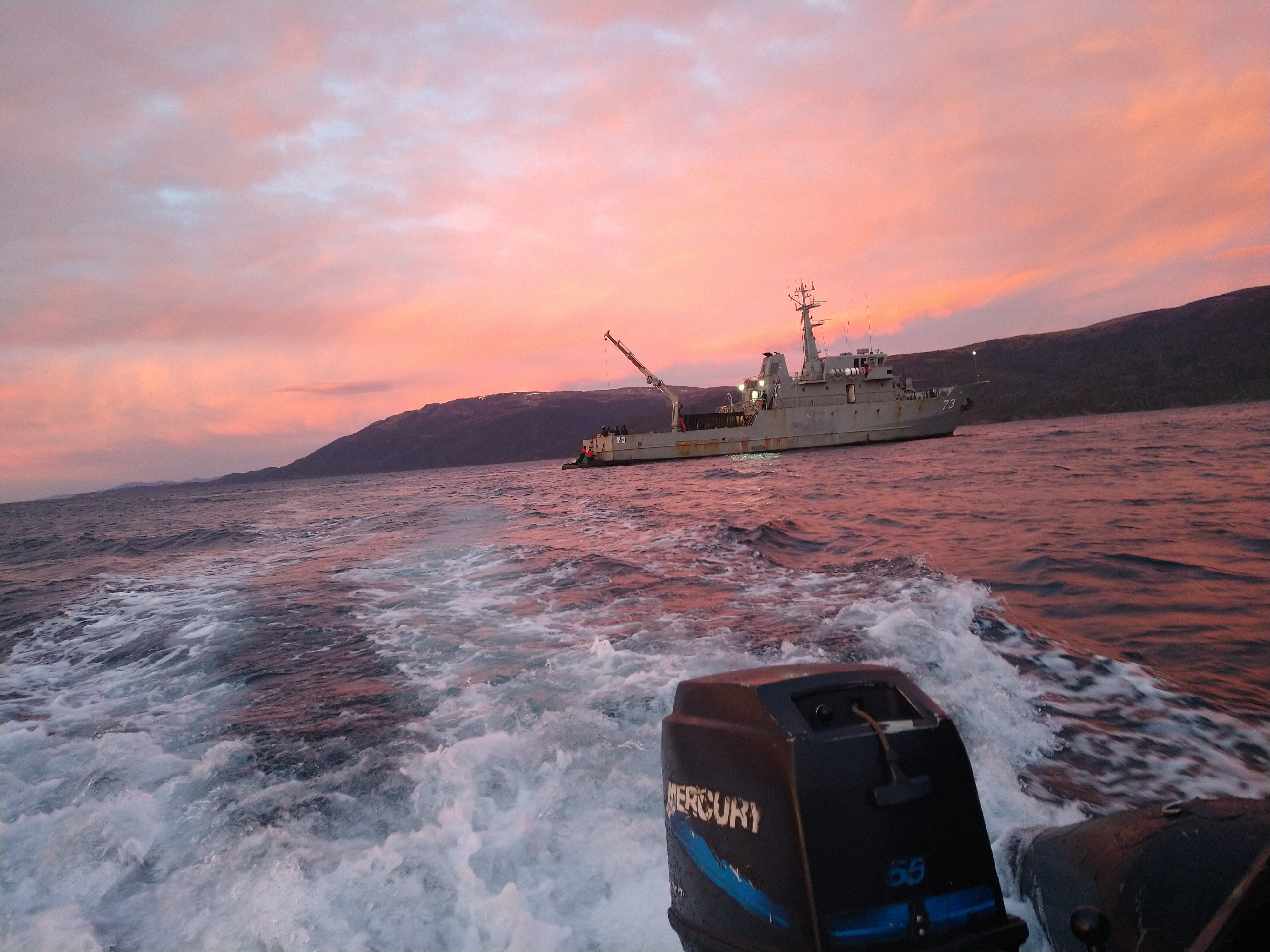
Unbeknownst to us, while we were ‘shwacking around the island, those who stayed on the ship had a little adventure of their own. The wind was so intense that day, that the ship got blown so hard the anchor was unseated. In an attempt to find a safer sheltered place from the wind, the captain cruised around the island to drop anchor again. Once we finished the camera trap deployment and returned to the landing, we watched as the ship passed back and forth in front of us, sometimes making sharp S curves. It was too windy and dangerous to drop anchor and send out the dingy for us, now a group of 6 plopped on the beach. We waited here for about another half hour before the ship finally found a safe anchor and the dingy sped out to retrieve us before the anchor pulled again. The Navy officer operating the dingy rushed us on and said we had about a 5 minute window to get back to the ship. We raced across the choppy waters as the front of the raft rose up out of the water from the wind and we clung to the ropes on the side. It was an adventure right up until the last ride back to the ship, one we won’t forget.
I’m not sure if environmental DNA has been collected before on these islands, and I feel so grateful we had the opportunity to pull this off. The samples are now safe and preserved in the -80C freezer at the Subantarctic Research Institute in Puerto Williams for further analysis. Before we disembarked from the ship, we spoke with the Captain who said he was happy about two things – 1) that he was able to assist on this project and 2) that we were able to see how the Chilean Navy worked. It was truly an incredible research experience and adventure.
Green points on the map below are the water sampling/camera trap sites for this trip with the Navy.


 kelwill
I need to find another word, other than amazing, to describe how I feel about these posts! These seemed like God-forsaken places, but you made it so interesting. And to think that you sailed with the Chilean Navy! This truly seems like the “end of the world”. I wonder what it looks like in the summer. Again, thanks for the adventure and continue to stay safe and keep the adventures coming! Love you, Kelly!
LikeLiked by 1 person